
First Generation Firebird Spotter’s Guide — Telling a 1967, 1968 & 1969 Apart
“Is that a ’67 or a ’68?” It’s the question every first-gen owner hears at a show, and honestly the 1967 and 1968 cars are close enough that plenty of people guess wrong. The good news: once you know a handful of details you can call the year of any 1967–1969 Firebird in a few seconds — even from a photo online. Here’s how we do it, with our own cars for reference.
One caveat first: this guide identifies how each car left the factory. Parts get swapped, hoods get changed, badges get added — so use these visual tells to place the year, then prove the details with the paperwork (there’s a section on that at the bottom).
The 10-second version
- See a vent window? It’s a 1967. Only year that has one.
- No vent window, headlamps tucked inside the bumper chrome? It’s a 1968 (or a ’67 — check the vent window and the rear marker).
- Headlamps outside the bumper chrome and a hard body crease off the wheel openings? That’s the all-new 1969.
Now the details, from easiest to spot to most subtle.
1. Vent windows — the fastest ’67 tell
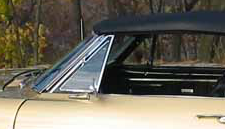
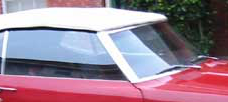
Pontiac deleted the vent window for 1968 when GM rolled out its new “Astro Ventilation” flow-through system, and it stayed gone for 1969. So if you spot that little triangular window, stop looking — you’ve got a 1967.
2. The front end — signals, headlamps, and grille
The ’67 and ’68 fronts look almost identical at a glance, but three things separate all three years:
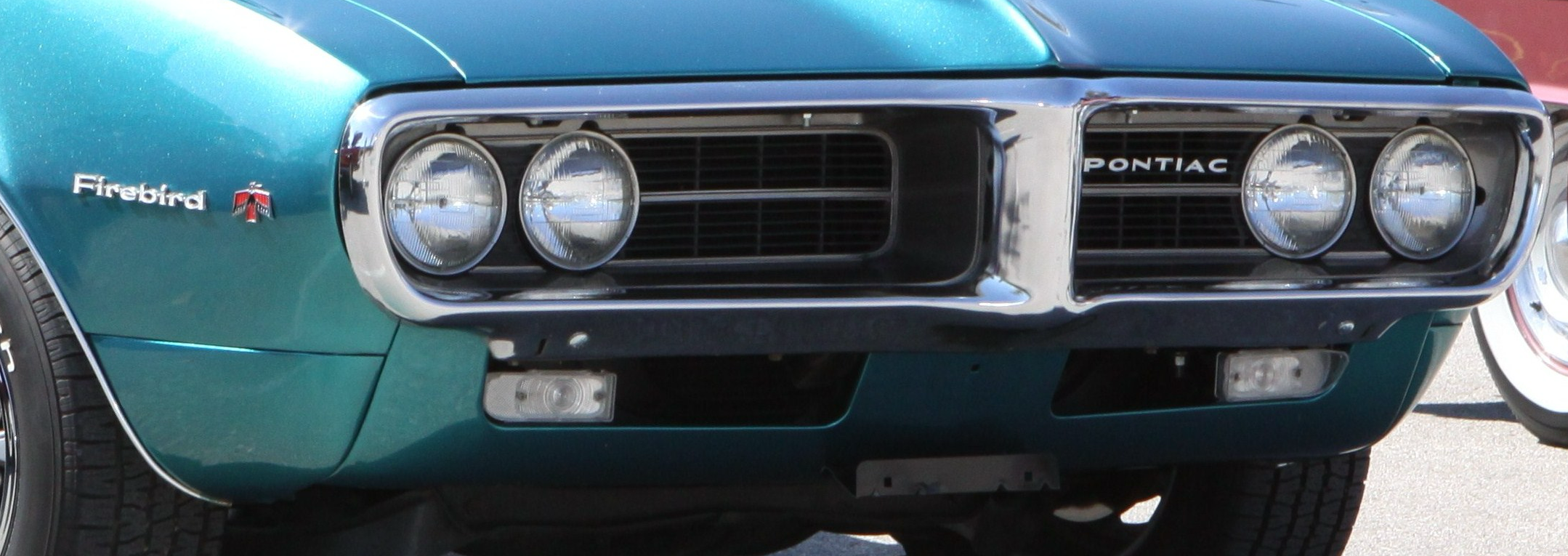
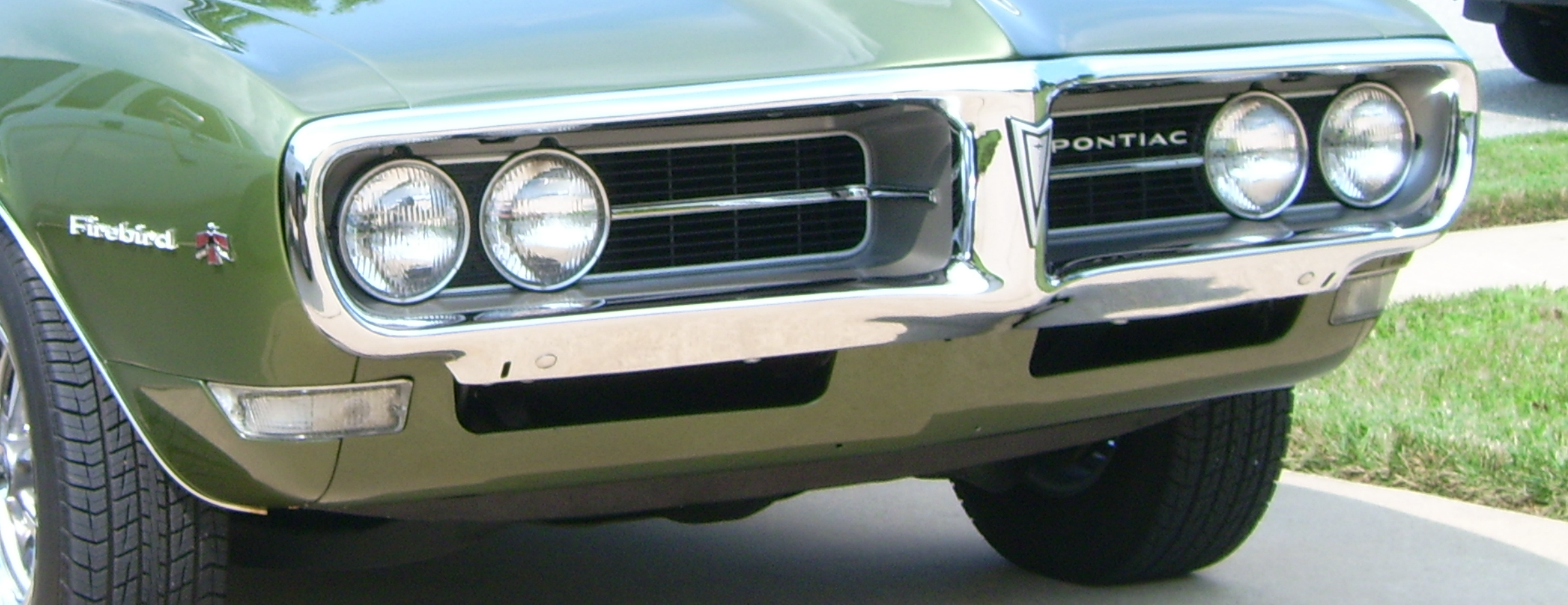
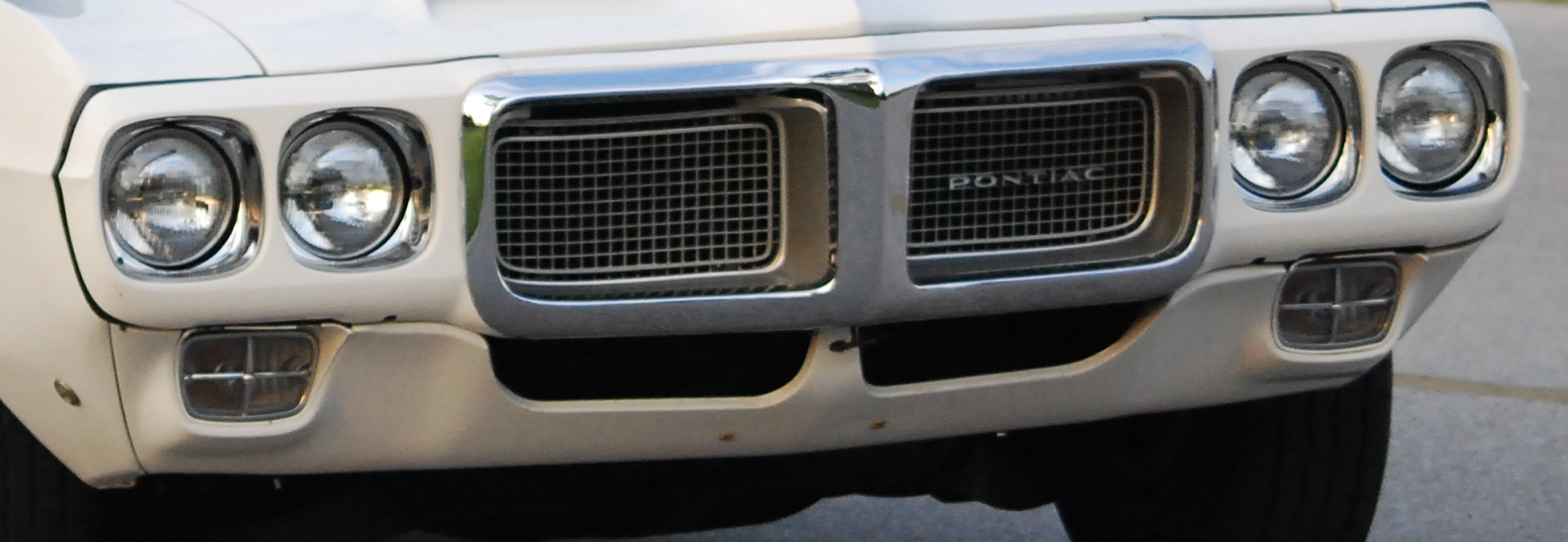
One more front tell that doesn’t show here: front side marker lamps (the small round lamp low on the front fender) first appear in 1969. If it has front markers, it’s a ’69.
3. The rear side marker
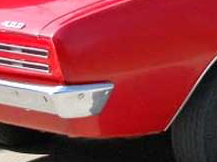
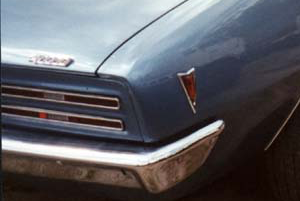
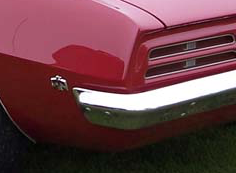
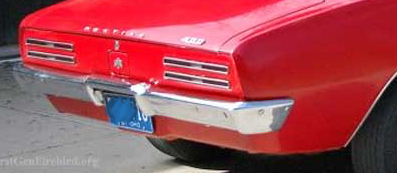
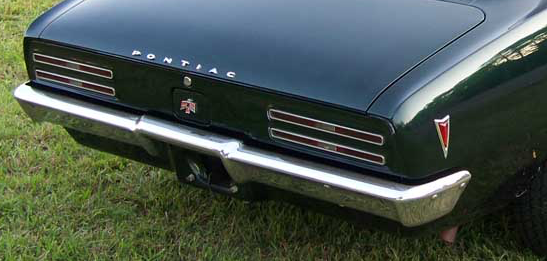
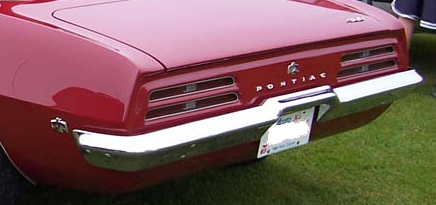
This is the tell that saves you from the back of the car, where ’67 and ’68 otherwise look the same. No marker = ’67; arrowhead = ’68; script = ’69.
4. The tail — lamps and fuel door
5. The 1969 side crease
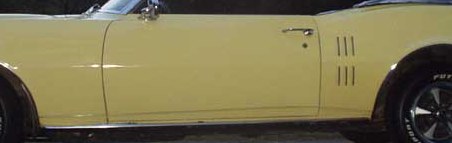
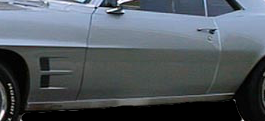
1969 got a full set of new sheet metal, and this side crease is the quickest way to call a ’69 from across the lot — no need to see the front or rear at all.
Trim & model tells (a quick note)
Everything above sorts the year. A few visual cues also hint at the trim, though these are the parts most often swapped — treat them as a starting point, not proof:
- Sprint & H.O. (1967–68): a thin stripe down the side — plain for the Sprint, broken by an “H.O.” on the front fender for the H.O. For 1969 the Sprint uses an emblem at the front of the rocker instead.
- Firebird 400: an arrowhead in the center of the front bumper (all three years), a dual-scoop hood with “400” emblems, and a “400” on the trunk lid.
- Trans Am: 1969 only — and every single one left the factory Cameo White with blue stripes, with a rear-deck airfoil. Just 689 coupes and 8 convertibles were built, so assume any “Trans Am” is a clone until the paperwork says otherwise.
Spot the year, then prove it
These tells will place the year and point you at the trim, but badges and hoods lie. When it matters — buying, selling, or settling an argument — confirm it against the numbers:
- Decode the dash VIN with our VIN Decoder and the cowl tag with the Body Tag Decoder.
- Check the hidden VIN locations on expensive cars — that’s how re-bodies and clones get caught.
- Order the factory PHS documentation for the real story on engine, options, and colors — the gold standard of Pontiac paperwork.
New to buying one? Start with our buyer’s guide. Got a car we could add to this page? Share photos in the forums or our Facebook group.
Got a first-gen of your own? Add it to our Car Show Registry so other owners can see it — and browse the Firebirds already registered while you’re there.
Content last modified: July 12, 2026 at 1:25 am
