
Hidden VIN Locations
Every 1967–1969 Firebird carries its identity in more than one place. Beyond the dash VIN plate and the Fisher Body (cowl) tag, Pontiac stamped a partial VIN into the body and the driveline. These “hidden” VINs are how you confirm a car is what it claims to be — that the body, engine, and transmission left the factory together.
The body tag number is not the VIN. The Fisher Body plate carries a consecutive body build number (the order the body came down the Fisher line) — a different number from the VIN’s sequential production number. They are not supposed to match. Read the body plate with the Body Tag Decoder and the VIN with the VIN Decoder.
Start with the two you can always see
| Identification | Where to find it |
|---|---|
| VIN plate — 1967 | On the driver’s-side door frame / hinge pillar. |
| VIN plate — 1968–69 | Top of the dash, driver’s side, visible through the windshield. |
| Fisher Body (cowl) tag — all years | On the firewall / cowl. Carries the body, style, trim, paint, and build-date codes — decode it with the Body Tag Decoder. |
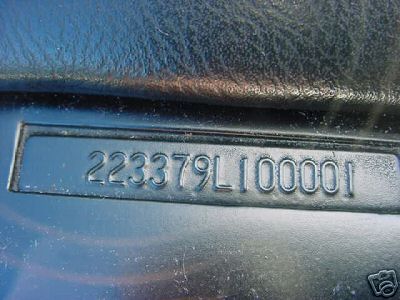
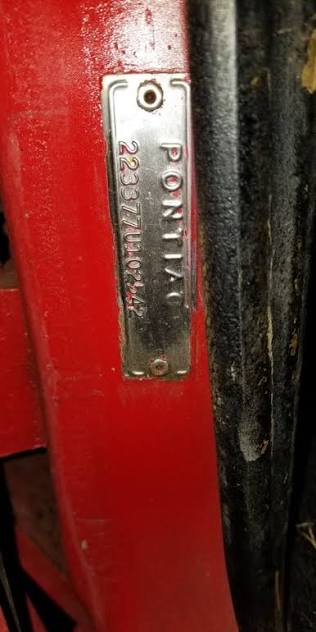
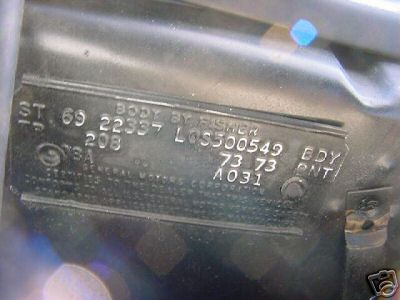
Hidden partial-VIN stampings (body)
Pontiac stamped a partial VIN into the sheet metal so a car could still be identified if the dash plate was gone. On first-gen Firebirds, two spots are commonly checked:
- Cowl — top, just right of center: the partial VIN sits on top of the cowl, just right of center. You can usually read it with a flashlight (and a small mirror) through the slots below the right wiper arm without removing anything; a fully clear read may need the wiper arms and cowl panel off.
- Under the blower motor: beneath the heater box, under the right front fender. This one is normally only visible with the front clip (fenders / inner fenders) off.
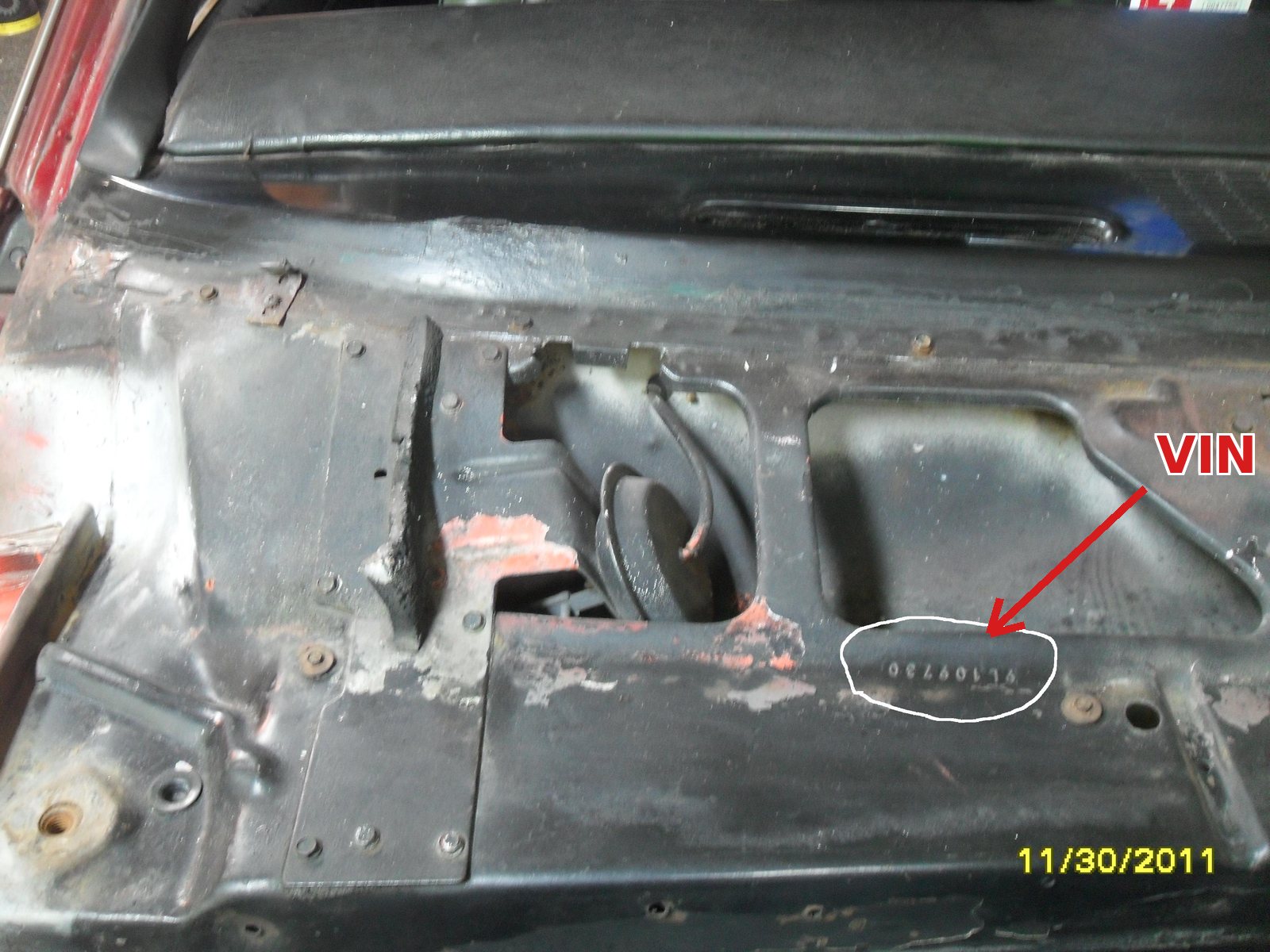
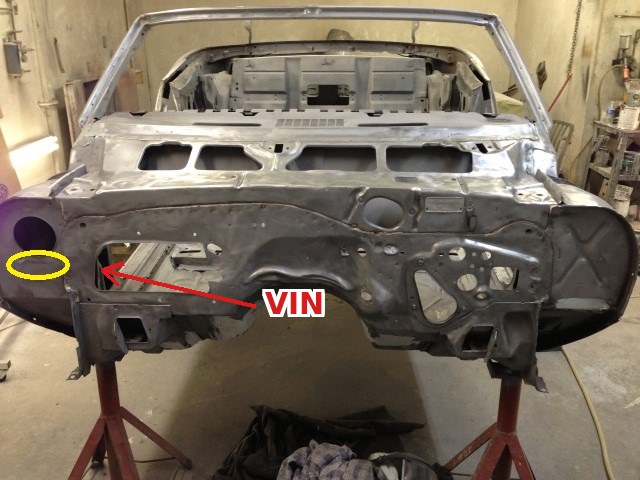
1967 differs. The 1967 hidden body-stamp locations are less consistently documented than 1968–69 and can vary from car to car — if you’re verifying a 1967, the Forums are the best place to compare notes with other owners. Also, in 1967 the VIN was not stamped on the engine block; a 1967 engine is identified by its two-letter code only.
Hidden-stamp locations and legibility vary by year, assembly plant (Norwood vs. Van Nuys), and how well the area was protected from rust and sealer. A missing, ground-off, or mismatched hidden VIN can point to a replaced body, a swapped front clip, or a car that deserves a closer look — get a knowledgeable second opinion before you buy.
Drivetrain (matching-numbers) stampings
To confirm an engine and transmission are original to the car, compare the VIN derivative stamped on each to the car’s VIN.
1968: on an original engine, the VIN derivative is stamped into the front right (passenger) side of the block.
| Component | Stamp location |
|---|---|
| Engine — V-8 | VIN derivative stamped on the right of the timing chain cover (front of the block). The two-letter engine code is in front of the right bank of cylinders. |
| Engine — 6-cylinder | VIN derivative stamped on the right rear lower side of the block. The engine code is behind the oil filler pipe. |
| Transmission — 2-speed automatic | Stamped on the low servo cover. |
| Transmission — Turbo Hydra-Matic 350 | Stamped into the sheet-metal cover on the side of the case. |
| Transmission — Turbo Hydra-Matic 400 | On a metal tag on the right side of the case. |
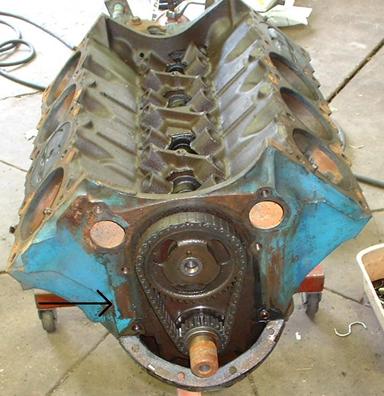
Stamp locations and the full engine, transmission, axle, carburetor, distributor, and head-casting code charts are on each year’s Drivetrain ID page: 1967 · 1968 · 1969. Also see the Identifying a Transmission FAQ.
Reading a faint stamp: clean the area, then use raking light — a flashlight held low and to the side. A small mirror helps on the cowl. Photograph it and zoom in rather than straining to read it in place.
Decode & dig deeper
- VIN Decoder — decode your dash VIN
- Body Tag Decoder — decode your Fisher cowl tag
- Per-year VIN pages: 1967 · 1968 · 1969
- VIN, Body Tag & Engine Code Information (FAQ)
- Still stuck? Ask in the Forums — members have documented hidden VINs on many cars.
Content last modified: July 18, 2026 at 12:01 am
