I figured out how to adjust the nose on a 9. Actually, there is no adjustment on the nosel in fact, it’s only front end component that doesn’t have an adjustment. The problem is that everyone tries to make it an adjustable part, even to the point of altering it to make it adjustable.
The nose mounts to a non adjustable point. The nose mounts to a non adjustable point.
The fender/core assembly adjusts to fit the nose. The fender/core assembly adjusts to fit the nose.
In a nutshell, mount the fender/core assembly loosely in place, mount the nonadjustable header on loose frame horns, slam the nose into place, crank’em down, hose it off, take it for a cruise and, if you can, find another 9 to park beside.
One thing worth mentioning is that I would bet serious money that many ill-aligned GM noses are rooted in this problem.
It seems clear to me when I look at in pictures and text, but you know what happens when I start to think.
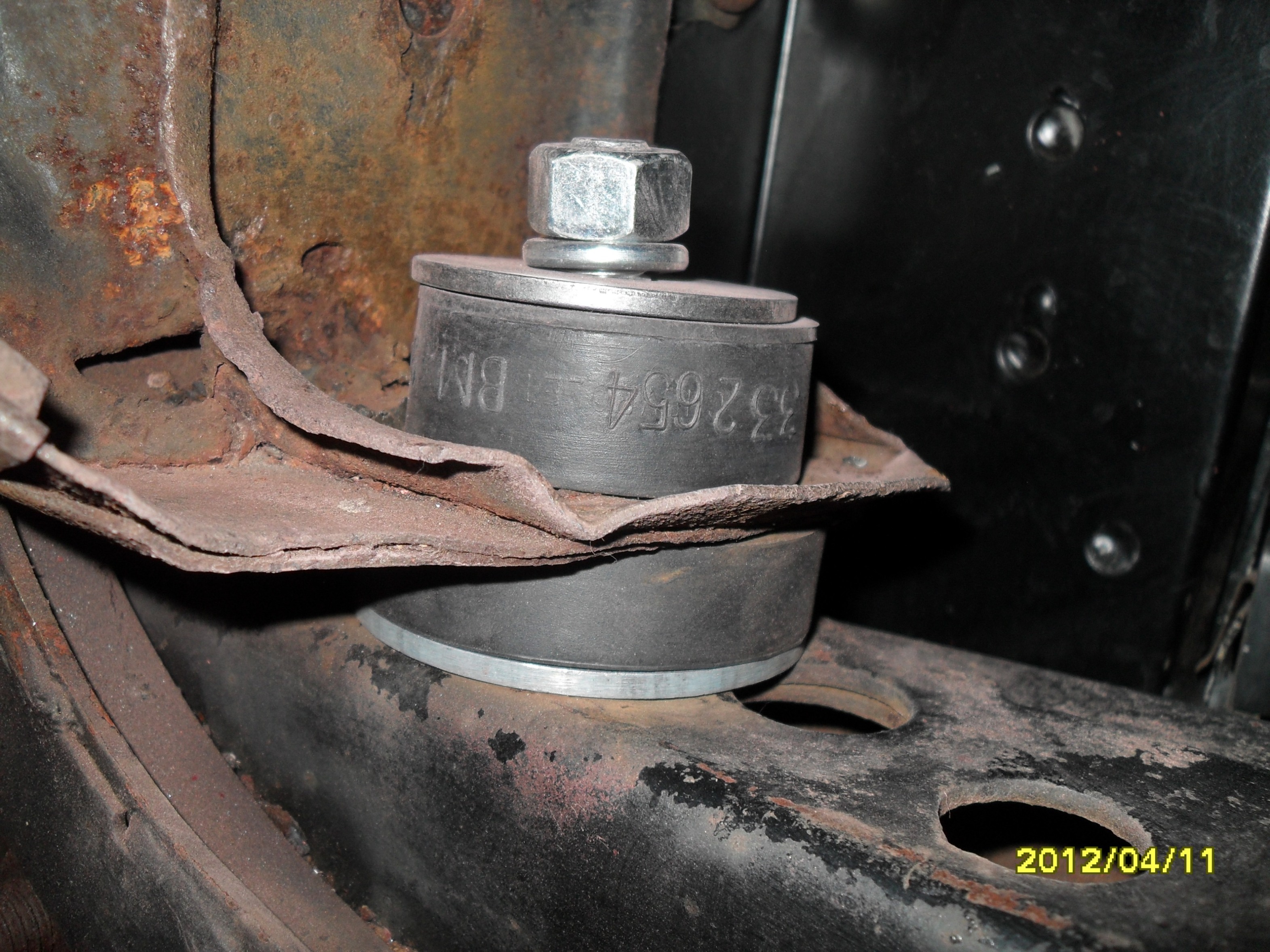
Picture one: With the fenders loosely hanged on the car and loosely mounted to the core, loosen the core mounts so that the core rattles. The old replacement bushings were still good; even so, for the price of replacements and based on the level of deconstruction, it’s mechanically unwise to use the old bushings. Also, the old ones have Chevrolet, upside down at that, stamped on them, so good riddance.
Again, the fenders and core are loose enough so that everything can shift. You will shift the core left-right to align the fenders with the nose, and shift the core fore-aft to adjust fender-door gaps. The only adjustment on the nose is forward and back, not back and forth.
When you are done adjusting the core, the nose aligns with the fender/core, and the core establishes fender-door gaps. Pin the core down. How tight is the thousand dollar question. I still have uncharted territory to cover. Do I think it’s right, or do I know it’s right? And you know what happens when I start to think! Also, the crush of the bushing drops the fender, meaning the cover will step drop from my mock specifications. The solution is to pin the core enough to anchor it; then, tighten it or revisit the adjustments during final assembly.
Playing with loose frame horns and flopping header panel is like a one-arm man trying to take a piss while hanging off a rope, especially while holding the header in position and tightening the fasteners.
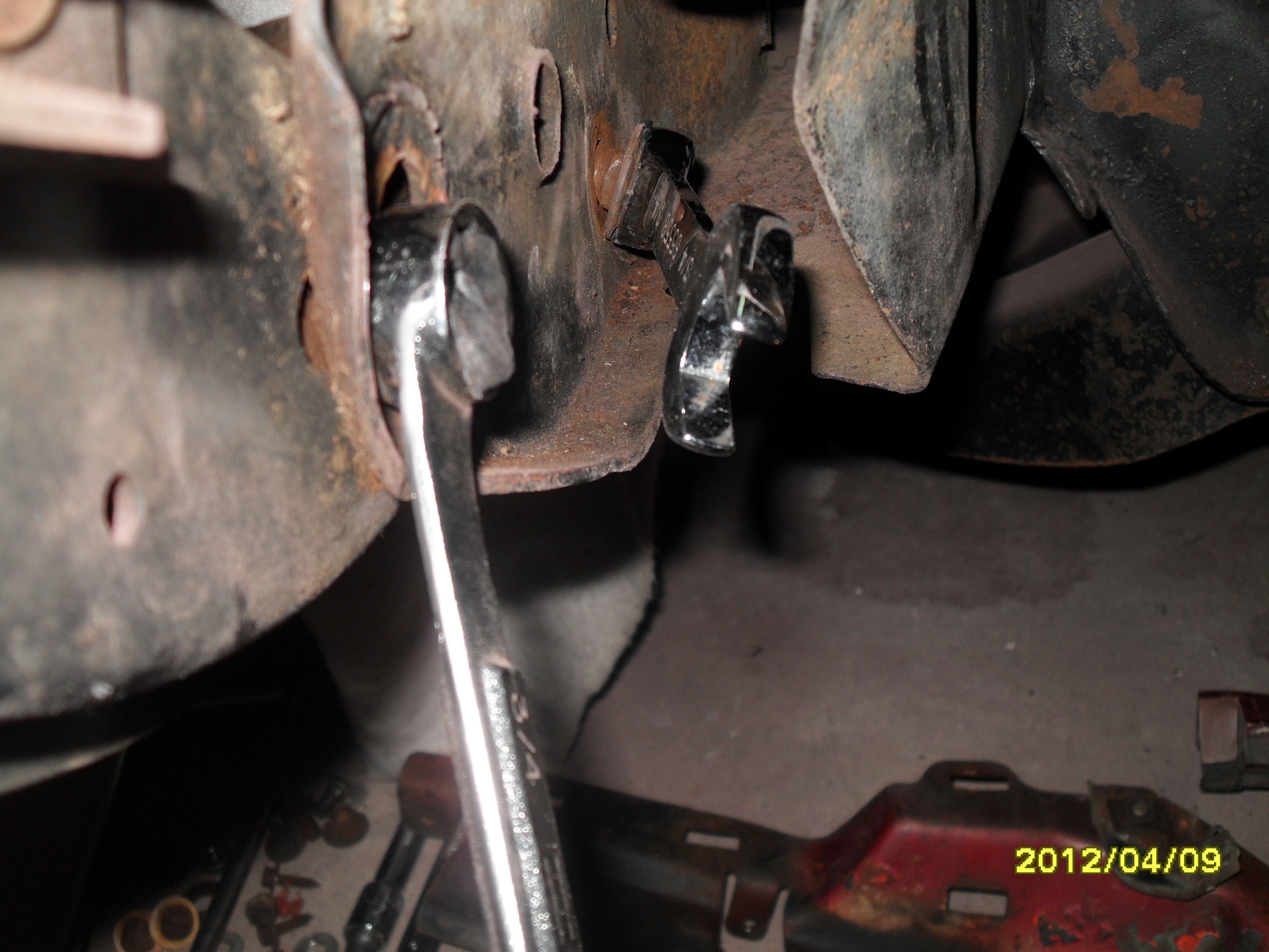
The second picture shows a solution. Dumdum up the wrenches to the bolts, and the sockets to the nuts. The Brillcream, little-dab-will-do-you days are gone. You need to use copious gobs of dumdum to hold the tools to the fasteners. How much? You’ll figure it out!
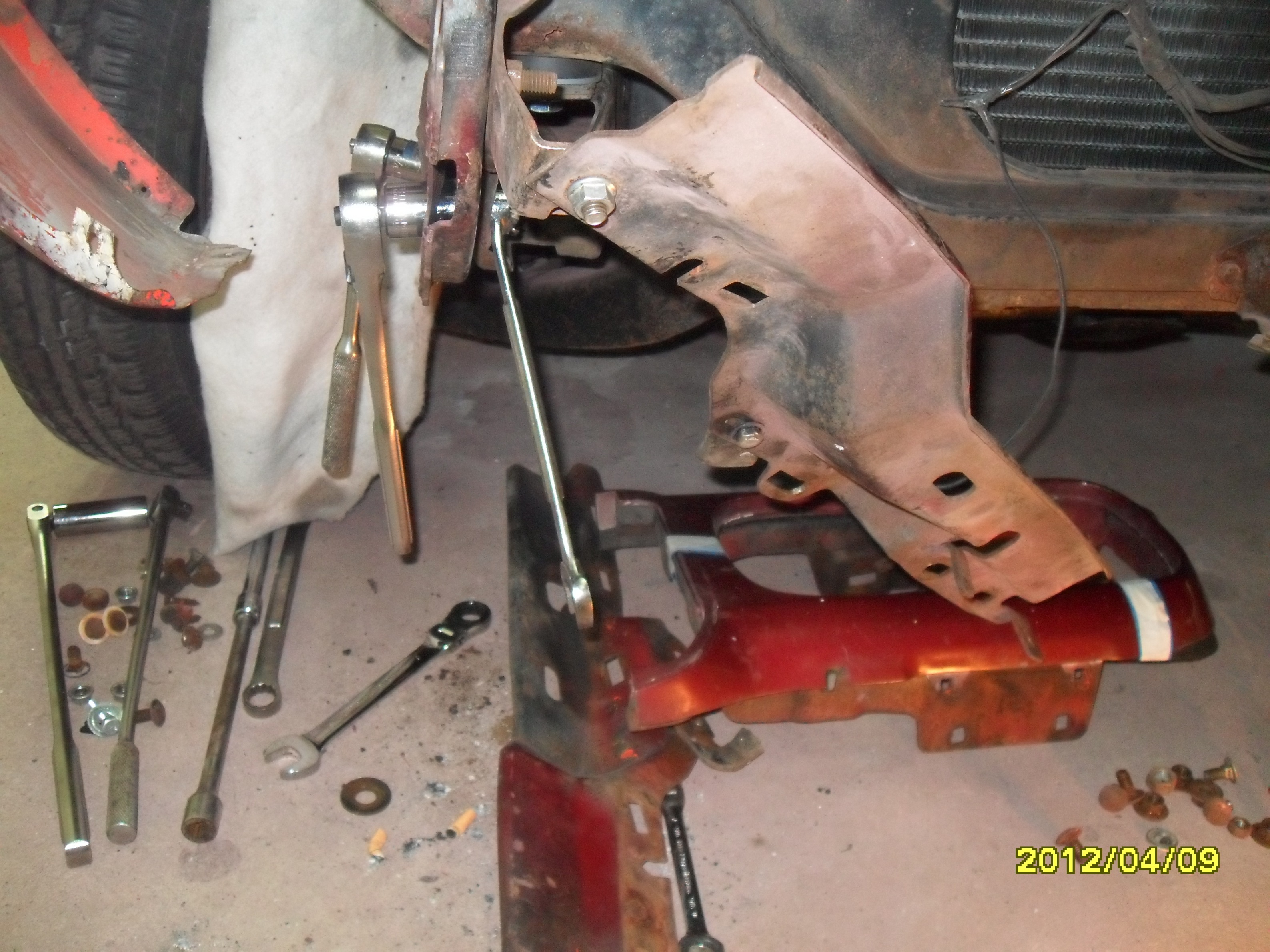
The third picture shows the correct snatch-tool for header panel installation. GM lists the correct nose-to-fender snatch-tool as J-3138481815743818162481840658 or its equivalent, and this happens to be the equivalent snatch-tool.
I placed the other frame/cover/lower bracket to help illustrate the snatch-tool. It’s the part that sits to the left of the frame/cover. Also, the to-be-installed headlight frame and cover is removed to better help illustrate the tool attached in the correct position. The tool provides additional leverage so that you can concentrate on holding your mouth right as you position the cover to the fender.
The fourth picture is a gift. I figured out the problem when I was playing with the old parts. I set this up to illustrate the problem. Of course while holding the header in one hand, the ratchets WILL NOT CLICK, so you gotta do the one-hand dink. Wrenches and sockets falling off only adds to the fun. Simply, it’s the most alignment effort I’m willing to give, jacking around with something that I know dam good and well it doesn’t fit.
I created this mock because this is the point where people start trying to adjust the nose. The position of the nose is the same in the before-after pictures, alas, because you cannot shift the nose. The fender/core assembly needs to be adjusted to the nose, making it square on the vehicle.
Look at the mounting point of the header in picture five. You would have to “elongate the slot for a better fit” if you wanted to shift the nose to align with the fender. The problem is that it doesn’t give a better fit; instead, it knocks the core/fenders out of square. A good analogy would be the two mounting points for the nose are plumb lines and the fender core unit is aligned on these plumb lines.
Back to picture four. If you if you alter the nose’s position, elongate the slots, it nocks the front end out of square. The out of square variance compounds the further you get from the nose. In this case, it would create a tight gap on the left door, and a large gap at the right fender-door. In other words, many, if not all, of the door gap issues are because of incorrectly installed nose pieces. And if you try to tinker the gaps at the door, it will be at the expense of fender nose alignment. Also, it could be the cause of hood issues. Nock it out of square and the fender-hood curves may not match. My bonus was that the fan/shroud almost interfaced ON THE RIGHT SIDE. And the little bump made a world of differnce
Once you have the core adjusted spot-on, the nose simply sets in place with zero drama. The example in the last pictures was 30 seconds of positioning after picture #3. Just for chits and giggles, I loosened the headlight frame/cover and articulated the part over the fender area, and the alignment should be a cakewalk.