If your car is strictly a street driven vehicle and the engine spends most of its time between 2000 & 4000rpm, then I feel that gasket matching is a waste of time. I did it to the heads and intake on one of our 455 bracket engines. We were only shifting at 5000rpm, so I didn't notice any increase in power or ET, over the as cast heads and intakes.
Pontiacs make most of their power from long stroke torque, in the lower rpm range. Now, if you wanna make 500-600hp and rev 'em on up to high rpm, with high flowing ported heads, forged rotating assembly, big cam and carb, then more airflow is needed.
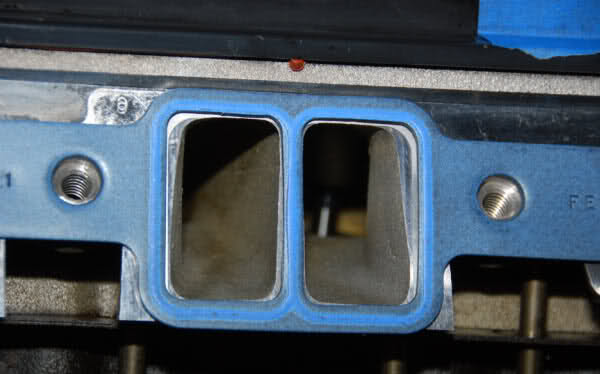
But for reasonable, under 5000rpm street power, unported stuff will do the job nicely. Now, I have seen some ports that were really deformed looking, as cast. So, it would probably be a good idea to check 'em against a gasket, and remove most of the excess material from any of the really bad ports.
I've read that it is more important to match the intake port shape to the head port shape than to the gasket, so that there will be a smooth transition from the intake to the head. So, if the head ports are not gasket matched, then for some ports, gasket matching the intake port could actually make the mismatch between the intake and head port worse.
Obviously, it would be best to have both the intake and head ports gasket matched, for a smooth transition, and better airflow.


.jpg "1509158_835705029857879_5065579011436371258_n (2).jpg
Views: 630
Size: 26.01 KB")


