Hello all and thanks in advance for any help. Had a shop build my 400 short block that I completed last year and finally got to fire up. They supplied a resurfaced flywheel and a new 12" 3-finger Borg n Beck clutch package. I have had unending issues with the clutch as I couldn't get enough 'disengagement' of the clutch disk to shift gears with engine running. I have tried the adjustable pivot ball (from min to max), the taller (1-1/2") release bearing, and many adjustments of the clutch linkage. I can still only get 12 thou disk-flywheel gap with linkage set correctly and 22 thou with no play on release bearing. Finally, after pulling the tranny 7 or 8 times, I decided it had to be the clutch and removed the pr plate & disk. I confirmed I had the low profile flywheel bolts a few threads mentioned, and of course, my disk is not backwards. After a close inspection of the clutch and flywheel, it is evident that the rivets (closest to the disc surface) on the clutch disc are rubbing on the face of the flywheel. (on the very edge of the inner flywheel face center drop off, as the rivets are only half worn down and the flywheel inner edge is shiny and beveled). So, I went and bought a new 11" diaphragm type clutch package figuring this 12" B & B clutch will not work. sure enough, when I look at my new 11" clutch disk, the rivets are even farther out from the center of the disk than the 12" which would mean the entire rivet will rub on the flywheel. Can anyone please supply me with the diameter dimension of a factory flywheel's inner depression at the crank? My only possible solution I can see to this problem is an incorrect flywheel. By the way, I still don't see how a rubbing rivet would stop a clutch disk from 'disengaging' (my main problem!) as it would seem more an 'engaging' problem wouldn't it? Any help from you experts would save me from buying an automatic ! (kidding!!)
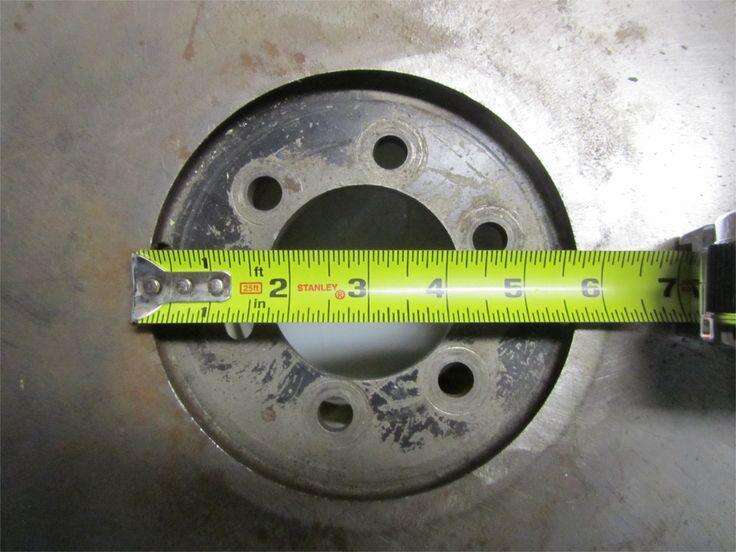
I'm no expert but I will try and help. I grabbed an old flywheel and a new disc. The hole in the flywheel where the springs sit was 5 and 3/4" diameter. The heads of the rivets was 6" in diameter. You would think they would hit, but the thickness of the disc kept the rivet heads from touching the flywheel. If your flywheel center is 5 and 3/4" you have a correct flywheel. But your disc may be wrong.
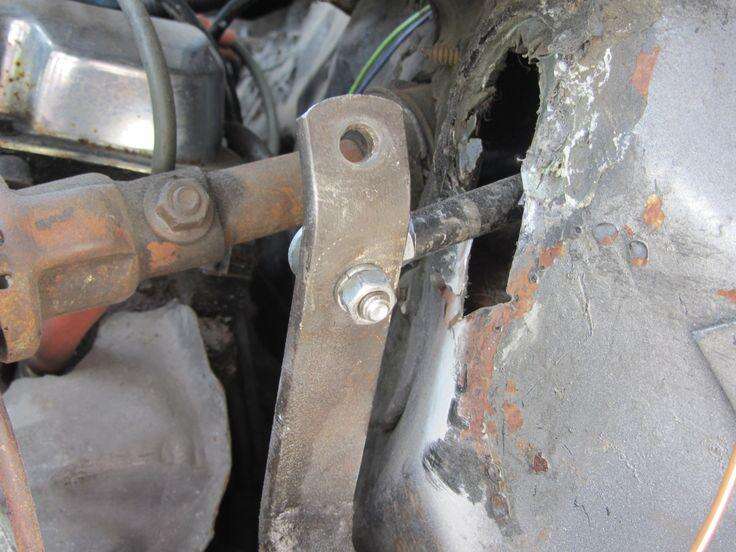
I hate the B&B style clutch. Too much pedal effort. 11" diaphragm is the way to go. I have changed to a new disc on old flywheels and found the same problem as you. Not enough adjustment to get full disengagement and still have 1" free play. I have gone so far as to remove the Z bar, and drill a new upper rod hole about an inch farther down. That changes the geometry of the linkage so that for the same pedal travel as before, you get more lower push rod travel. Pedal effort goes up a tiny bit, but with a diaphragm clutch, pedal effort goes down as the beleville spring gets over center. Another plus of diaphragm clutches. An extreme fix, but short of getting a brand new flywheel, and all new parts, it worked for me. Pic is my station wagon with 4 speed manual trans. Same issue.
Remember that the geometry of the linkage is such that inches of pedal travel results in millimeters of pressure plate movement. It does not take much flywheel or component wear to mess things up. All the factory adjustments are based on new parts so as things wear you get issues like you described.
I have also had cars that the fork was hitting the firewall before clutch was fully disengaged. Ended bending the fork in the press. Also check the bellhousing is centered. If the input shaft is not in the crank centerline it will still spin the input shaft and cause funny clutch problems.
Thanks Olds. You may not be an expert, as you say, but you gave me exactly the expert information that was needed. Haha. You have confirmed I have the correct flywheel with the 5-3/4" center and the 6" spaced disk rivets on the clutch. I like your wagon mod and great as a last resort, but I'm hoping to keep it stock. I replaced anything worn so tolerances should be good. The only oddity I see is when I put a straight edge across the new 11" Pontiac clutch disk rivets, the rivets are -definitely- 15 thou higher than the disk surface. This is the similar for both the troublesome 12" and my new 11". It almost seems the rivets were meant to ride on the flywheel. -To keep the disk wear down to a minimum? Smoother transition? It may be a good thing I discovered that the 12" rivets were wearing on the inner edge of the flywheel depression as that is definitely not correct! Someone please tell me the rivets are meant to rub on the flywheel! Haha. There must be some science there I'm not aware of. I just want to drive this 69 bird after 33 years in my garage(s)! Hoping not to make it 34. Thanks again.
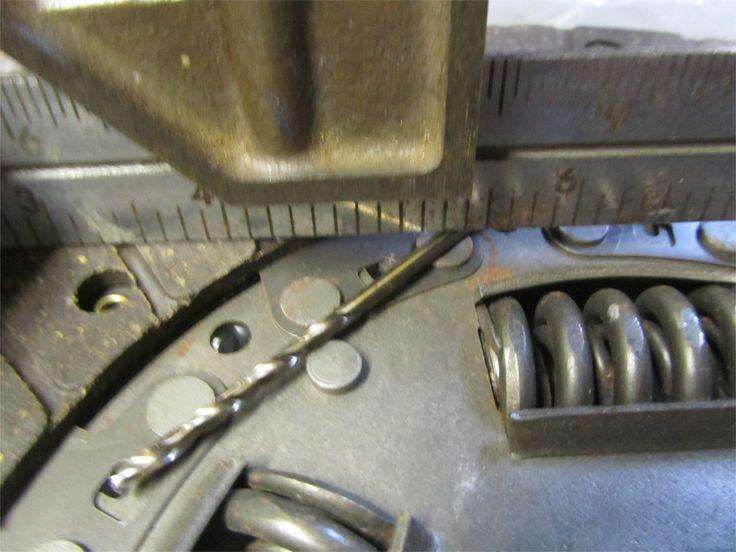
You caused me to go back down the basement and measure my disc. A #35 drill bit [.110"] fits between the rivet heads and the straightedge across the friction pads. No way those discs you have are going to work with a Pontiac flywheel. You may be falling victim to the 'GM is all the same' mentality. I have had good results with Borg Warner discs, but last time I needed an 11" 21 spline disc for my ST-10- no one had one. I ended up getting this disc from an actual clutch re-builder that used to be in Jamaica, Queens. It looks very meaty. If you are getting 'GM' discs from parts stores, maybe search for a new disc from a name brand company like Borg Warner, McLeod or Ram. And as big of a PITA it would be, maybe take your flywheel along and only purchase a disc that has the clearance I got.