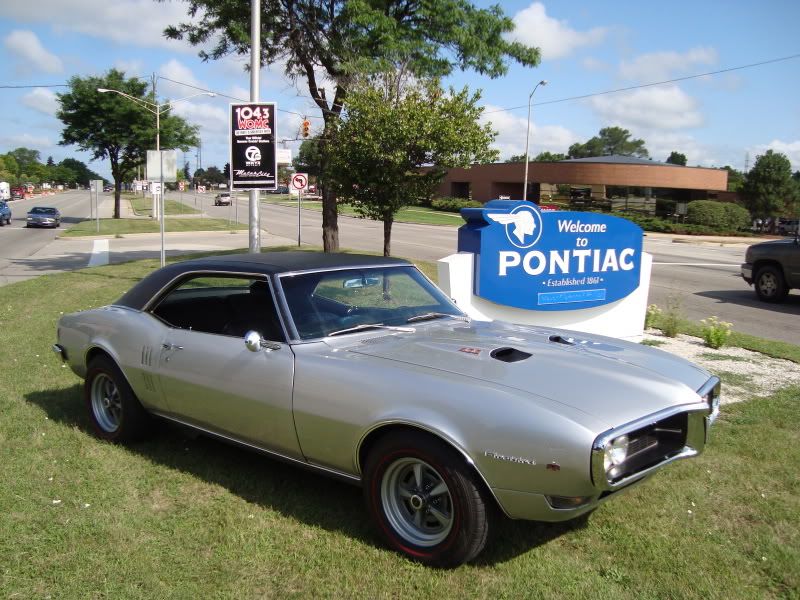
Ok, here is the write up that I wrote about vinyl top install. I think I will create a whole new thread and post a ton of pics to go with it:
Parts and materials: a) Correct vinyl Ok, here is my best attempt at offering up step by step instructions. If anyone else can think of something to add, by all means as I am no expert I am simply trying to help someone who may want to attempt their own installation.
top (pre-stitched seams) b) 3 quarts of BRAND name contact cement (NOT RUBBER CEMENT) 3M or Weldwood come to mind c) 1, 3" mini roller and mini roller pan (must be hard plastic or metal not the cheap light plastic ones that come with the roller as the contact cement will eat through them (don't ask). A pro shop/installer would use a spray gun to spray the contact cement, although this would make things a bit faster, rolling it on works perfectly fine.
Tools required: d) China marker/grease pencil (they come in white, black or red) pick a color that will show up clearly on your vehicles paint color. e) Masking tape f) Several brand new single edge razor blades (don't cheap out, buy brand name blades and have several of them handy) you will need to make several CLEAN cuts and the backing on the vinyl is tough on these blades. g) Tape measure h) Clean rags i) Paint thinner j) One full roll of wax paper (but your own, don't steal it from the Mrs. ask me how I know) k) Lint roller (one of those rubbery type is best (Mr. Sticky) (borrow but be sure to put it back from the Mrs.)
First, be sure to have a clean work area as you DO NOT want ANYTHING getting stuck to the felt side of the vinyl top. The smallest particle can & will be seen under the vinyl once glued to the roof.
Also, two additional helpers is a good idea. More than two might become more of a problem than anything. Let the "extra" helpers sit and drink your beer and tell you how you should be doing the installation.
1) Lay your vinyl on the floor with the felt side up. Use a measuring tape to find center on both front & back. Keep in mind the seams are often wider towards the back then they are the front so be sure to measure correctly as this is crucial. Once you mark the felt side of the vinyl top with a china marker at the front & back locations use a straight edge to connect the two marks using the china marker.
Now that you have a center line on the backside of the vinyl you may want to roll the entire piece of vinyl with a lint roller to remove any and or all specks of dust, lint, sand etc.
2) At this point you should have all your trim moldings off the car (on a 66-67 "A"-body you will need all moldings off the rear window and only the top pieces off the front window) and also the gutter trim (some people install the vinyl leaving the gutter trim on the car, cut the vinyl and tuck in the gutter meeting the trim piece. I did my 68 Firebird this way and have seen shops do them this way. Bottom line is they vinyl will shrink eventually and the first place you will see it is here.
Also, now is the time to trace your vinyl top trim moldings onto the body of the car. Trace them on both sides of the trim piece (top and bottom) so you can clearly see them on the paint. Don't worry, China markers wipe right off. This step is VERY important when it comes time to trim the vinyl near the end of the install.
If you remove the gutter trim and wrap the vinyl top down into and around the gutter lip your installation will look a thousand times nicer. However, removing and re-installing these trip pieces is not easy and usually results in dinging them up. It is said that the repops go on much easier and look better than originals only because they are made with a lighter material and have much more flexibility. All I can tell you is that it is next to impossible to get the originals back on without using a rubber mallet and you know what that means.
Once you measure and find center on the front & rear glass, put a heavy vertical mark on the masking tape that you had placed near the center of the glass. Putting a line on the tape gives you dead center. Using the masking tape on the glass gives you a surface to draw the center line on and is easy to see.
3) Ok, now that your layout is complete (center line drawn on the backside of the vinyl and vertical center lines marked on front & rear glass), the backside of the vinyl has been cleaned, wipe the roof of the car down with a strong degreaser ie: lacquer thinner to ensure the roof is completely clear of wax, cleaners and or polishes etc. Now is a good time to lay the vinyl over the roof of the car.
It is recommended to now let the vinyl top drape over the roof of the car for a couple of hours preferably outside in the direct sun. This will heat up the vinyl and allow it to stretch, become pliable and reduce wrinkles etc. Go have breakfast, brunch or lunch at this point. Keep in mind, it is still early morning at this point so it's too early for a beer.
4) Ok, so now you've had something to eat and vinyl has had some time to warm up the process is ready to begin. Hopefully your helpers are not hung over or worse already started drinking, you will need their help!
Standing on one side of the car fold the vinyl over towards the other side about 12" more than center. Your center line on the vinyl should be clearly visible. Now begin to roll contact cement on the vinyl. I recommend you go one roller width on each side of your center line. This will give you approx 6" strip of contact cement right down the center of the vinyl. Now do the same on the roof of the car. I recommend doing the vinyl first as it takes twice as long for the contact cement to dry on the vinyl than it does on roof (the metal is usually hot and tends to dry the contact cement fast).
If you have never worked with contact cement this may sound crazy, but, contact cement ONLY WORKS WHEN BOTH SURFACES ARE DRY TO THE TOUCH! Now remember, once the two pieces touch you are done. Typically once the two piece touch one another you can not get them apart. Especially with vinyl because if you do attempt to pull them apart, the vinyl stretches and you WILL end up with a wrinkle in that spot!
5) Now that the vinyl has a 6" strip of contact cement down the middle, and the roof does as well, now it is time to mate the two together. THIS IS THE MOST CRITICAL STEP IN THE ENTIRE PROCESS! Getting this first center section of the vinyl mated to the dead center of the roof will determine the rest of the installation. If you screw up here, there is no making it up somewhere else.
Now here is the key to getting the two lined up dead nuts. Before flipping the vinyl over to meet the roof tear off a piece of wax paper the entire length of the roof and let it drape down the front and rear glass. With the wax paper in place flip the vinyl over with the wax paper in between the vinyl and the roof. Wax paper will not stick to contact cement. Now line up the mark on the back of the vinyl with the marks on the front & rear glass on the masking tape. This ensure that you are centered from side to side. Now, if you are installing a vinyl top on a car where the vinyl comes down the "A" pillar (ie: Firebird) you will also need to ensure that the seems for the pieces that travel down the "A" pillar are within 2"-3" from the top of the roof line. In this installation on an "A"-body, the vinyl does not travel down the "A"-pillar arm so you do not need to worry about this.
IMPORTANT NOTE: DO NOT trim ANY excess vinyl off the material until AFTER THE ENTIRE GLUING process is 100% COMPLETE!. You need the access to use to pull and stretch the vinyl to ensure that it is tight and wrinkle free.
Ok, so now that you have the vinyl centered from side to side and front to back, hold the front of the vinyl down on the roof and have someone keep the vinyl from moving from side to side. Have another helper pull the wax paper from the back window area towards the rear bumper. Be sure this person pulls the wax paper NICE AND SLOW and have the other person in the back watching the marks on the vinyl and on the rear glass masking tape that they stay lined up with one another. As the wax paper puller person slowly pulls the wax paper out from between the vinyl and the roof, you, the installer must make sure that the vinyl is laying down smoothly on to the roof using your flat hand to smooth it along.
Once this process is complete and everything is lined up dead nuts front to back, side to side you are now on your way to a successful install. This step has set the job up to be really nice or really whacked.
6) Now it's a matter of flipping the vinyl back over towards the opposite side you are working on and laying down another 6" wide path of contact cement on the vinyl and on the roof. Let it dry to the touch (5-10 mins). Then put yet another NEW piece of wax paper on the roof, flip the vinyl over and repeat the pulling of the wax paper from the rear. I recommend always working from front to rear all the way through the install. That way you are pulling in one direction and keep the excess going towards the back.
7) Now I recommend going from side to side and here is my reasoning. By going from one side of the car to the other you can continually measure and watch the distance of the seams in the vinyl to the gutter. Remember, you are pulling and slightly stretching the vinyl towards the outside edge of the roof. If you finished one side without alternating you might pull one side tighter than the other and you could end up with one seam closer to the gutter than the other. This way you can monitor this and keep them the same.
8) I also recommend that you do not glue the front channel or rear window channel until the end. This gives you the ability to lift the vinyl ever so gently at the edges to maybe pull a bit tighter to give those edges a nice clean tight look.
9) Continue to work in the 6" strips until you reach the gutter. Let the vinyl hang over the edge of the gutter and wait to glue the face of the gutter as per step #8. Now you will need to work the rear sail panel area. Continue with the 6" strip theory as you really need to keep a handle on this area and your vinyl holder/puller/stretcher person is going to be critical at this point. This person needs to pull quite hard and also keep the vinyl from touching the roof. Let that person do the pulling and stretching and you do the "working" of the vinyl to the roof. I don't think you can effectively be the puller/stretcher and the smoother person. The third person is still the wax paper puller person.
IMPORTANT NOTE: During this sail panel area of the install, only work the outside surface of the sail panel. DO NOT attempt to wrap the vinyl around the backside of the "wing" or sail panel. Just the face for now.
10) Ok, now it's time to work the inside sail panel area. Coat the entire inside of this area of the roof and coat ALL of the excess vinyl for this area. This ensures that you will have enough of the vinyl coated and won't have to apply more contact cement and have to wait. You want to wrap this area in once clean attempt. Standing at the rear quarter panel have your stretcher person reach over the back end of the car from the opposite side and pull the vinyl towards them. Then you begin the wrap the sail panel as you are pulling the vinyl tight.
This area of the "A"-body is unique to the 66-67 and is also critical to get the top tight and looking nice as it should. I have seen vinyl tops installed by "professionals" who screw up the entire install in this area.
IMPORTANT NOTE: At some point during the wrapping of the sail panel area, you will need to make a relief cut in the vinyl directly in the rounded corner area of the back window. HOWEVER, DO NOT CUT TOO DEEP as you do not want to see ANY of the cut on the lip/bend in the corner itself. DO NOT OVER CUT as it will look like crap in the end.
11) Now that you have the flat areas of the vinyl glued down and things are looking good, I bet your thinking the hard part is over. Well, not really. The hard part in my opinion is the trimming and finishing. If you cut the vinyl too short ANYWHERE during the trimming phase, it will show and it will ruin an otherwise nice installation. So be careful and use new blades, switching them out OFTEN. You want really nice, clean cuts and no fuzzy crap sticking out from under and of the trim moldings etc.
12) Trimming the bottom edge where the vinyl top moldings attach. Again, DO NOT TRIM THE VINYL TOO SHORT AS IT WILL SHRINK OVER TIME. You want the vinyl to go down behind the vinyl top moldings about 3/4 of the way. This way as the vinyl shrinks over time it will not "pop" out from behind the moldings (I've seen this before and it looks terrible and there is NO way to fix it).
This is where the tracing of the moldings onto the body of the car comes into play. The marks allow you to use them as a guide and you can transfer the marks onto the vinyl so you can pull the vinyl away from the body as you ABSOLUTELY DO NOT WANT TO TRIM THE VINYL WHILE IT'S LAYING ON THE BODY!!!!!!!!!! If you score or cut into the clear coat while trimming the vinyl, you WILL get rusting and or bubbling in the paint I guarantee it. Ask me how I know. I scored the clear coat when installing the vinyl top on my 68 Firebird. Ten years later when the car was totaled, I pulled the vinyl back and in EVERY SINGLE LITTLE PLACE WHERE I SCORED THE CLEAR COAT, THERE WAS BUBBLING OF THE PAINT!
13) Trimming the sail panel area and installing the trim moldings. Now I know from the factory GM used the vinyl top molding clips. A long clip with one screw on one end. However, I simply used 4 spring style slide thingys. I have no clue what they are actually called, but they have a wire off the side of them and snap into the trim/molding and they have a threaded post sticking off the backside. I recommend these for several reasons. One, they are threaded and simply use a nut inside the trunk area. Two, they will allow the trim piece to slide back and forth, therefore the holes can be drilled anywhere.
Now what I did was use one of these clips on each "V" piece placed dead center of the longer part of the "V". Then I used 3 of them on the long side moldings, one on each end about 1" in from the very end, then one dead center between the ends ones. This pulls the ends nice and tight, pulls the seam of the "V" and the side piece together nice and tight as well. All in all this worked out VERY well.
IMPORTANT NOTE: If you decide to use the threaded stud type clip as I did, getting the nuts on the shaft of the clip closest to the rear quarter window IS NOT AN EASY TASK and does require the removal of the back side panels of the interior as you CAN NOT REACH THEM FROM INSIDE THE TRUNK! Also, the passenger side has a brace that runs near this area making it a bit more difficult than the driver's side. I'm sure this is why GM used the long style clips, even still I like the threaded shaft type better in my opinion mainly because you don't have that long clip up against the side of the car where water can lay just as it does on the door mirror mounting bracket.
14) Trimming and gluing the front and rear window channel. Now is the time to trim the vinyl at the front and rear. Be sure to leave enough to go down into the glass channels you do not want the vinyl to pop from behind the window trim. You can leave more than you might expect as those channels are deep. Be sure to put plenty of contact cement down into those channels and be sure the vinyl has plenty as well as it is crucial for these areas to hold tight. A well installed vinyl top will have sharp, crisp edges in these areas. Loose and or wrinkles in this area just kill the install if not done properly.
Well, that's about it. Clean up is easy and I wouldn't be concerned about contact cement that may have spilled and or dripped on the glass and or body of the car as it cleans of quite easily especially once it dries, it pretty much peels off and doesn't require any type of solvent to remove it.
Taking your time and lots of patience is critical to a successful installation. Personally, I am fairly picky when it comes to this type of thing. In my opinion a sloppy vinyl top install will absolutely ruin the look of any car. Another thing to be careful of and I have seen this with professional installs, when pulling the vinyl tight towards the outsides, be sure not to distort the seams. In other words, if you pull tighter in one area than another, the seam will have "s" curves in them opposed to a nice straight arch or straight line etc.
I hope folks find this helpful. I am sure there may be other ways and other ideas etc. that may work even better as I do not claim to be a pro nor do I claim to know what I am doing. All I do know is that I have now installed two tops on two different cars and having more time than money I have been able to save myself some money that could then be spent elsewhere on the car.
I looked at it like this, if the top costs $135 and I screw it up, well I am out $135. If I am able to install it myself and look decent I saved $300-500 on labor to have it done. I will admit that this top came out better than my first one and also came out better than I had hoped it would. Now that is something that doesn't happen often at least for me.
Now it’s Miller time. It’s five o’clock somewhere…