My research shows that synthetic supposedly keeps the block a little cooler. Any thoughts on synthetic use for FGFs (not slick 50) would be appreciated. :p
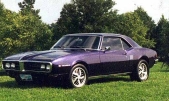
'68 428 HO M3 Monster, 4-on-the-floor! Need I say more?
I know a guy who used top work in one of the Buick labs here in Flint. About five years ago they performed a major oil test with 10 different brands of oil. The idea was to match the correct oil with the correct driving habits. But they also wanted to compare synthetic oils with petroleums. In a nutshell here's the most fascinating part of the study.
They took a brand new 3800 and filled it with 10W-30 Mobile One and and fired her up. Every 5,000 miles they'd stop the engine and change the oil filter. They'd only then top off what little drained into the grate. After 100,000 miles they had performed no complete oil changes, but dug a sample out of the oil pan and analzyed it. It had zero sign of breakdown.
i read a study which said 30 percent synth offers the same benefits as full synth. i dont know anything about cooling better, but it probably would a little.
there have been a lot of advances over the years to provide the synth with the same properties as dino-juice, so oil leaks aren't a problem, but if you have any leaks, and you switch to synth, i would not be surprised if they got worse. seals have gotten better over the years too...
also.. do not put in any oil additives with synth.. ever. it may not react well.
i've had good and bad experiences with synth oil, and have used different brands, and talked to reps from valvoline and mobile. i run valvoline or havoline. when my engine seats, i plan on running 2 quarts of valvoline synth/4 quarts havoline dino. (valvoline and havoline are the same oil)
I have used synthetics for years in all my cars - engine oil, trans fluid and gear oil. I changed the oil in the 400 convertible I just bought to synthetic the first weekend I had it.
I have used AMSOIL (was a dealer for years - not sure if I still am.) in the engine, trans and differentials.
I have also used Mobil 1 - you can't go wrong with either one.
Thanks again for the hood. Hope you were able to cool off those Bud Lights when you got home.
Scott has obviously done his research and knows he can mix these two types of oil. You must be very careful mixing two oils. I was sent to an oil class at a local college(GM sent me), one thing that was stressed was not to mix oils. It can cause catastrophic failure to the bearings. Jim
I used to be a TRUE believer in synthetic oil,but not anymore!In the last couple of years I have changed alot of differentials because the manufactures put this stuff in.It doesn`t matter the make Dodge,Chev,or Ford,I`ve done them all.The synthetic oil doesn`t stay on the gears,if you take the cover off a diff that has regular gear oil,it is still is on the gears.If you take the cover off a diff with synthetic,it`s like you washed the gears off.The point I`m getting is,everytime you take off,the bearings are dry,and can cause failure.By the way the diffs I had trouble with were NOT abused,all highway driven and had under 70,000 Miles.
True... I've used Amsoil for many years and have had great results. My daily driver has a hard 280K on it right now... my truck has well over 200 k, and was burning oil, and tired when I switched it over, and I got better gas mileage, better performance, and no more smoke?
And as far as leaks, there is a lot more to it than the rumors would have you believe. Changing to a quality full synth actually will prolong the life of your rubber seals and similar parts, and will to an extent make them playable again.
Yes it lubricates considerably better, so you get less friction, less heat, more performance, can run a much lighter weight (even more performance) and there are numerous other advantages.
I've always used Amsoil, as they have been in the synth business the longest, and have always been the best. Notice how just in the last 5 yrs or so... all the major brands are coming out with some type of synth? Hmmm? why now all of a sudden when Amsoil has been around for 25 years+?
Anyway, truly, it comes down to personal preference, and personal experience. I use it as it's always worked well me, costs me much less per year, keep my cars going for much longer... and so on...
I just have enough miles on the 455 to switch that over pretty soon. IF I ever get the time to get her out and drive her!
If you look into Synthetic oils, I do suggest Amsoil, Redline or Royal Purple. These are the ones that I hear consistantly as being the top dogs, and would be the only ones I'd trust to actually do anything for me. Anything less, and to me, you may as well stick with dyno juice...
John, Have you tried rerefined oil? Some don't like to use it because they think it is used oil but actually refined oil is better. There are no detergents,additives and such. I think you are a military man right? My father was in the air force for many years and all they used in those fighter jets is rerefined oil. The oil was cleaner, could stand higher temps, and could withstand those high RPM's those jet engines produced without foaming. Check it out it is just a thounght. Ohh yea the oil is also cheaper
Stephen
Maybe someday I will get this thing off the road to do a full restoration
Thanks all for comments, looks like I'll start off with synth oil this weekend, glad I asked about it. Tom, hope the hood fits well, it was great to meet you this weekend, and yes, the beers tasted just fine. I neglected to ask if you needed the 350 hood numbers, let me know if you were expecting them.
'68 428 HO M3 Monster, 4-on-the-floor! Need I say more?
If you can reduce friction with conventional motor oil, or synthetic, or either one with an additive, you will reduce engine temps. Tight tolerances also increase engine temps. Incorrect timing, carb jetting and poor cooling system efficiency can also increase temperatures.
Say your motor is 100% efficient in the tolerance, timing, cooling and jetting area and your car runs 180 degrees in 100 degree temps. After 10 years of running the car and not thoroughly overhauling EVERYTHING, you will lose efficiency percentages in every category. Say you lose 20% across the board which increases temps by 36-40 degrees. Motor now runs at 215-220 degrees.
However...
If you build the motor correctly and have correct tolerances and have thoroughly checked the motor over well, there should be no reason to specifically use brand X to reduce oil temps. If that is the case, buy an oil cooler with a fan.
Attempting to cure an overheating engine can only be accomplished by properly building and tuning the aspects of the motor that will promote overheating. You get to the root of the problem and you will cure your overheating without resorting in spending $200 in additives.
If it bothers you that much, have the carb rebuilt and distributor recurved, then see what your car is running. (I say this assuming you have tried changing T-stats timing and jetting already).
If you do not want to work on the timing and carb, I suggest buying an oil cooler and fan and removing trans lines from radiator and buying a trans cooler. I do not recommend buying more parts to correct a problem, rather correct the problem(s) that is causing the issue. If you do not address the root of the problem and continue to band aid, you will really be in trouble.
Trans cooler alone with a 4 core will reduce temps by 10-15 degrees.
Oil cooler/fan and trans cooler can decrease temps by 30 degrees.
Again, I do not approve of band aid methodology and do not promote quick fixes, but if so, need be.
Si Vis Pacem Parabellum
1967 Starlight black PMD Engineering 400 Auto 1968 Alpine Blue 400 4 speed 1968 Verdoro Green 400 HO 4 speed 2013 1LE 2SS/RS Inferno Orange Camaro.
One of the car mags had a test where they replace all the oils with I think royal purple? Not sure if thats right. They did a before and after dyno and gained 10hp. This was the engine, tranny and rearend oil. It also cost them over a 100 bucks to do that.
I have a 85 chevy that I have used every aftermarket additive there is, starting at 130,000 miles and it still runs good now even though it is over 230,000 miles
My first 455 droped 15 deg when I added, dare I say it, Slick 50.
I can also see why you wouldn't want to use it in a rear end. The heavy weight oil is suppose to stick to the gears. The syth oil, I would think, would be more apt to slide off?
One last thought. Some where on the Classical pontiact site there was a link to a oil test on a fleet of taxi cabs were they test a few diffrent brands, and changed some at 3000 mile and others at 6000 mile. When they tore the engines apart there was no diffrence in ware between them. Don't remeber if they test any synthetics in that test.
One thing to remember w the taxi cab test though is that they get 6K mi fairly quick, no time for oil to get 'old'....depending on driving habits change oil differently....town or freeway etc... I change ev. 6 mo. in my bird , never get more than 2K in 6 mo., in my old Volvo I changed ev. 5K, my Caddy goes about 5 - 6 K before change...the 88 Landcruiser we use we change ev 3K....
I was told once that as long as the oil rating on the can was the same as the owners man. called for you'd be alright.
I had a 89' buick lesabre w/the 3800 engine and I bought it with 172,000 miles and it ran really good and in the next 4 yrs. I ran it to 320,000 all highway and it still ran well, when I sold it here a couple of months ago. I never changed the oil myself I always had it done at wal-mart using whatever they had on special. Although I'd never let them change the oil in my bird.


![[Linked Image from hosting.photobucket.com]](https://hosting.photobucket.com/albums/ss328/alvey_john/john-alvey-1968-Firebird-oct2012-2.jpg)





![[Linked Image]](http://www.oocities.org/~lobird/images/liukkonen1.jpg)


