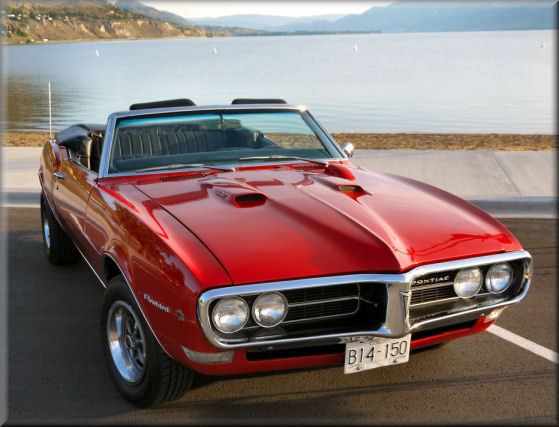
So, I had a great day after a very stressful day. Yesterday I spent all day trying to figure out why when I hooked up my alternator the inline fuse at the battery would trip. I figured it out though the polarity (+,-) on the battery was marked backwards from the factory. So I finally got my engine running and am wondering what grade of fuel to run in it? For the time being I have 89 octane, But I heard I should be running 93? The engine is out of a 69 GTO, YS block, #16 heads, as far as I know it's all stock except for a few pistons (factory bore) and possibly the cam is different. It runs VERY strong right now, and don't want to hurt it's performance.
Those motors required the premium of the day, which was 99+ octane(?). I wouldn't ever put less than premium in it. And if you're going to thrash it, maybe add some octane boost.
My YS code 389 runs OK on 93 octane for normal driving but when I punch it, I get knocking at WOT at high RPM's. The one time I put 87 octane in (after I ran out of gas), the engine wouldn't shut off when I got to the gas station (dieseling).
I used to run the highest unleaded 92-93 and add some lead substitute to protect my original valves and seats. It would ping with any heavy throttle so now I use the Maxlead2000 BobS refers to. The car enjoys the additional octane and feel better having the real stuff (lead) back protecting the engine.
I think the highest octane available should be always be used. Does anyone drive their 'bird that much that the extra cost of premium would be significant?
I'm a hobbyist. Not a professional. Don't be hatin'!
My previous location was in the Texas Panhandle and that's where I had my 455 engine built. Texas has the lowest premium octane ratings I have ever seen - 90. So that's what I told my builder I wanted my car to run on.
We have 91 octane without ethanol here in OK and that makes me happy.
2012 Mustang Boss 302 #1918, Competition Orange. FGF replacement 2006 Mustang V6 Pony, Vista Blue. Factory ordered. 2019 BMW X3 (Titled to the wife, but I'm always driving it for her. So I'm claiming it) Old projects, gone but not forgotten: 1967 FB 400, original CA car. After 22 years of work, trashed by the guy who was supposed to paint it. I had to sell it. 1980 Turbo Trans Am 1970 Mustang fastback, 351C 4Bbl, auto 1988 Mustang GT, 5 speed 1983 F-150 4x4, built 302 1994 Chevy K2500 HD 4x4, 454 TBI
I drive my 400 on "plus" gas, sometimes on "regular"....heads/engine etc combo = Compr. ratio is determining what you can use...I get CR at 9.2-9.3.....
Our only choice up here in the corn belt is an ethanol blend. (State mandated years ago)
91 octane for me.
I used to be indecisive. Now I'm not sure. I feel like I am diagonally parked in a parallel universe. 1968 400 convertible (Scarlet) 1976 T/A - 455 LE (No Burt) 1976 T/A New baby, starting full restoration. 1968 350 - 4 speed 'vert - 400 clone (the Beast!) 1968 350 convertible - Wife's car now- 400 clone (Aleutian Blue) (Blue Angel) 2008 Durango - DD 2008 GXP - New one from NH is AWESOME! 2017 Durango Citadel - Modern is nice! HEMI is amazing! 1998 Silverado Z71 - Father-daughter project 1968 400 coupe - R/A clone (Blue Pearl) (sold) 1967 326 convertible - Sold 1980 T/A SE Bandit - Sold
That ethanol blend stuff kind of scares me. The last time I was over in Iowa I noticed the different blends. But I don't have to worry about driving it for months now, since I shattered my left heel monday.
what is ms100? we can still get 93 octain down here. but 90 percent of the stations have changed to the ethenal pi$$. i'm scared to use it even though i have to mix my fuel to stop detonation. doesn't ethenal have a higher octain rating? are there any advantages to it? or will it hurt anything?
MS100 is 100% Moonshine. I saw the Duke boys running it in the General Lee once.
Ethanol doesn't have an octane rating the same way gasoline does. There's no octane in it. Converting a car to run on Ethanol (or methanol) requires a complete change to the fuel delivery system.
Alcohols act differently than gasoline in an engine for a variety of reasons. It's really not fair to compare the two since they accomplish the same thing in a different manner.
Almost all gasolines have some amount of ethanol in them. As little as 10% or as much as 85%. It will eat most natural fuel lines made from rubber. Newer cars use synthetic rubber and other elastomers in places where there is going to be a significant concentration of alcohol.