I know some systems pressurize the fuel tank. My 68 has a fairly new stock gas cap and it was "moaning" after driving for 15 minutes. Took me a min to figure out what the noise was. Turned gas cap(carefully) and whoosh! seemed to be an inordinate amount of pressure. I could also smell gas while I was driving. First thing I did when I stopped was look underneath for a leak. none. is the cap supposed to be vented or not? the tank has both the fuel line and vent line attached to the fuel pump.
Not 100% on 68s, but think you should be venting thru the vent line....stopped up?
I have a new tank on my 69, no vent line, but have a vented cap....they only work 'one way; though , let air in.... if you dont vent the tank and have a full tank and parked in hot weather, you can blow your sending unit gasket....then you`ll smell gas in your garage, dont ask how I know!
anyhow...I added a tiny hole in my vented cap , for relief of pressure....drilled from one side ,a hole less than 1/16"...and then from the other side, not aligned...and made a small slit in the rubber gasket to allow the air to the 'pocket'...have not had any problems since...the reason for not aligning holes, just to make sure nothing spills out on heavy acceleration w full tank....
My tank is new as well. I assumed the second line between tank and pump was return. Bought what cap Autozone said was correct for the bird. Not vented. How did it pressurize that much in 15 minutes on a nearly half full tank? Should I use a vented cap?
I don't have a lot of faith in Autozone's computers for our cars. When I went into one for a thermostat gasket a while back they told me that Pontiac didn't offer a 400 engine on Firebirds in 1968. I told them that that was interesting and asked for one for a 350.
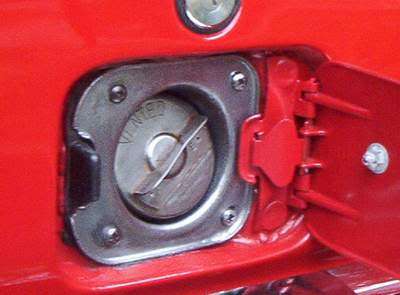
heres a photo of the gas cap of my 69'. i don't think its original but its old for sure, atleast 25 years old. it sais "Vacuum Pressure" on it so i'm assuming it works the two ways, or it did when it was new. i had a boat once that the tank was not vented and after a while of driving, the engine would stop running because it was starved for gas, as soon as i opened the gas cap, it would do what your saying "whoosh" and the vacuum inside the tank would relieve. i guess drawing all that fuel out of the tank when its' not vented, creates that huge vacuum inside the tank. as for pressure in the tank, like the others are saying, if it sits and gets hot in the sun for example, the pressure from the vapor inside the tank builds and has nowhere to go, then it finds the weak spot (sender gasket, etc...).. i would say you need it vented for sure for both vacuum and pressure, but thats just my 2cents. i like the idea of putting a small hole in the cap, then you have the vacuum/pressure vent just to be sure.
thats not what my vented cap looks like on my 69.... its no color, has twisty grip, says "vented" on it..no pic here right now. It looks alot more like Jims above....not 100% like it but close