I'm replacing some rusty floor pan sections and got tired of lying on my back under the car with no room to work - especially when wearing a welding helmet or face shield.
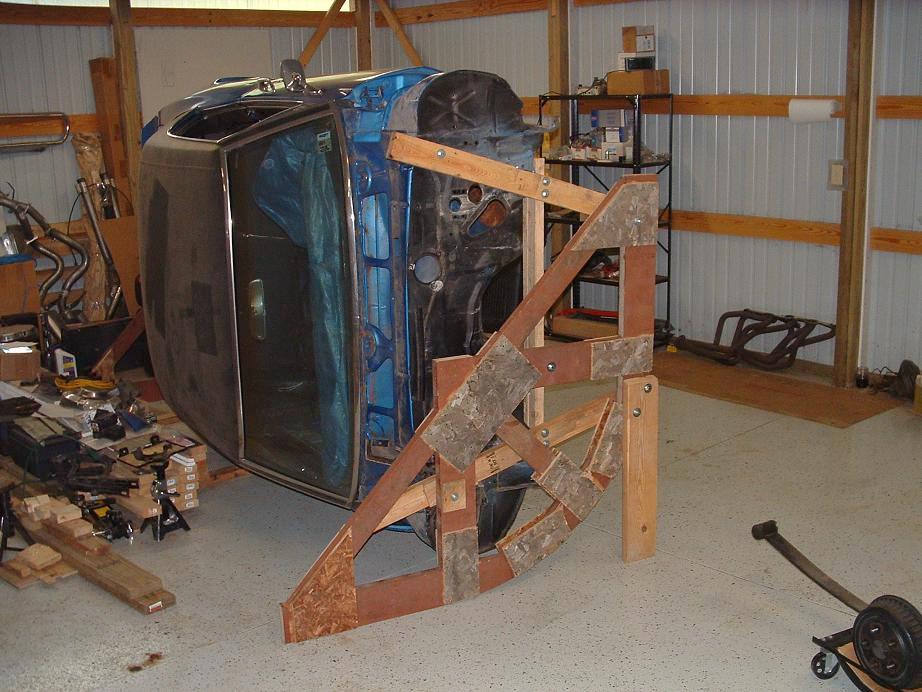
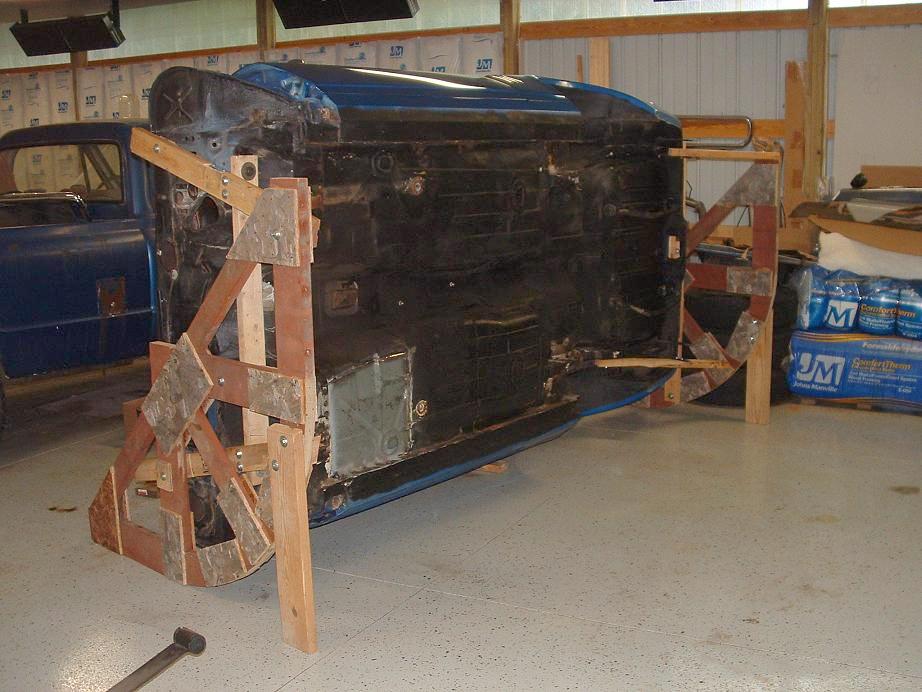
I built this "roll-tisserie" loosely based on other pictures I found online. I rolled the body up on it's side and now have great access to the underside! I spend maybe $10 - $15 on bolts, washers, nuts, lag screws, and nails. The lumber was all scraps and leftover boards from an old deck that I had on hand.
I used to be indecisive. Now I'm not sure. I feel like I am diagonally parked in a parallel universe. 1968 400 convertible (Scarlet) 1976 T/A - 455 LE (No Burt) 1976 T/A New baby, starting full restoration. 1968 350 - 4 speed 'vert - 400 clone (the Beast!) 1968 350 convertible - Wife's car now- 400 clone (Aleutian Blue) (Blue Angel) 2008 Durango - DD 2008 GXP - New one from NH is AWESOME! 2017 Durango Citadel - Modern is nice! HEMI is amazing! 1998 Silverado Z71 - Father-daughter project 1968 400 coupe - R/A clone (Blue Pearl) (sold) 1967 326 convertible - Sold 1980 T/A SE Bandit - Sold
I don't have any documentation / plans since I made it up as I went along. I can post some more pictures and some measurements.
As far as stability, I can put my shoulder into it and push hard in any direction and it feels real solid. That said, the lumber does have a little spring to it. If I push/pull rapidly parallel to the body length, I can get the whole thing to oscillate a bit. There is no creaking or scary noises, and it stops shaking as soon as I stop.
I had a request for more details on how I built the "roll-tisserie".
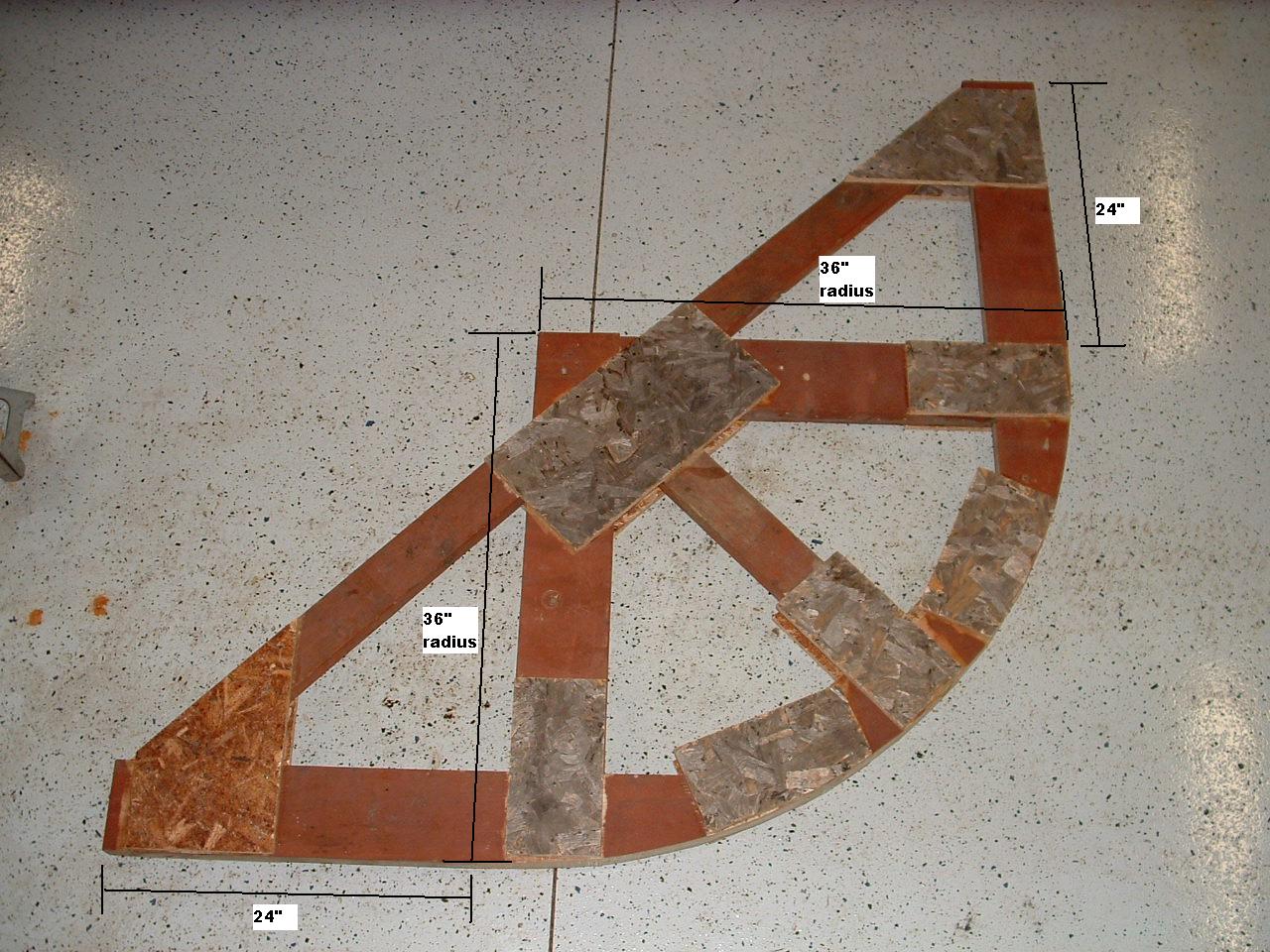
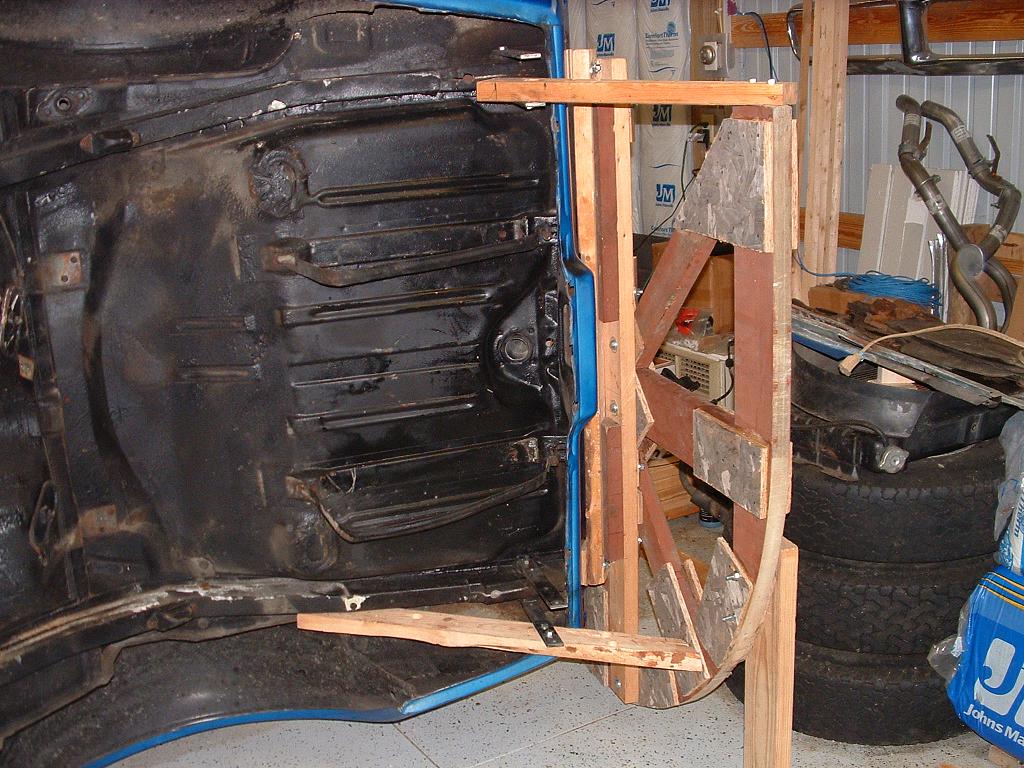
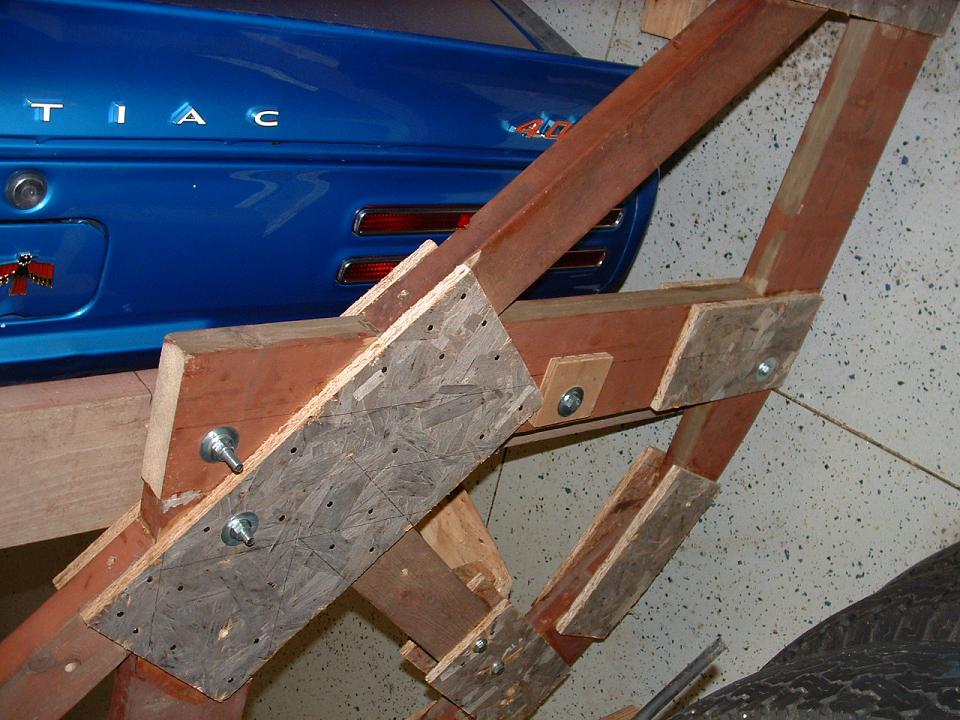
The front and rear arcs are identical. I used a combination of 2x6 and 2x4 lumber and 1/2 inch OSB for the gusset plates. There are plates on both sides of each joint, attached with glue and a bunch of nails. The curve was roughed out on a band saw and smoothed using a 60 grit flap disk in an angle grinder. The curve is large enough that it really doesn't need to be all that smooth.
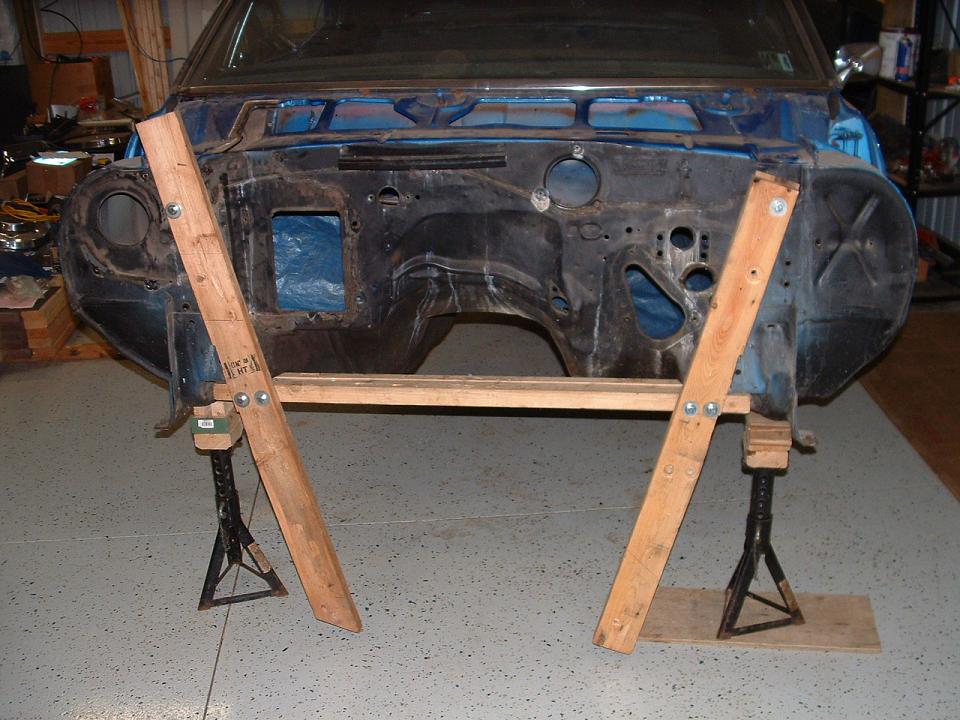
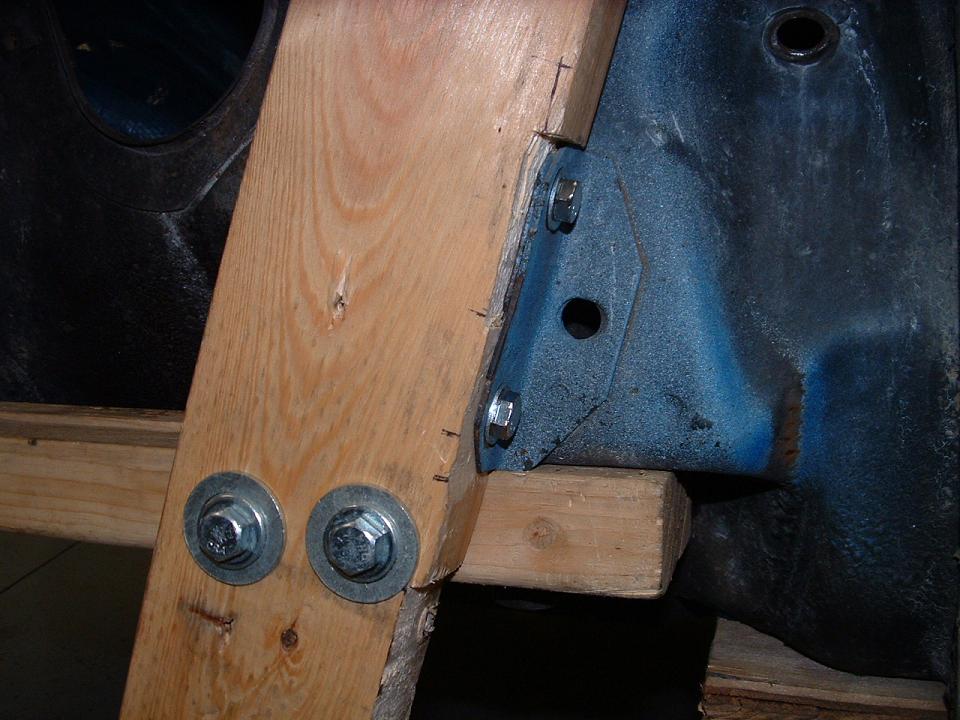
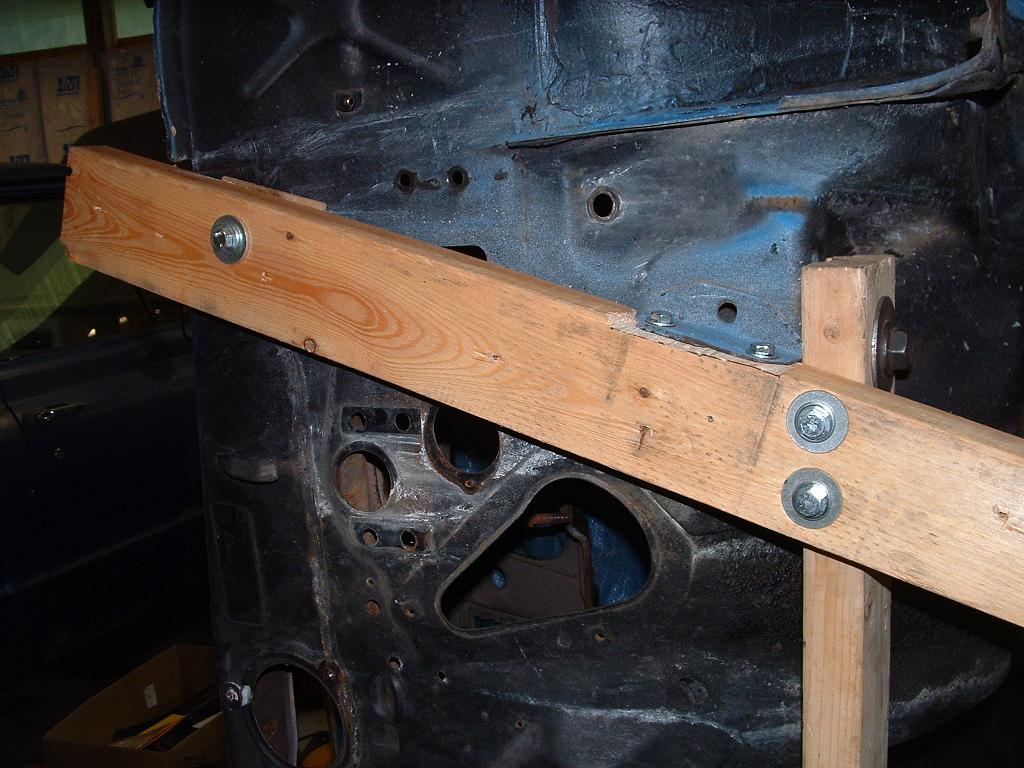
The front mounting frame is made up of 3 2x4s. One horizontal piece is bolted between the subframe mounts, and two mostly vertical pieces are bolted to the fender mount hole at the top, to the inner fender support bracket, and to the horizontal 2x4. The angle of those two pieces doesn't quite match the angle of the inner fender support bracket, so the 2x4 is notched a bit so that it will line up over the upper fender mount hole. The front arc is then bolted to the front mounting frame. I used bolts and large washers where I could, but in some places there wasn't access to the back side to put a nut on the bolt, so I did use lag screws in a few places. I used 1/2 plywood and small 2x4 blocks as spacers where needed.
Make sure the arc is mounted far enough to the side to extend beyond the body of the car at all points. Sight between the front and rear arcs when both are in place and make sure the body isn't sticking out anywhere. I think I put the center of the arc 4 inches over from the center of the car (towards the passenger side in my case). This also means that the car will want to roll back to its horizontal position when you tip it.
The rear mount was trickier than the front. Again, I made it up as I went along and had to change it around a few times before I got a setup that I liked.
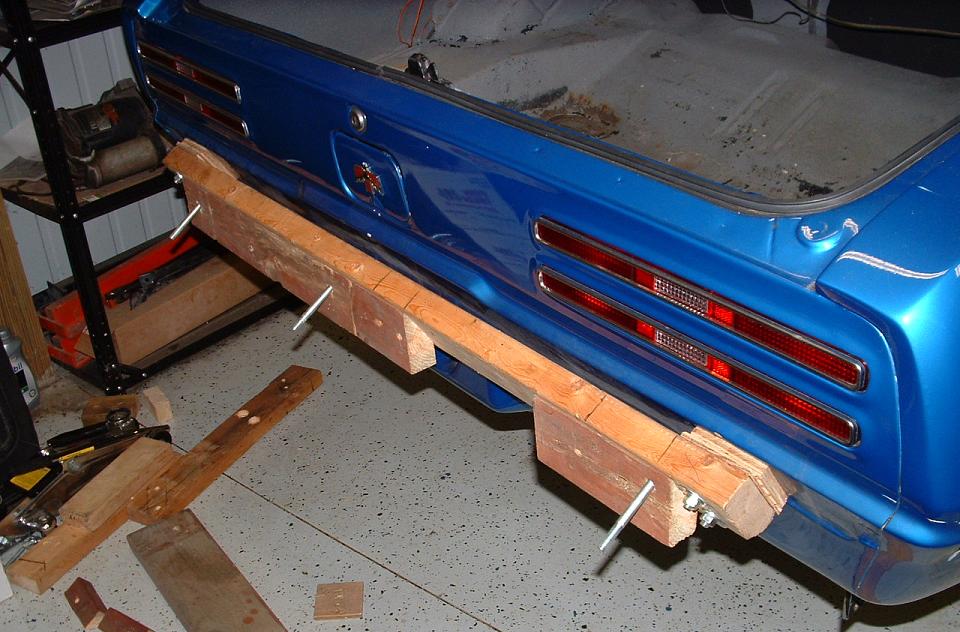
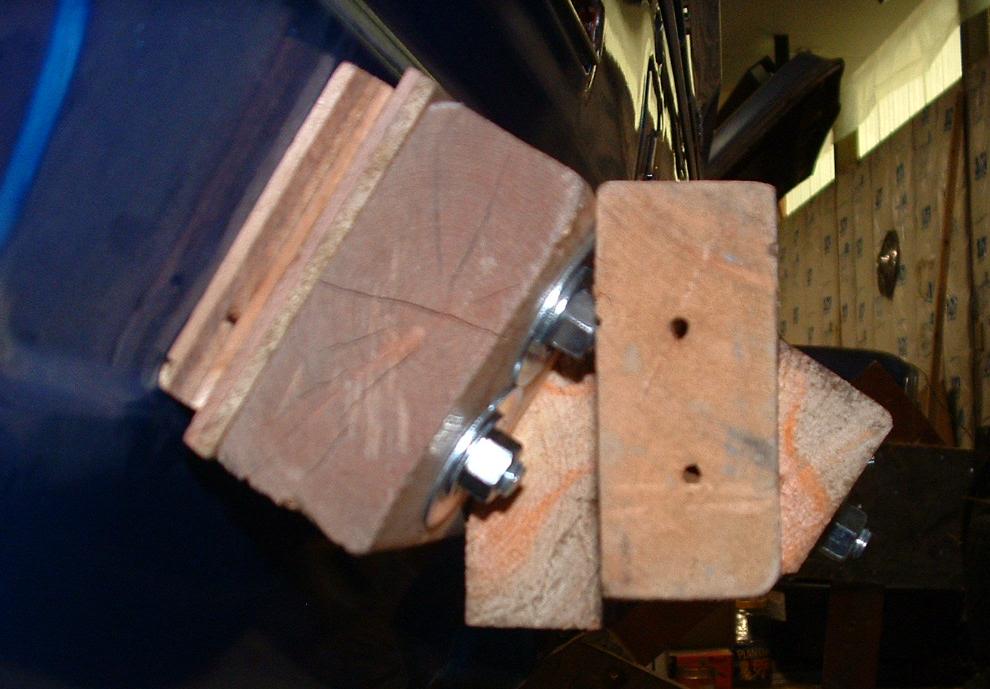
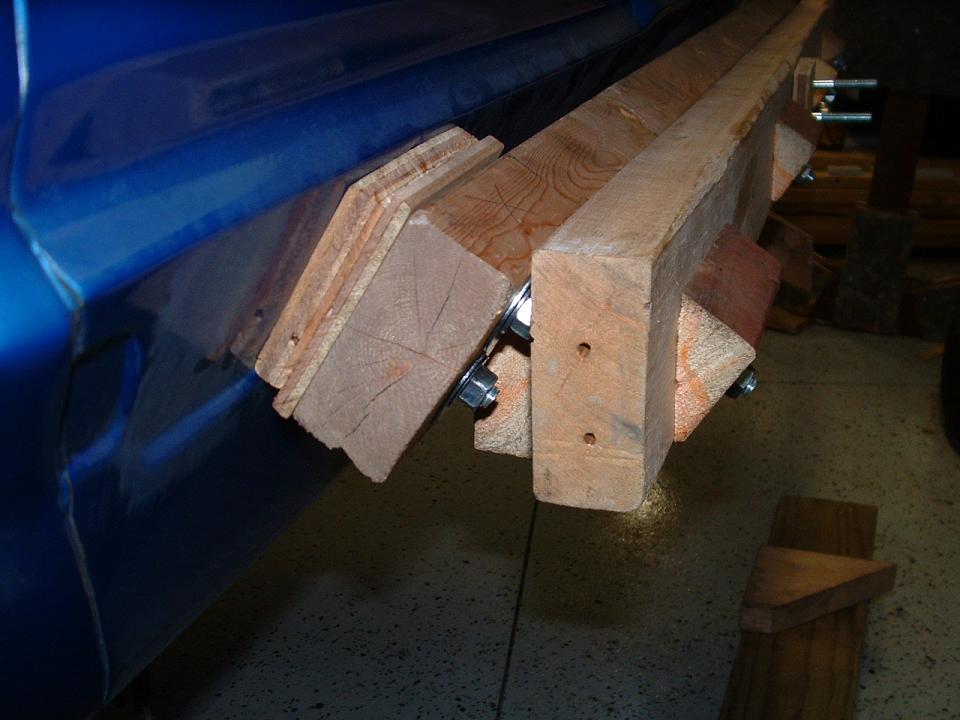
I used the bumper mounting holes to mount a 2x4 across the body. I used plywood spacers to get the board to clear the body near the center. Since the board mounted to the body doesn't have a vertical face, I cut a 2x4 into a wedge and used the wedge between the 2x4 and a 2x6 piece. The wedge holds the 2x6 so that it's face is vertical. (Some pictures show a 2x4 board instead of a 2x6 - I later changed it to a 2x6 to get a larger space to bolt the arc into it.) Long bolts sandwich the 3 pieces together, along with the cut-off piece of the wedge over the end of each bolt so that the washer and nut clamp down on a parallel surface. Does that make sense? Hopefully the pictures make it clearer. I also counterbored a recess for the head of each bolt and its washer so that the bolt head wouldn't stick out and risk damaging the paint or body.
The rear arc is then bolted to the vertical face 2x6. I put the bolts through from behind first, before bolting the wedged sandwich together for the final time. The arc then slides over the bolts and the washers and nuts are put on. For additional stability, I ran diagonal braces between the bottom of the arc and the frame rail. I think I attached the brace to the exhaust hanger holes in the frame rail. My car has a set of those "jack-up" rear shackles and it was easy to bolt the diagonal brace to those too.
Like the front arc, I positioned the center pivot point about 4 inches to the passenger side. It should match what ever you chose for the front.
Let me know if more detail or pictures are needed. The car is still on the roll-tisserie so I should be able to take more pictures or measurements.
Awesome job! Just throw those small tripod jack stands away when you're done. They are unstable. I had a friend almost die when a pair tipped over on him.
Just wait until you see those wagon wheels he has picked out for when he is done.
Can't wait for the first ride this summer...
I used to be indecisive. Now I'm not sure. I feel like I am diagonally parked in a parallel universe. 1968 400 convertible (Scarlet) 1976 T/A - 455 LE (No Burt) 1976 T/A New baby, starting full restoration. 1968 350 - 4 speed 'vert - 400 clone (the Beast!) 1968 350 convertible - Wife's car now- 400 clone (Aleutian Blue) (Blue Angel) 2008 Durango - DD 2008 GXP - New one from NH is AWESOME! 2017 Durango Citadel - Modern is nice! HEMI is amazing! 1998 Silverado Z71 - Father-daughter project 1968 400 coupe - R/A clone (Blue Pearl) (sold) 1967 326 convertible - Sold 1980 T/A SE Bandit - Sold








![[Linked Image]](http://www.oocities.org/~lobird/images/liukkonen1.jpg)