Interesting, I've always been a medium climate 10-30 guy. You saying 10-40 is better in a region having 30-100 degrees average per year, and it leaks less than 30W?
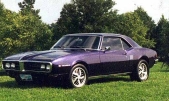
'68 428 HO M3 Monster, 4-on-the-floor! Need I say more?
I'm definitely saying 10-40 leaks less than 10-30 in my >100,000 mile engine. Leak rate drops from ~1.5 qt/1000 miles to about half that.
I would think the 40W would be better if you regularly drive in 100 degree weather. The higher viscosity is supposed to maintain lubrication at higher engine temperatures.
whatever you do don't add synthetic oil. once a motor has used standard oil in it, it will collect varnish on the internal walls. once you add synthetic oil, the ester in the synthetic oil will release the varnish into the motor. also it can cause the seals and gaskets to shrink.
The varnish part I had never heard of. If you were using a non detergent oil and switched to a detergent oil, synthetic or not, it could do that.
With the seals, if your engine is already leaking, it could get worse with synthetic. I dont really know why, but have experienced it. Swapped back to Dino juice and it quit leaving puddles.
If it is an older engine, the seals are designed to swell slightly with conventional oil. Early synthetics would not do this, so they leaked. Synth oil now is supposed to have additives to correct this, and modern seals are better too.
As far as which oil to break in an engine with, it depends on who you talk to.
I would run SAE30 or 10W40 at summertime temps. Probably stick with 10w40 the rest of the time, or 5-10w30 on a fresh engine.
My 2 cents: Synthetic blows conventional out of the water, the sooner you use it (after break-in) the better off you are for sure. Too many wifes tales still floating around about synthetic. I use Amsoil which has extened drains of 25k miles for the oil and 1/2 that for the filter. I also use filtermag.
Now if you have a leaky bucket of bolts and switch to synthetic then yes it will probably leak even worse, but if your engine is in good shape then you should have no problems. At 140k miles on my '93 DOHC Grand Am I switched to amsoil. I did a oil change of 1/2 amsoil and 1/2 conventional for 1000 miles then switched to all amsoil. The 1/2 & 1/2 was to slowly clean out any varnish. I did this a year ago and have had no problems. I wish I had switch a long time ago. Modern chemistry is a powerful thing.
I have an un-riced 2000 Civic Si with 72K miles. Great engine but in cold weather there is some bearing or "something" that squeals on startup. It'll be noisy for around 15 secs. It's enough to make a car guy cringe.
Even though I change my oil regularly I figured I'd try a full synthetic instead of 5W30 Penzoil dino oil. What a difference! This whole winter the "thingie" hasn't squealed once. Not even a little.
I'm sold on synthetic. I just hope I haven't created any seal issues. So far, no drips on the driveway.
Howdy HOT OHC did I read correct that you get 25,000 miles before you change oil. That sure does make it more appealing. I could not justify price with 5,000 miles oil changes. But I do like synthetic. CLEAN CLEAN CLEAN
</font><blockquote><font size="1" face="Verdana, Helvetica, sans-serif">quote:</font><hr /><font size="2" face="Verdana, Helvetica, sans-serif"> HOT OHC did I read correct that you get 25,000 miles before you change oil. </font><hr /></blockquote><font size="2" face="Verdana, Helvetica, sans-serif">That is correct Mr. Cowboy Click HERE to read all about it. Tons of info. Towards the bottom of the page is the SERVICE LIFE info.


![[Linked Image from hosting.photobucket.com]](https://hosting.photobucket.com/albums/ss328/alvey_john/john-alvey-1968-Firebird-oct2012-2.jpg)



 Click
Click 


