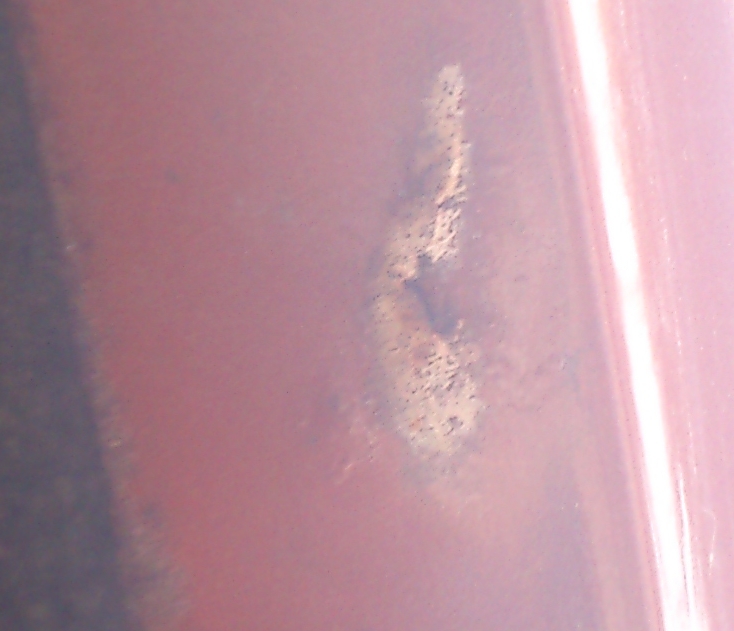
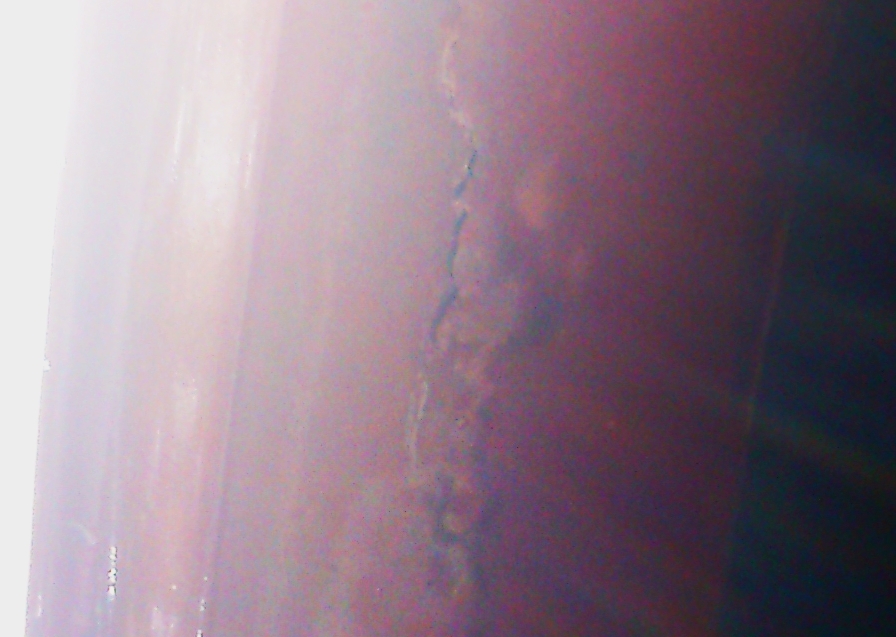
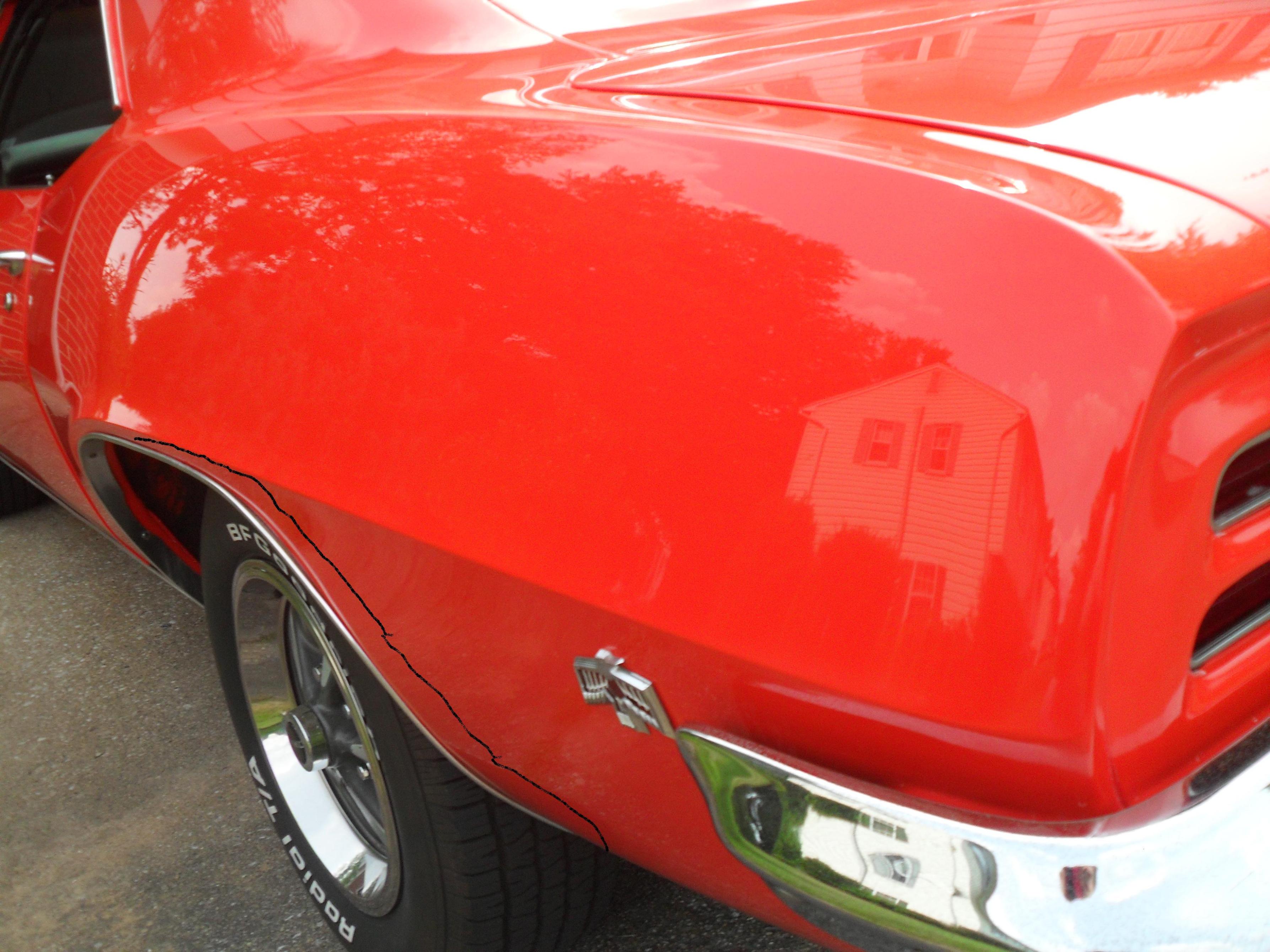
There are some areas on my FB where there is some surface rust, e.g the rear driver-side wheel arch - on the outside horizontal sheet the paint has some cracks where rust infiltrated it. The sheet is solid and the rust is definitely not from inside. At first I thought about removing the paint on these spots, seal sheet and repaint it since I was afraid that this process continues destroying the sheet. Again I was told this: Since the system of the current respray is unknown and most probably not available anymore a spot repaint is most probably visible and may be not compatible. Furthermore, the rust hasn't been severe in this area. Recommendation - preserve current state by a suitable product. Does this make sense and - if so - what product do you use?
Hi, and nice car. Yes your information makes sense. I loaded pics of it when it was still for sale. I can't see the rust in the pics but usually what I recommend is to get some of the closest colour toutchup that you can. Take the corner of a razor blade to the rust spot itself and scratch away just the rust until its shiny. Dab etch primer into the spot with a paper clip or something similar, allow it to dry and dab paint into the spots with a paper clip as well. avoid using brushes as this usually makes a mess. Keep toutchups as small as possible. Best of luck. ( was not meaning to creep anyone by saving the pics, you just happen to have the same body colour and interior that my 68 400 car came with.)
Depends on if your looking for a fast fix / cover up or making sure its solid for years. Any place you have rust should be taken down to bare metal. Prep with a rust preventative and then paint to match. Most paint shops have a hand held unit that matches the color paint and even if your is faded should be fine. People worry all the time that the older paint can not be matched, but remember after a year your hood and lower rockers no longer match because they fade different. Its all about blending and what you think its worth investing to fix now rather then later.
I know about the tool to analyze the paint. This is actually not my concern. Though there might be a slight visual problem. The analysis yields matching percentages of existing paint formulas. If the best match is below 90% than there is a visual difference. But what if there's currently laquer paint sprayed on the car. Laquer isn't available anymore only waterbased paints requiring clear coat. So if paint only parts what is with the area where old and new paint sytem come togther? At the moment I consider ising Owatrol Oil that creeps in the rust areas and reacts with rust resulting in a coat, which has to be renewed once a year.
I suspect that it's from the inside. Before you spend any money on anything dig into the rust. I would use an ice pick, awl, or similar tool and press firmly. If it's solid, the metal will not give. Keep in mind that if the rust is on the backside of the panel, you will punch a hole in the car.
The point is that if you punch a hole in it, you were already screwed. You just didn't know it.
If so, you have two options. The correct way is metal fabrication. If it's a small pinhole, be prepared to amputate as much as 30 cm from the pinhole. Pinholes are bad news because it's usually more than a pinhole.
The other way is to simply fill the hole and touch up or spot paint. This is a butcher job. If that's what you have do do, do it. What the hell else are you going to do--pay someone $2k to fabricte a patch?
If you need to butcher it, don't bother with all the weasel piss because you are pissing in the wind; simply, fill the hole, spot color it, and your done until it shows up again. If it shows up again, repeat the process.
If you are hesitant at poking a hole in your car, can you post a decent close up picture of the area. I'm not an appraiser, but I can read metal lamf, something an appraiser cannot do. I could probabaly tell whether it's surface or internal rust by just seeing a decent picture.
Dig at it with an ice pick or awl, and twist it some. If the metal is solid, the best you can do is mar the paint. But that isn’t going to happen; it’s going to punch through. Remember, I’m the only one who is trying to talk you out of hacking up your car, so I’m not praying for rust! I think you ought to touch it up and call it done.
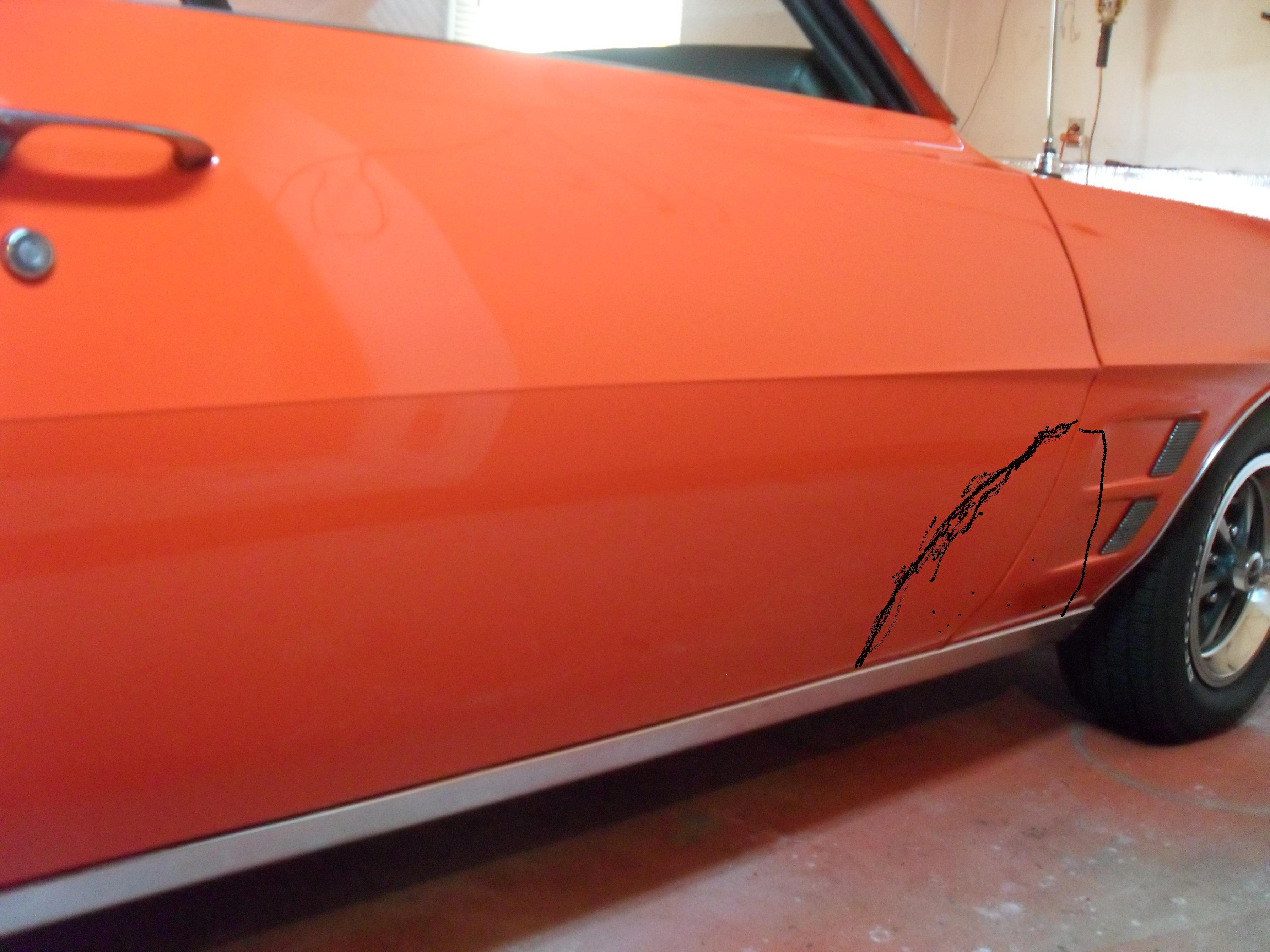
People don’t understand what they are getting into when they buy these cars. I did my best in ‘paint’ to mark out the patched areas on my fender/door. (as you can see, I’m better at ‘paint’ when it come to cars.)
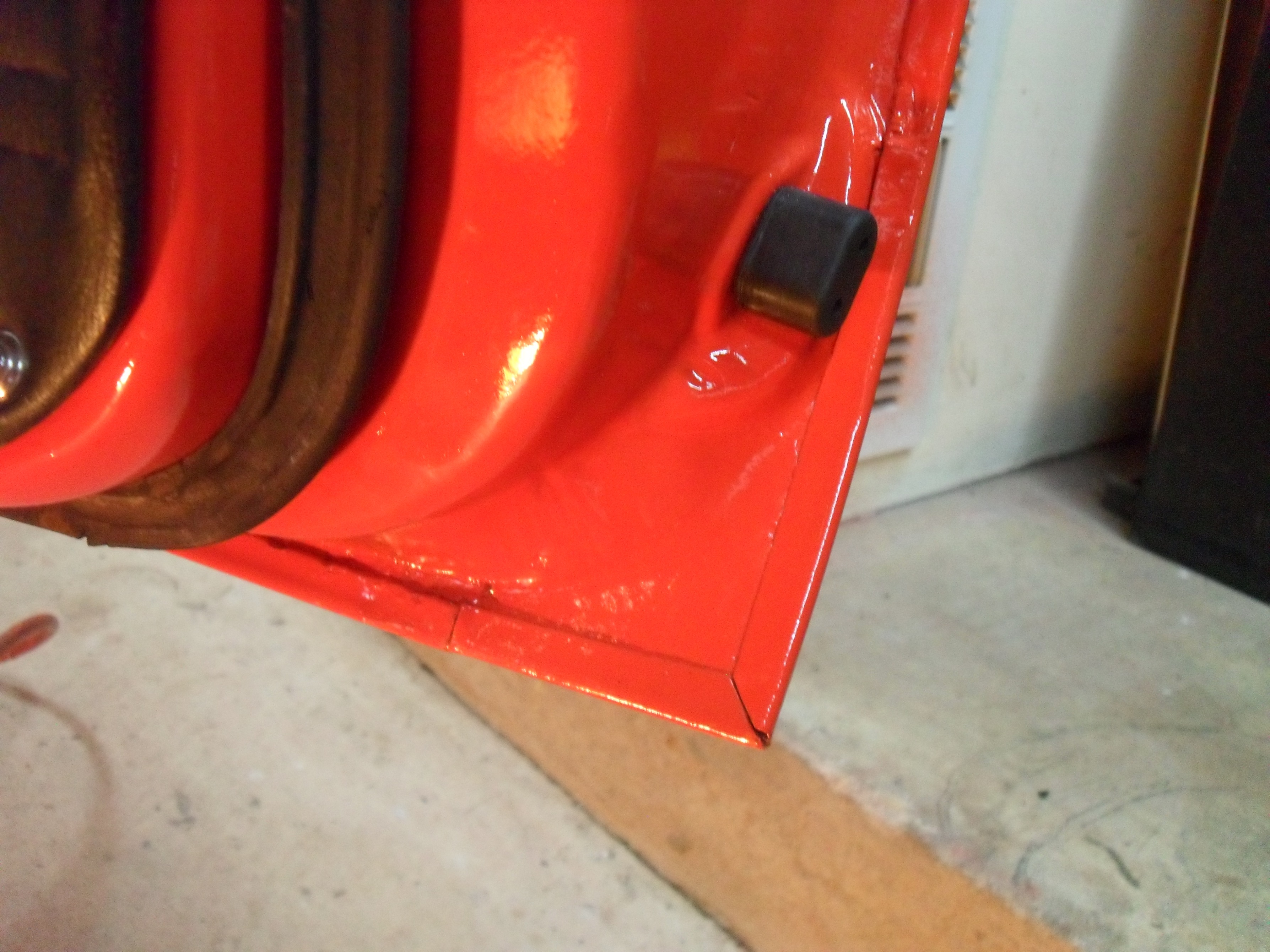
The small black specks are a good example of the amount of visible rust, looking about the same as on your car, the reason people were shocked when they saw the size of holes I cut in the doors and fenders I included a backside shot of a patch on the bottom back. That rust wasn’t even showing, but since I was already hacking and burning, it wasn’t any extra work to patch that spot. I decided to let it stand as a visible patch. From the investment aspect, a visible patch allows the person to see exactly what was done. When I see something like that finished out, I automatically assume that it’s a huge chunk of bondo covering a rust hole. Also, my doors are in the top 1% of any remaining doors, so a patch like that isn’t something that will devalue the car.
If you see the hacked out quarter in my other post, there was no visible rust where the horizontal cut begins and where it ends at the bottom of the quarter. Notice how much metal I had to remove to get out all the rust. I did another ‘paint’ picture of the repaired quarter, and sketched the approximate area of metal removed. Keep in mind, there was no visible rust in that area. You have visible rust, meaning that the rust may be at an exponential than on my car.
Chances are better than good that once you get into it, it will require metal amputation at least as far as I illustrate in the picture. If I were assessing a car, a pinhole means at least 30 cm of metal amputating.
When people tell you to do this and that, lots of them have never worked on a car, let alone do this type of work. I can fix anything, but I have extensive professional experience, a well developed skill set, a fair selection of tools, and an excellent formal automotive technology education.
If you know how to do this type of work, you will hesitate to suggest that others start hacking away. (Your child is having headaches? Cut the top of the skull off, and remove a quarter size chunk of brain, and reattach the skull.) And when someone tells you to start hacking away like it’s a wax job, I question whether or not they have done such work. For instance, I hacked half of my quarter off and patched it. See how easy that was? 10 words. Anybody can do it, type in 10 words! Why don’t they ever include pictures of what they did?
Again, I think it would be a bad idea for you to start chopping into your car, but please listen to whomever you want.
Typical rust repair. I know it will never haunt me again under a new paint job. Previous owner just slaped some bondo over it and painted, may have lasted a year that way.
That looks like it's rusting through. The best thing to do is to leave it be unless you're prepared to have the metal cut out and new metal welded back in. Anything less in the way of repair will return and the appearance will be worse than if you left it alone. You're looking at the tip of a rusty iceberg. It looks okay from the back because you're not seeing the back, you're seeing the inner fender. Amervo showed you where these cars rust; they collect dirt and leaves so they rot from behind.
Ok, I talked to the owner of the garage where the FB will be fixed for traffic registration. It was clear to him that the rust is from the inside .... however he recommends cavity preservation and sealing the rust with creep oil, the latter needs to be refreshed once a year. If the rust increases despite these measures replacing the whole panel would be his prefered option in order to maintain an original appearance even regarding the back side of the sheet metal. Furthermore, only replacing a small piece of sheet metal would cause heat etc. that could harm existing sourounding sheet metal perhaps resulting in new rust. Summary: retain original sheet metal as long as possible. He is enthusiastic on the overal sheet metal condition having seldomly seen a similar F-body. To him my FB is a true survivor - despite one (older) repaint. No fixes to hide questionale areas etc. My FB seems to be a good remedy for my perfectionism :-)