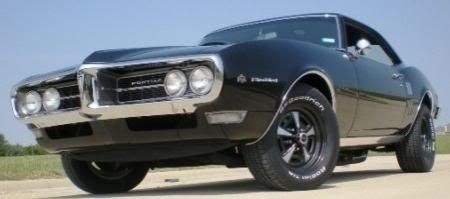
My '69 F-bird has power brakes with disks up front and drums in the back. All brake components at the wheels are new as is the booster. There are no leaks so I did not run new lines. The car does stop but feels much more like manual brakes with very slight power assist. The car does have a big cam and I've been told that can effect vacuum but I've had other cars with big cams where the brakes felt OK. Not really a brake guy so I'm looking for some insight on what to check to the problem.
FYI: They market vaccum cannisters that "collect" enough vaccum to work with power brake boosters for cars with low manifold vaccum.
2012 Mustang Boss 302 #1918, Competition Orange. FGF replacement 2006 Mustang V6 Pony, Vista Blue. Factory ordered. 2019 BMW X3 (Titled to the wife, but I'm always driving it for her. So I'm claiming it) Old projects, gone but not forgotten: 1967 FB 400, original CA car. After 22 years of work, trashed by the guy who was supposed to paint it. I had to sell it. 1980 Turbo Trans Am 1970 Mustang fastback, 351C 4Bbl, auto 1988 Mustang GT, 5 speed 1983 F-150 4x4, built 302 1994 Chevy K2500 HD 4x4, 454 TBI
Nah, you can go lower than that. My gauge reads about 11-12 lbs at idle and I have plenty to run my stock booster. You don't need much for brakes at idle though and when you do need them you usually have plenty of vacuum anyway with the RPMs up.
9 times out of 10 it seems to be a system bleeding issue when I have had trouble with mine. There's been times when I've had to pull the MC off a couple of times to bench bleed and then do the whole system several times before it felt right.
If you drain into clean bottle then air cannot get back into the system. Also, top up master, if it goes empty then air is back in system again and you have to do full bleed again. So your pumping up the brakes, hold, release fluid into bottle and close before foot hits the floor?
Reason I asked about the fluid is because you won't want to mix new type with old. I believe we use Dot 3 for the old cars (if memory serves me right).
If that all checks out I'm not sure what else it could be. I had a very radical cam on my car years ago with no issues with the brakes. Maybe try remove vac line from booster and plug of vac connection and test to see how they perform without vac assist. If there is little or no change then sometime wrong in the assist side.
Back in the day I would run a long vac line to my windshield so I could monitor it while I was driving. Try it on yours and see what it's pulling when your braking while driving.
Engine Test Stand Playlist: https://www.youtube.com/playlist?list=PLwoxyUwptUcdqEb-o2ArqyiUaHW0G_C88 restoring my 1968 Firebird 400 HO convertible (Firedawg) 1965 Pontiac Catalina Safari Wagon 389 TriPower (Catwagon) 1999 JD AWS LX Lawn tractor 17hp (my daily driver) 2006 Sequoia 2017 Murano (wife's car) 202? Electric car 203? 68 Firebird /w electric engine 2007 Bayliner 175 runabout /w 3.0L Mercuiser__________________________________________________________
Yep the rubber lines can do weird things, best to replace. But the way you described it "feels like manual brakes" sounds like a hard pedal not a soft pedal. Definitely suspect the new booster as 15" of vacuum is more than enough.
I had a hard pedal on my manual drums. One problem was that my return spring on the pedal was weak, so when I had adjusted my brake light switch I had adjusted it out to far and was actually putting slight pressure to the brakes constantly. Also had a rear brake cylinder that was hung up. Fixed the break cylinder and backed off the brake switch and no more hard pedal. Trying to find the will power to take out brake pedal assembly to replace the spring, but for now just pulling back on the pedal gently with my foot so the break lights go off.
Definitely a very hard pedal. Probably something I should have noted to begin with-might have gotten different responses. Think I'm going to start with a good bleeding and then work to the booster and lines.
Almost the same just marginally different with the car running. What valve would you be referring to?
There is your problem Dave, something wrong with your booster or the vacuum supplied to it. The valve is the plastic 90 degree fitting on the booster that the vacuum line connects to. It is a one-way valve so the booster should hold vacuum for some time even if the engine is not providing any. For example, after you turn off the car you should usually get one application of the brake pedal with power assist, after that you've lost that vacuum and no more assist.
test the valve by running the engine and shutting it off without using the brakes. then pull the valve out of the front of the booster, you should hear the vacuum being released as you break the seal. If you don't hear it then check to make sure it is getting vacuum(start the engine with line disconnected and put your hand over it). If there is vacuum at the valve the booster should be working even if the valve has failed.
Appreciate that. I will test that tonight when I get home from work. If I have vacuum when I remove the valve and feel vacuum when covering up the end of the disconnected valve I guess the issue would be with the booster itself?
yes, but I have been lucky enough to not face the failed booster thing yet so I can't answer stuff about pushrod length, travel etc. It seems to me that those issues might cause a good booster to not work but not sure. good luck.
This is weird but it was the problem. I recently put a TA hood on the car and when trying to get it aligned properly found that the hood was hitting the top of the booster. We changed the angle of the booster so the hood would close and found that it also made a big difference in how the brakes function. I would have never thought this would be the problem but seems like it was.