|
|
Joined: Oct 2014
Posts: 187
Member
|
|
Member
Joined: Oct 2014
Posts: 187 |
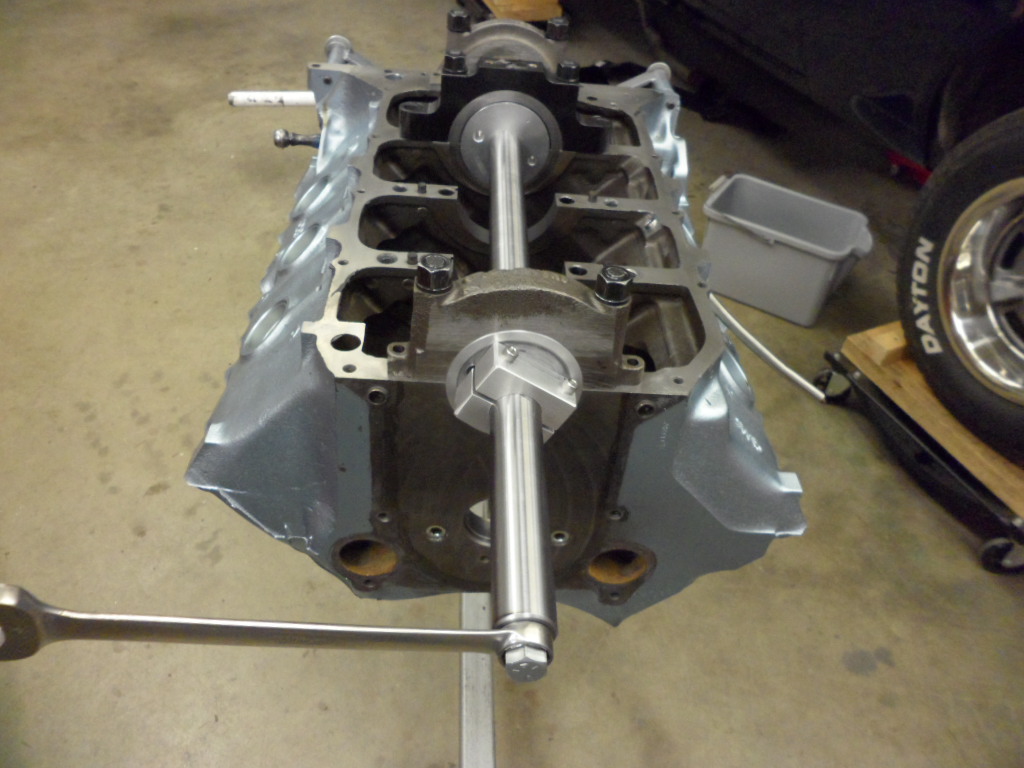
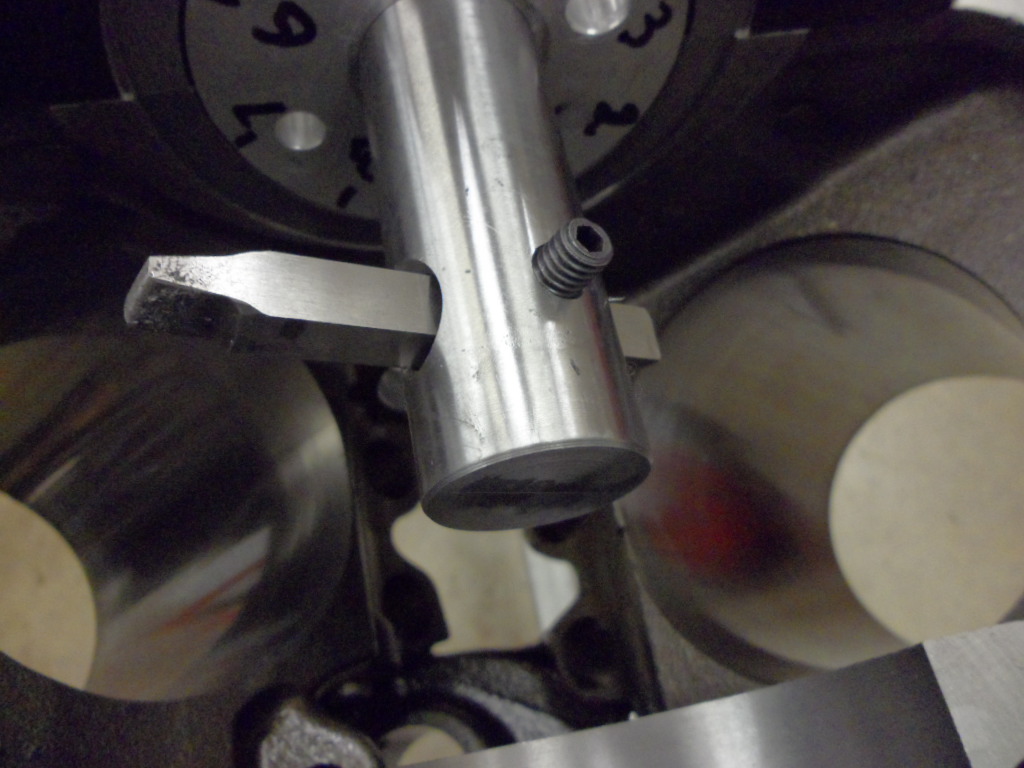
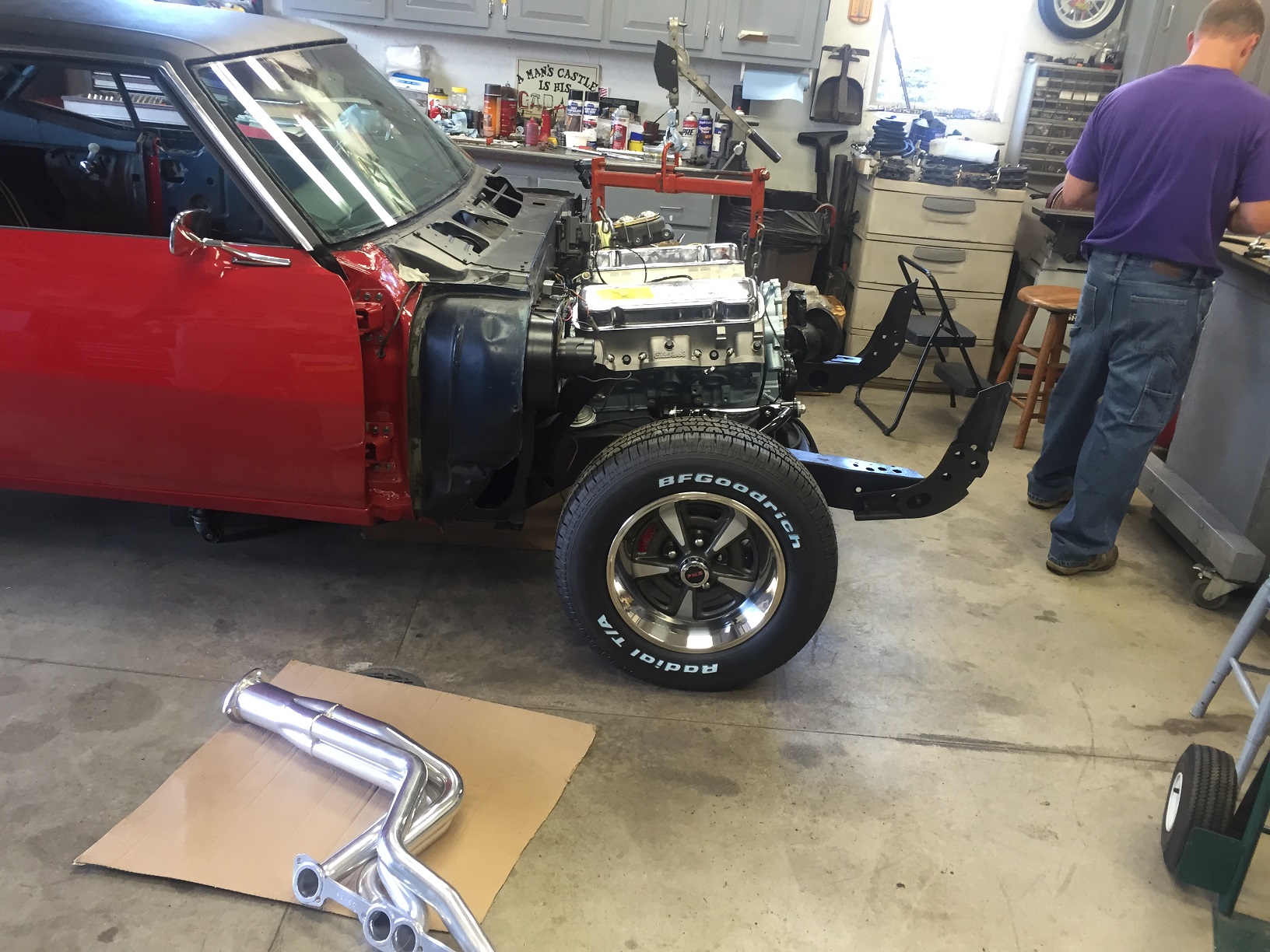
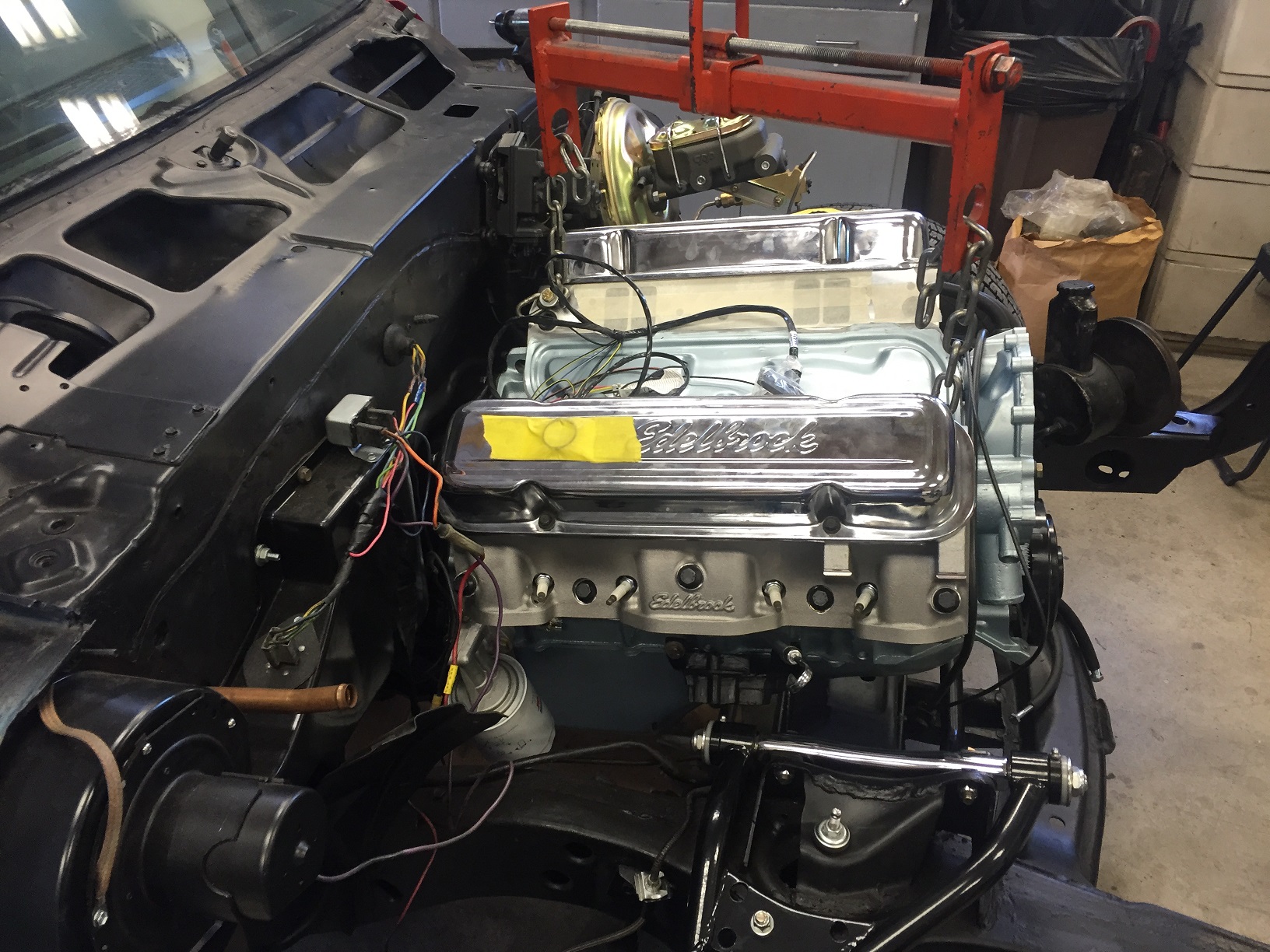
I posted this in my restoration thread, also. We were going to put the 467 in the '68 Firebird today, but when we hoisted the engine with the transmission attached at the angle shown in the pictures, oil began dripping from the rear main seal. I was hoping it was the oil pan, but after we removed the transmission and rotated the crank so the casting cutout was at the bottom of the rear main, we could see oil coming out of the crank, not the oil pan.
The crank/rods/pistons were installed by the shop that did the engine machining. We installed the cam/lifters/rockers/heads. We degreed the cam and set the rocker clearances for the Voodooo hydraulic roller cam. The guy at the shop is not going to be happy taking everything apart to fix this problem.
I know the procedure is to go back to bare block and install the seal. Do any of you have other suggestions?
Last edited by bocoogto; 07/13/15 01:18 AM.
|
|
|
|
|
Joined: Oct 2014
Posts: 187
Member
|
|
Member
Joined: Oct 2014
Posts: 187 |
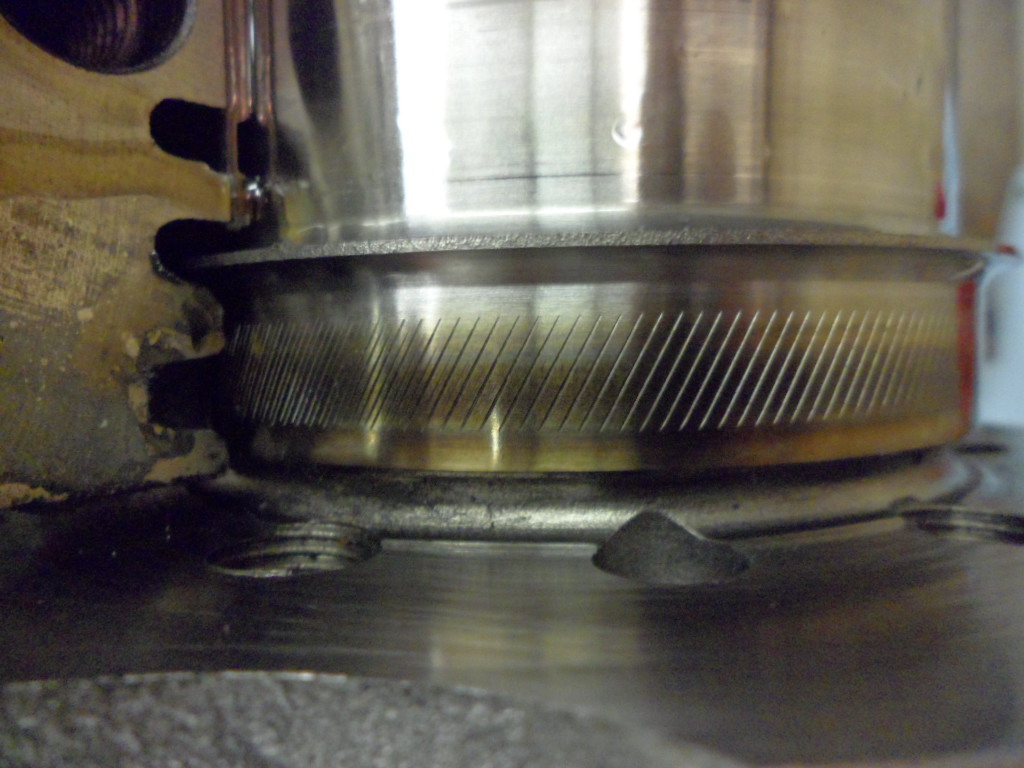
Butler said this may be due to the serrations on the rear of the crankshaft. They are there for the rope seal and will sometimes allow oil to leak with a neoprene seal under extreme conditions like tilting the engine with oil covering the entire rear of the crank/rear main/rear seal.
He said sometimes it's necessary to smooth these serrations with emery paper for a perfect seal.
As it is now, we have a drip about every 15 seconds when the engine is tilted. There was no leakage when priming the engine, but under those conditions there is no oil at the rear main seal.
Running the engine on a test stand now would be a very good option to see if it leaks under normal conditions.
|
|
|
|
|
Joined: Mar 2012
Posts: 1,529 Likes: 41
Member
|
|
Member
Joined: Mar 2012
Posts: 1,529 Likes: 41 |
As it is now, we have a drip about every 15 seconds when the engine is tilted. There was no leakage when priming the engine, but under those conditions there is no oil at the rear main seal.
How so? All main journals receive pressurized oil to the bearings. I have used all the rear main seals for Pontiac except the new 1 piece. Never had any leaks even with the new fiberglass rope seal.
Pontiac power
|
|
|
|
|
Joined: Jul 2007
Posts: 674
Member
|
|
Member
Joined: Jul 2007
Posts: 674 |
Another thing to consider, it's been documented that the recess for the seal is not always perfectly machined, that it was a separate machine process that did not have the same tolerances as the line bore/hone. So, it may be 'out of round' slightly. The original rope seals did not have a problem with this but sometimes its enough to cause a neoprene seal to leak. Also, the 3.25 journal blocks seem to have more problems with this.
|
|
|
|
|
Joined: Jan 2010
Posts: 2,405 Likes: 1
Member
|
|
Member
Joined: Jan 2010
Posts: 2,405 Likes: 1 |
Kind of hard to think what it may be without knowing the history of what was machined on the block/caps before rebuild. Were the main saddles and caps rebored to true the main bearing bores?
Every time the mains are bored, material is taken off the caps at the mating surface and the mains are then re bored to size. Most of the material is bored out of the caps but a small amount out of the saddles. This causes the crank to be positioned slightly higher than when it came from factory. Unfortunately this also results in the main seal groove to be no longer centered in the bearing bore and also no longer centric. Material is taken off the bore surface of the caps and also out of the saddle bore but not out of the seal groove, one ends up with a seal groove that is not only not centered with the crank but also more eye shaped than round.
The serrations on the crank are to pull oil back into the oil cavity at the rear of the cap/block as the crank turns in the rope seal.
As Quickbird states, there was a problem from factory with some 455 block real seal grooves. Some were machined eccentric with the center not in plane with the crank bore and also some were machined out of round by a few thou of an inch. There is a tech bulletin somewhere, I had it in my files at one time, that has the serial number range of the affected blocks. usually the robe seal would shape itself to the seal groove and to the crank and do a good job of holding oil. Sometimes it did not. Excessive machining of the main line compounded this problem.
Im my case the rear seal leaked from the time I bought the car. I pulled the engine and replaced the seal. It leaked. I pulled the engine again and used the Tin Indian seal, it leaked. I pulled it a third time and rebuilt the entire engine. The machine shop screwed up the main clearances and I had to get them to re do it. This time they screwed up the cap mating surfaces. I bought new billet steel caps and had the mainline done yet again. This time I used the Best Gaskets Graphtite rope seal. It was fine for about three thousand miles when the rear seal let go. I pulled the engine and tore it down. I found the rear seal surface of the crank burned and the seal was disintegrated. I measured the rear seal groove and found it to be sixteen thou too narrow top to bottom.
Obviously I needed to have the rear seal groove re bored. I contacted nine machine shops locally and none would attempt the job, they would all do a SBC rear , but that's a different animal. I found one shop in the southern states and Buttler Performance the only shops that would attempt the job. Shipping would have cost more than a new block.
Eventually I made my own tool and bored the rear seal groove out myself. I then installed the BOP rear seal and have been leak proof since.
Al
|
|
|
|
|
Joined: Mar 2012
Posts: 1,529 Likes: 41
Member
|
|
Member
Joined: Mar 2012
Posts: 1,529 Likes: 41 |
This is why everything must be checked prior to assembly
Pontiac power
|
|
|
|
|
Joined: Oct 2014
Posts: 187
Member
|
|
Member
Joined: Oct 2014
Posts: 187 |
Thanks for the detailed info! I'm puzzled as to how a lip seal can hold oil from leaking through the serrations even if they are not severe.
|
|
|
|
|
Joined: Oct 2014
Posts: 187
Member
|
|
Member
Joined: Oct 2014
Posts: 187 |
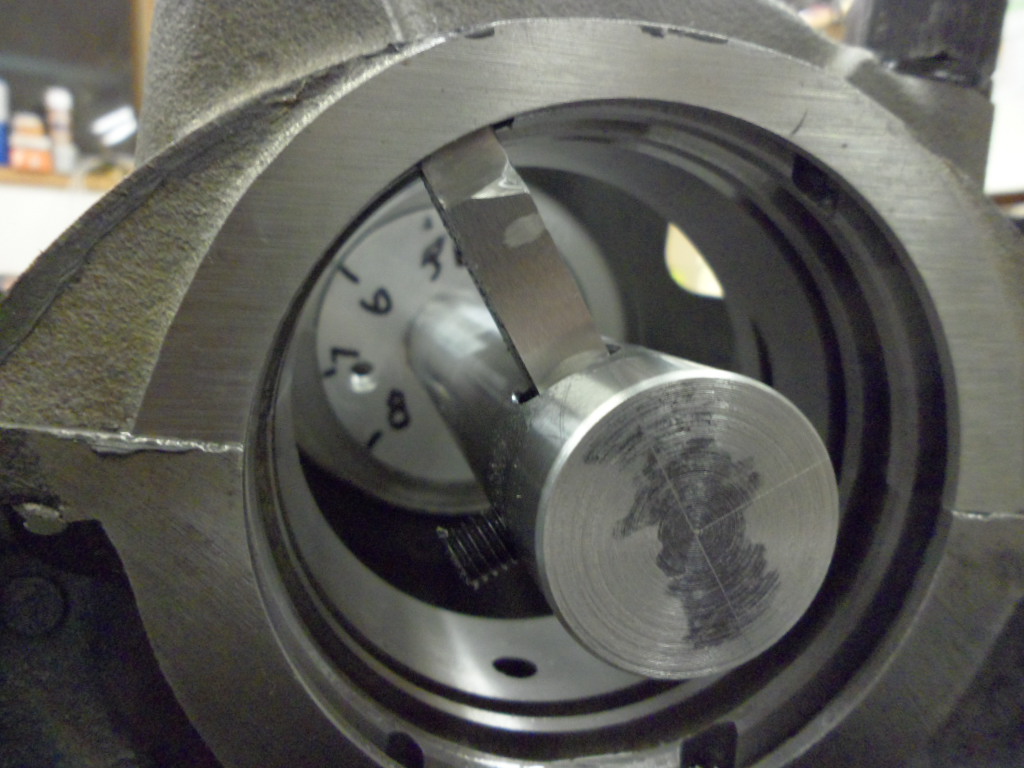
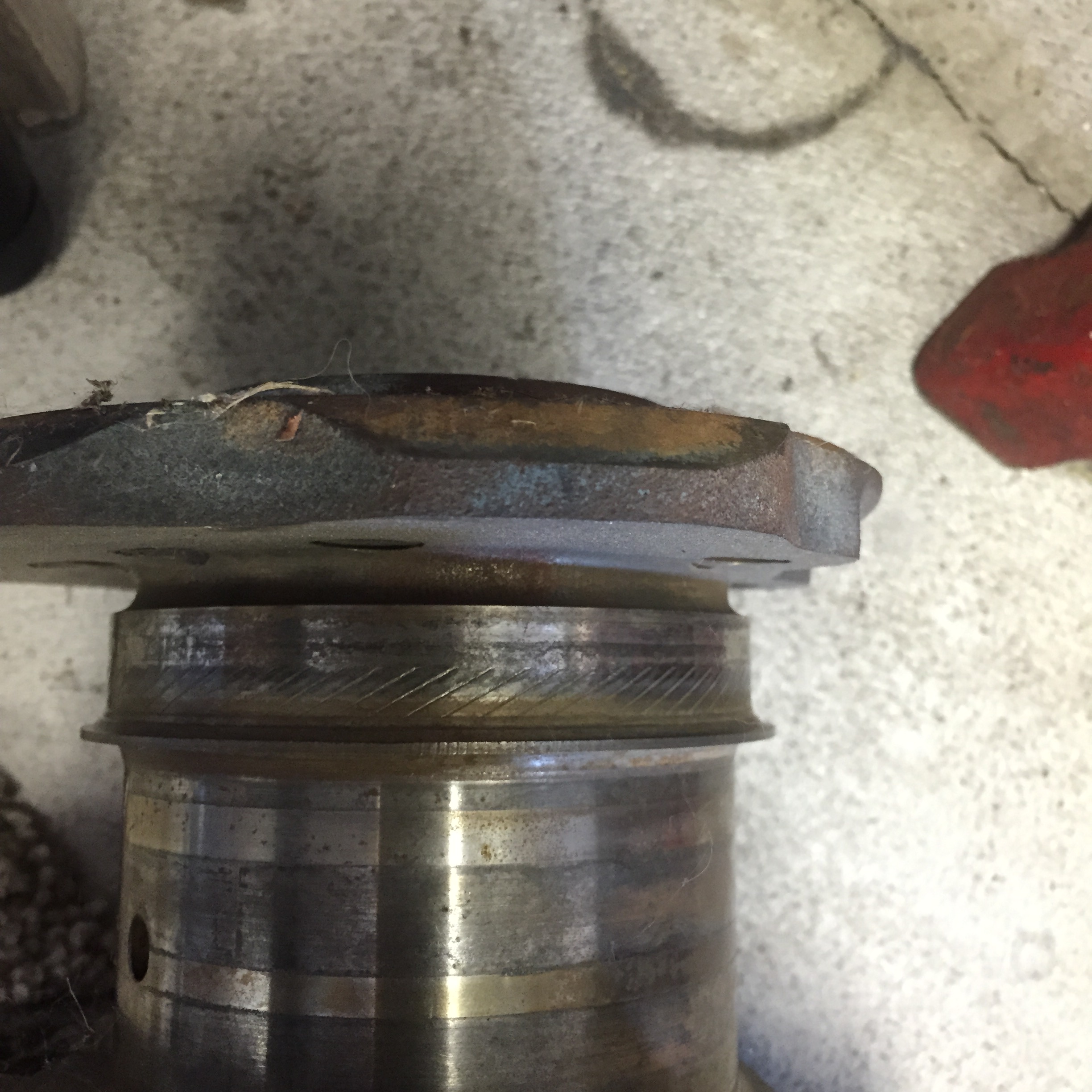
Here's a stock 455 crankshaft. I don't remember how the Butler crank serrations compared, but if they overlap the area that the lip seal runs on, oil will leak past them, correct?
|
|
|
|
|
Joined: Jan 2010
Posts: 2,405 Likes: 1
Member
|
|
Member
Joined: Jan 2010
Posts: 2,405 Likes: 1 |
Big Chief is correct about checking every measurement prior to assembly. When I got my block back from the machine shop, I measured the cylinder bore, crank journals, lifter bores, main bearing bores, etc.
That is how I first discovered the machinist had bored my mains to two thou over what I had requested. The next time around they all measured correctly but upon assembly the thrust bearing bound the crank so it wouldn't turn, the machinist had ground the cap mating surfaces on a plane other than 90 degrees to the crank before he re bored the tunnel. Mistakes happen but this was getting ridiculous.
I've built my share of engines but I'd never had a problem with the rear seal groove like this and neglected to measure the diameter and plane of the groove compared to the center of the crank. My mistake there.
I don't think machinist are used to having someone re-check their work after they do a job. I told him I was going to in advance but he was still upset when I found the work not done to spec.
As for the oil leaking past the seal as the engine/tranny combo hang at an angle, mine didn't, but I didn't have it hanging that way for long. I'd taken the engine to a dyno shop for tuning and break-in before installing it in the car and once the tranny and engine were mated it only hung at that angle for a couple of minutes. I can't see how it wouldn't leak eventually. after all they are grooves in the metal and the lip seal would not form to such small indents.
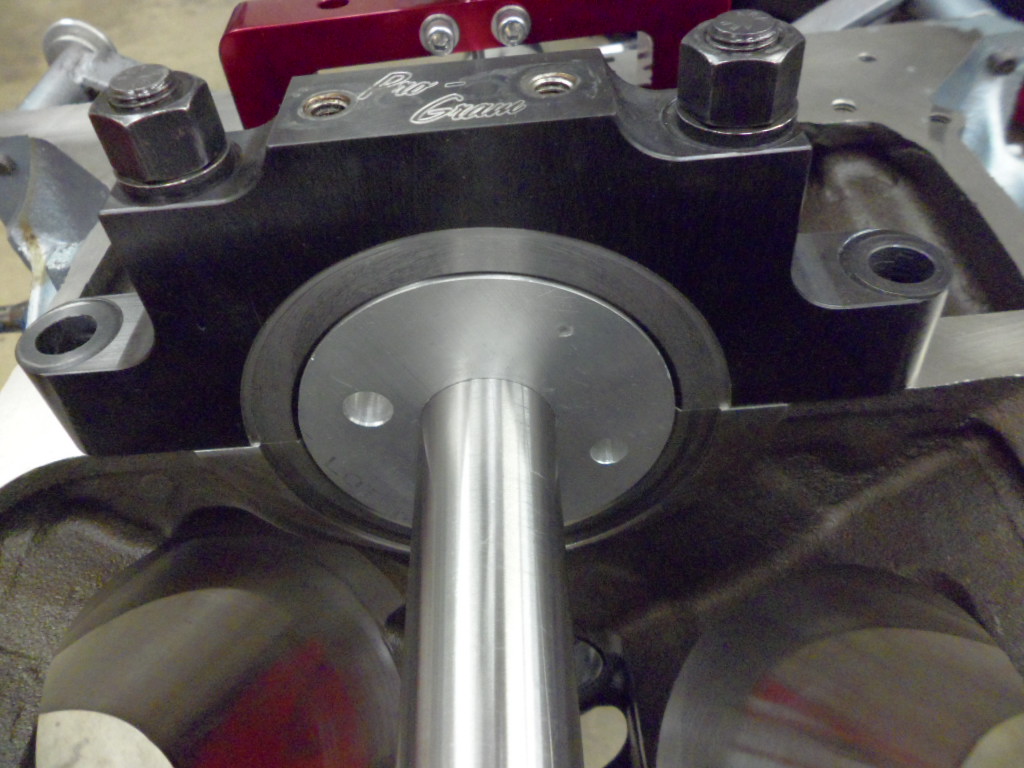
When the engine is running the bearings are pressurised to 50-70 pounds or so but that pressure does not reach the rear seal, there are grooves for the oil to spill back into the pan through the rear cap before it reaches the seal. I'll attach a couple of pics that show the holes the oil will dump through.


Al
|
|
|
|
|
Joined: Mar 2012
Posts: 1,529 Likes: 41
Member
|
|
Member
Joined: Mar 2012
Posts: 1,529 Likes: 41 |
I remember all the headaches you had with that.
Good thing to check everything like you did.
Still a few good shops out there, but it's dwindling.
Pontiac power
|
|
|
|
|
Joined: Oct 2014
Posts: 187
Member
|
|
Member
Joined: Oct 2014
Posts: 187 |
We lucked out on this one. The shop that assembled the crank, rods, and pistons agreed today to fix the seal. He said we don't have to remove the heads, cam, pan, etc. He apologized and said bring in the engine.
He will try to use a neoprene seal, but may go to a rope seal if there is an eccentricity problem with the seal groove like I've been hearing is fairly common.
I'm glad we didn't install it in the Firebird!
|
|
|
|
|
Joined: May 2008
Posts: 2,113 Likes: 1
Premium Member
|
|
Premium Member
Joined: May 2008
Posts: 2,113 Likes: 1 |
Intetesting that the answer may just be going back to the old technology(rope).
1968 400 Coupe, verdoro green, black vinyl top, auto
1969 GTO Judge coupe, Carousel Red, manual
1971 Trans Am, cameo white, auto
1970 Buick Skylark Custom Convertible 350-4(driver), Fire Red, white top, auto
1972 Buick GS Stage 1, Royal Blue, black vinyl top, auto
|
|
|
|
|
Joined: Oct 2014
Posts: 187
Member
|
|
Member
Joined: Oct 2014
Posts: 187 |
We spoke with the engine shop after he put oil in and put the engine nearly 90 degrees on end. He got a few drops of oil and confirmed it was the crank seal leaking, not the pan.
He called BOP. They confirmed that this is an extreme test and that others have experienced leakage under these conditions, but had no leakage with the engine in the car, running. The said it likely will not leak.
So, our game plan is to put the engine in the car with only necessary assembly to start the engine. We will run the engine for about 1/2 hour to confirm leak or no leak before further assembly.
BOP's alternative is a BEST rope seal, also, as the engine shop was prepared to install. I'm good with this way of handling the issue and will keep my fingers crossed that we have a non-leaker.
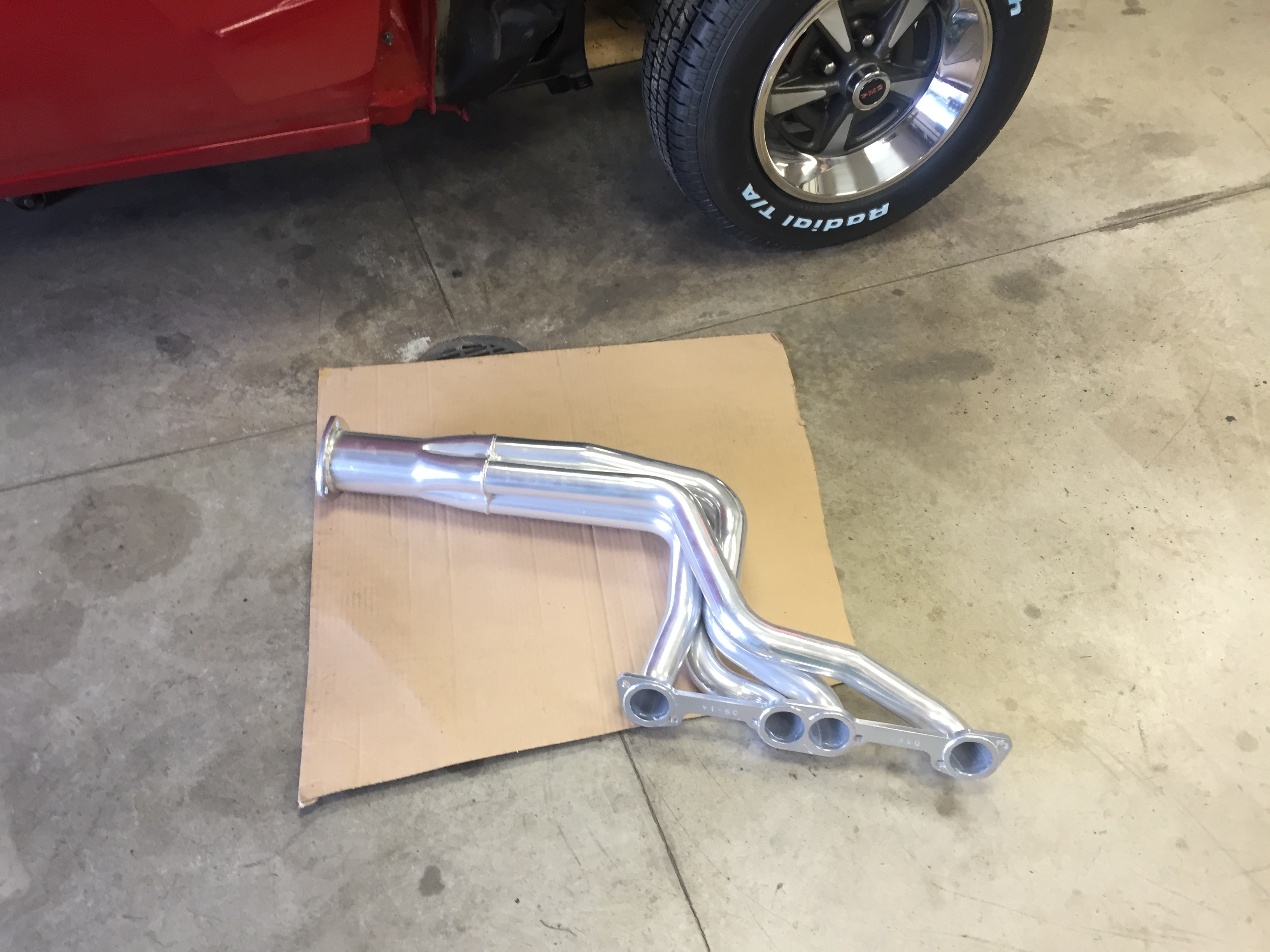
Will keep you posted. Engine went in tonight. FWIW, the Doug's headers fit perfectly. We only had to remove the oil filter (long one) to clear the headers for installation. The starter was not in the way. I'm really glad we put the wires on the starter first, since getting to the solenoid would now be impossible.
|
|
|
|
|
Joined: Jan 2010
Posts: 2,405 Likes: 1
Member
|
|
Member
Joined: Jan 2010
Posts: 2,405 Likes: 1 |
Looking good, If I remember correctly Butler had +/- 0.006" tolerance in the groove for the BOP seal. Anything greater than that they recomended machining or using the Best Gaskets seal. I'm betting no leak.
Are those global west control arms?
Al
|
|
|
|
Forums57
Topics35,534
Posts298,850
Members8,861
| |
Most Online19,810
Feb 1st, 2026
|
|
|
1 members (airram),
1,462
guests, and
111
robots. |
|
Key:
Admin,
Global Mod,
Mod
|
|
|
There are no members with birthdays on this day. |
|
|
|