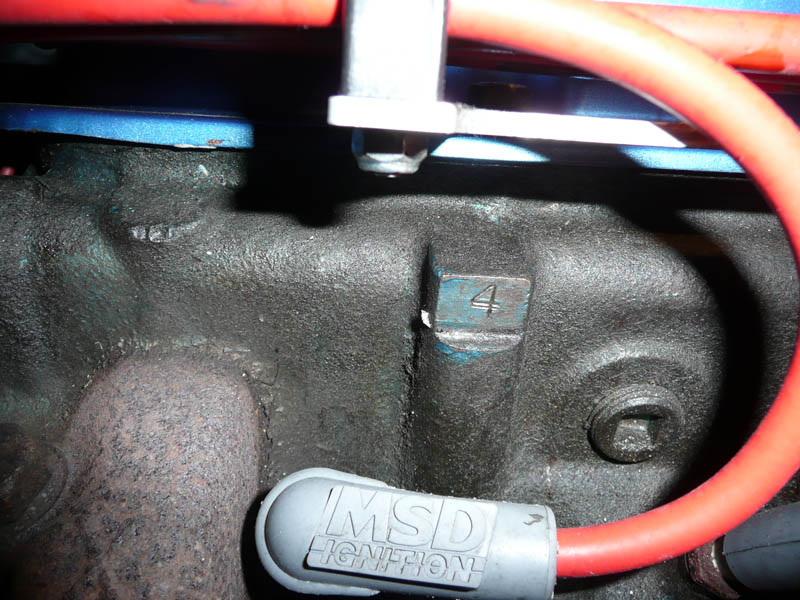
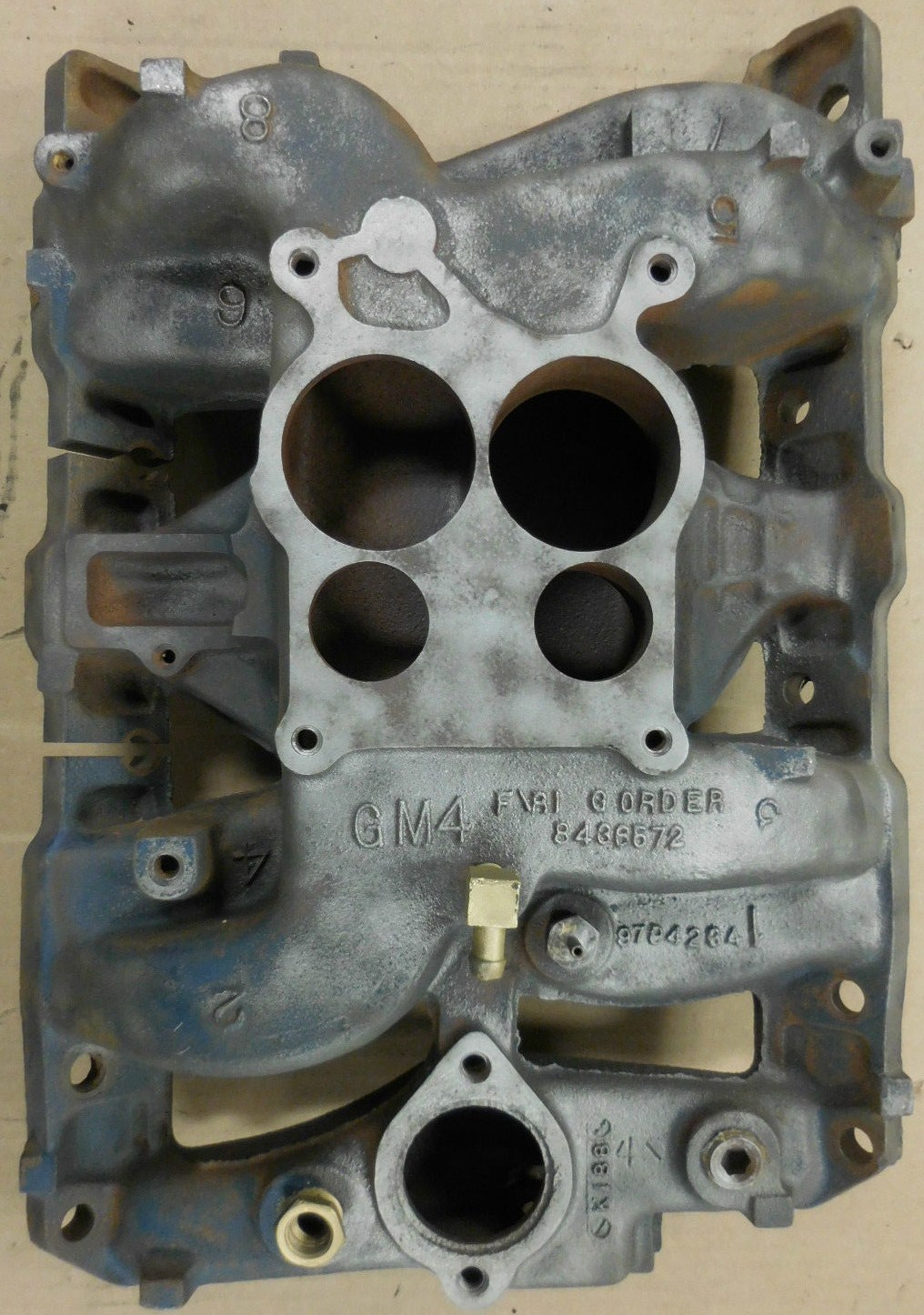
Hello everyone, I'm new here but I've had my 68 since 1984. I am in the process of rebuilding a 400 that I picked up at a junk yard 30 years ago, only in my youth I was gathering parts and now I need some help. I have a 68 400 block, 68 400 heads with code 62 and two intakes, one intake is a 68, #9794234,.... the other is a 70 # 9799068.
I'm less concerned about a numbers matching car, as the car was a 6cyl to start with, which intake might work better? the 9794234 is a little different than the 9068 as it has two "splits" in the bolting flange on one side but not the other.
The 9068 is solid on both sides.
Next question, the pan under the intake has a hole in it in the front, with a,... rubber?,... type gasket that reduces the size,.... what does that hook to?
The hole with a rubber grommet, in the valley pan, is for a PCV valve. The valve plugs into the grommet. Then, a rubber hose connects the valve to the big vac tube, which is located on top of the intake, just in front of the carb mount.
I assume it is possible that they began using the #62 heads, late in the '68 model year, when they ran out of #16 heads. Don't know. Here's a #62 head that was cast in '68.
Some say that these old heads need to have hardened valve seats installed, for use with unleaded gas.
At 72-75cc , it would probably be safer to run dish pistons, to reduce compression to 9.5 or a bit less, for use with pump gas. Since you're porting, maybe you can open up the chambers a bit, to decrease comp.
Wouldn't worry about hardened seats. Maybe if you have a solid roller cam with high spring pressures and that you are driving everyday it would be and issue.
I was planning on having the hardened seats done, If I drop compression I'll make less power yes?Would it be substantial? I'm planning on running the 041 cam so far, Was thinking I'd only be at 10:1 I'm not going real high on spring pressure, just what's recommended for the cam with roller lifters. I WILL be driving it a fair amount and at least a few times to the lake house in the summer so it'll see 3 hours on the highway. I'll have to look into opening the chambers some, but I've never done that before, I polished, but never changed anything besides smoothing the outside edge. Hmmmmm
Any thoughts on running the 068 cam? What transmission are you running? A well put together 400 can handle the 10:1. I'm at closer to 10.2 and using the milder 068.
1968 400 Coupe, verdoro green, black vinyl top, auto 1969 GTO Judge coupe, Carousel Red, manual 1971 Trans Am, cameo white, auto 1970 Buick Skylark Custom Convertible 350-4(driver), Fire Red, white top, auto 1972 Buick GS Stage 1, Royal Blue, black vinyl top, auto
A 10:1 static compression ratio engine with a 041 camshaft will have a lower dynamic compression ratio than the same engine with the 068 camshaft. The 041 has a 230/240 duration at 0.50" lift and an intake centerline of 112 degrees, that would have the intake valve closing to 0.50" at 227 degrees after bottom dead center. The 068 has 212/225 at 0.50" and an intake centerline of 113 degrees, that would have the intake valve closing to 0.50" at 219 degrees after bottom dead center. The 068 starts it's compression eight degrees before the 041, even with it's later 113 degrees centerline. That eight degrees lowers the dynamic compression with the 041 and may make it a bit less prone to detonation with a 10:1 compression using todays lower octain gasoline.
Of course that is not the only reason to choose a camshaft. One must consider the expected use of the car whether racing, street or highway driving and were in the rpm range one wants max torque and rpm as well as the peak torque and rpm values. Then there's the lumpy camshaft lope people seem to like at idle.
If you have an auto trans and power brakes, the 041 cam may not be the best choice. I've read lots of reports of not enuff vac to operate power brakes. But, if you have a manual trans(or loose converter) and manual brakes, the 041 will work, but might not be the best choice. The only way I'd run it is with Rhoads lifters, to smooth idle and increase vac and low rpm torque.
Some steps down from the 041 might be the Crower 60243, the Summit 2802, then the Crower 60916. But, if you'd like to stay with a grind similar to the 041, but can't stand the ticking sound of Rhoads lifters, you may wanna consider the Howards version. It has less advertised duration, so should provide a better idle and more vac.
Howards also makes a near duplicate of the 744 cam, as does Melling. I ran the 744 on the street for 60,000 plus miles and lots of drag strip passes. I liked it. But I had a 4-speed, manual brakes and 3.90 gears. Don't know how it would work for you.
Hey, cam recommendations vary GREATLY, and can develop into heated arguments, on some of these forums. So, these are just my own opinions and not the last word.
Al, and oldskool, Thank you very much for the input, My car is a four speed, will have 4 wheel power disc the next time it hits the pavement, I'm shooting for july at the lastest. It used to be a 6cyl and I don't know how to tell for sure (car isn't here) but my buddy when I was young said it had a 410 rear, he had the same car as me but his was a 67 coupe. Did they come that low? I know when I had the 389 in it it was a rocket up to 110. My buddy had a 428 in his and ran 12.1 quarter, and spun for 500 feet. Al, you made the camshaft something I understand a little better now! I was leaning to the 41 cam because thats what was in that 428, yes we loved the hard lope, I have a mechanic who says if need be we can add a vacuum pump for the brakes, not sure how but he seems to be confident and he's a GM mechanic, with his own place, very smart and a good friend that is helping me and giving me my own lift in the garage till we are done. going to put a new suspension on a brand new sub, mount the motor and muncie and roll it under, new rear leafs and hotchkis frame connectors and x-brace. It's been 18 years since I drove it, I can't wait. Oldskool, I'm checking out the cams you linked me and diving into research.
"... I was leaning to the 41 cam because thats what was in that 428, yes we loved the hard lope..."
The 041 cam acts "bigger" in a 400 than in a 428. And it acts even smaller in a 455. We ran it with Rhoads lifters, in our 455 bracket engines. We ran TH400's with stock 13" converters. The engines would idle low enuff for us to launch from an 800 rpm idle. That's a lot of off/idle torque. Same cam in a 400 would produce MUCH less low rpm torque.
"...my buddy when I was young said it had a 410 rear"
But hey, if you do indeed have 4.10 gears, the 041 might work great for you.
Camshafts are very confusing if one doesn't know how subtle changes in the grind will affect the engine's performance. The Pontiac Street Performance site has some good articles on camshafts, but unless the claims are backed up by actual test comparisons, they may just be someone's opinion. And as Oldskool says, opinion vary a lot. The 041 camshaft will have a higher operating range than that of the 068 or the 067,744 and 066. Pontiac usually put cams with a lower duration in automatic cars than manual equipped cars. One would have to know all your engine specs to give a guess as to the actual rpm range. A bigger cam may give you more horsepower but that usually cost low end torque, and the higher horsepower will be at a higher rpm.
What you should really look at is what you intend to use the car for. You stated you want to take the car out to the house on the lake, well you don't want to drive down the highway at a steady 4500 rpm. You may get 375 horsepower at 5,500 rpm but how often are you going to be driving your engine at that rpm. Are you building a race car or a street car? I built mine with the Idea of driving up a long hill on the highway with enough torque to leave the tranny in overdrive and not have the engine revving over 2,500 rpm. I have 535 HP available to me but that is at 5,000 rpm, I don't drive it at that rpm very often. One has to be honest with him/herself when deciding what the purpose of the build is, and go from there.
Quite often people get caught up in numbers, it doesn't mean anything to you if you have x hp or y hp, it means a lot to have a car that performs well the way you drive. Good idle, good torque for starting from a red light, smooth running without overheating, enough vacuum to run accessories, enough power to pass someone on the highway. But if you want to build a monster power engine, go for it. Just remember it's driving manners may be poor.
Okay more research before build. Nice HP numbers Al. So since I am talking to guys that are way ahead of me in the Pontiac motor game I have a side question, can these motors be stroker motors like the chevy's? what goes in what if so and do people do it? I see alot of 461, or is that just a bored out 455?
As far as what I want to build, I want a prostreet, but don't have the budget for the real deal, so I'll make it as radical as I can afford. handling and stopping became first priority this time, motor I will squeeze as hard as I can, luckily it's a light car, geared low, and that will school most of the "fast and furious" crowd in the eighth mile I'm willing to Run 'em.
"...can these motors be stroker motors like the chevy's? what goes in what if so and do people do it? I see alot of 461, or is that just a bored out 455?..."
You can use a 400 block, then install a 4", 4.21", 4.25", 4.50"(and others) stroke crank and build anything from around 428 to 500 or so cubic inches. The 4.25"stroker is probably the most popular. The cheapest balanced stroker assembly I'm aware of is the cast crank Butler assembly, with 5140 Eagle rods, & Mahle pistons.
There are lots of upgrades available, such as forged cranks, H-beam rods, and Ross pistons.
"...motor I will squeeze as hard as I can, luckily it's a light car, geared low, and that will school most of the "fast and furious" crowd in the eighth mile I'm willing to Run 'em..."
Well, if you are gonna run the 1/8 mile, with 4.10 gears, you'll need some real sticky slicks, and some good traction bars, like maybe the Cal-Tracs. We did it with slappers, but ran 13" slicks. And if you build a stroker, it would be a good idea to go with a forged crank. You can go with either the 4.21 stroke with 6.625" Pontiac rods, or the 4.25" stroke, with 6.8" BBC rods. Not much difference in power.
"...I'll make it as radical as I can afford..."
A cast crank stroker shortblock, less cam, will cost about $3500 + shipping. Add a few hundred for forged crank.
Then add at least a thousand bucks for some well built unported 6x heads, and a decent HFT cam & lifters, and it'll run you at least $5000. And most builders will charge MUCH more than that. Don't know how much you can spend on the engine. But, this should give you a ruff idea of engine cost.
6 X heads? I have those,...... in the barn. But I thought they were from like the mid 70's low power motors? and thank you for the links! I'll be reading for hours
6 X heads? I have those,...... in the barn. But I thought they were from like the mid 70's low power motors?...
Yeah, the 6x heads were used on low compression engines, from '75-'79. But the 6x-8 heads will get a 455+ engine up to 9:1 CR or higher--just right for a pump gas stroker. They're probably the most used iron stroker heads. And the 6x-4 heads, which came on 350's and '77-'79 W72 400's will raise comp even higher. Most sites list the 6x-8 chambers at about 101cc, and the 6x-4 chambers at about 93-94cc. The 6x heads have 2.11/1.66 valves, factory hardened seats, and screw-in rocker studs. They flow well, even unported. Lots of guys just have a GOOD valve job done, using one piece stainless valves, and 7/16 rocker studs. Other guys, with more to spend, pay somebody big bucks, for porting. They'll make over 400hp & around 500ft lbs of torque, unported, on a 455+.
Many engine builders agree that around 9.5:1 CR is the safe max, for iron heads on pump gas. So, the 6x-8 heads would be safer. CR can be adjusted slightly with deck height, head gasket thickness, piston valve reliefs or dish, and shaving some off the heads.
M any engine builders agree that around 9.5:1 CR is the safe max, for iron heads on pump gas.
Keep in mind that this is a rule of thumb and that there are many parameters involved such as quality and octane of fuel, camshaft, quench height, chamber design, spark plug selection, etc. So, if you calculate to a 9.67 CR, that doesn't spell instant doom. Well, maybe if you chose the wrong camshaft.
1968 400 Coupe, verdoro green, black vinyl top, auto 1969 GTO Judge coupe, Carousel Red, manual 1971 Trans Am, cameo white, auto 1970 Buick Skylark Custom Convertible 350-4(driver), Fire Red, white top, auto 1972 Buick GS Stage 1, Royal Blue, black vinyl top, auto
I didn't build mine with a HP number in mind, like I said numbers don't mean anything. I put a rather mild camshaft in as I was aiming for torque not HP. But it looks like you are building yours for a different reason , or end use, than I. I could get more hp with a larger cam but I like to be able to drive mine, even in stop and go rush hour traffic. Mine started out as a simple rebuild but damage to the block required custom parts. Be warned this stuff is not cheap I spent over $10,000 before I started to bolt anything to the block. That did not include machine shop time.


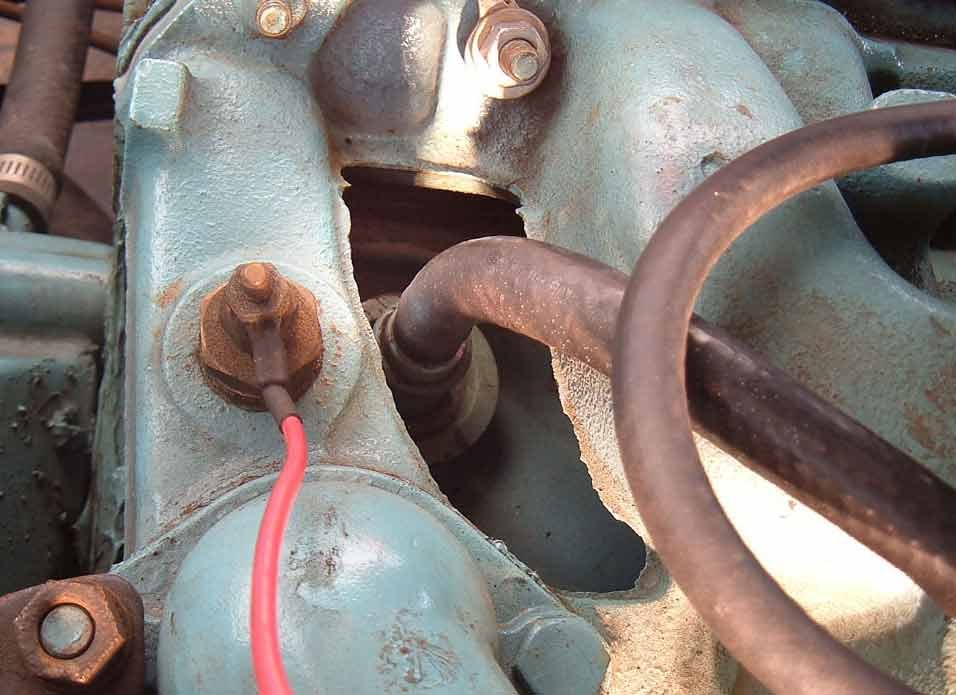
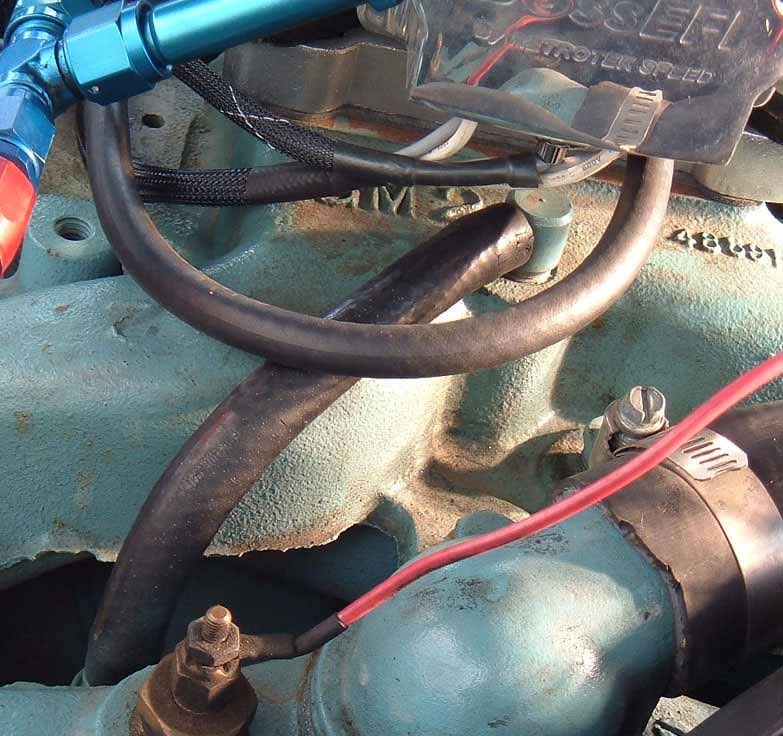
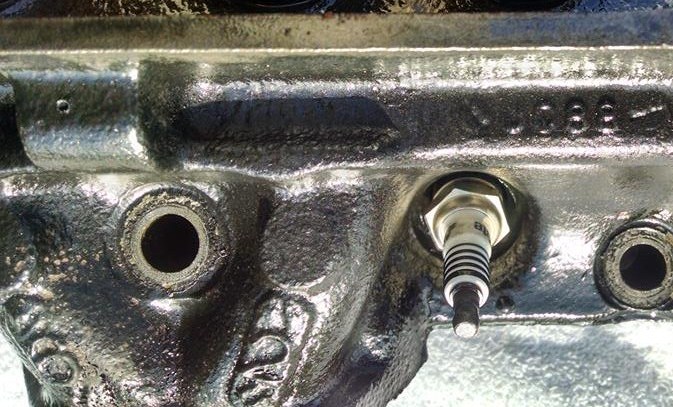


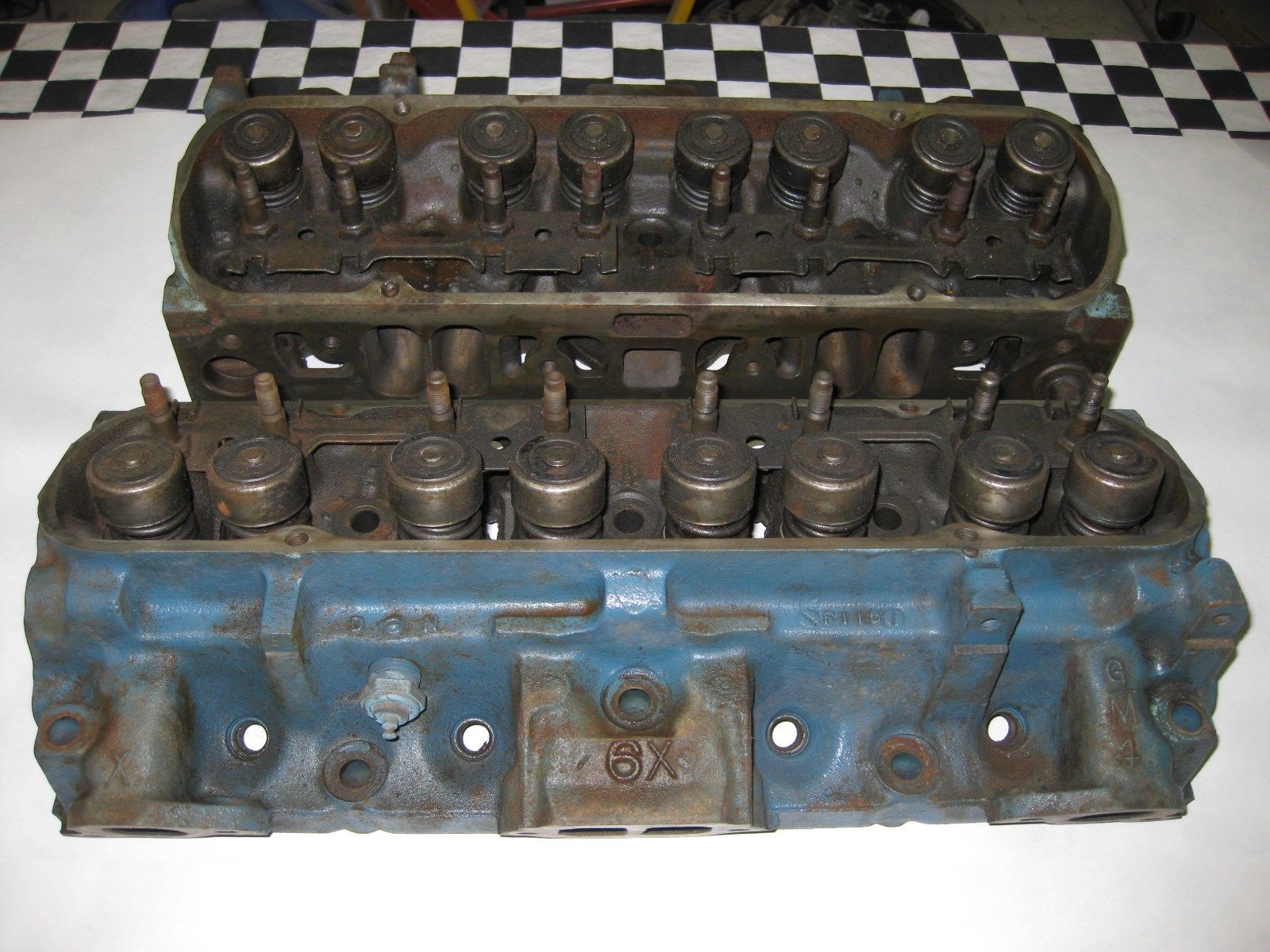
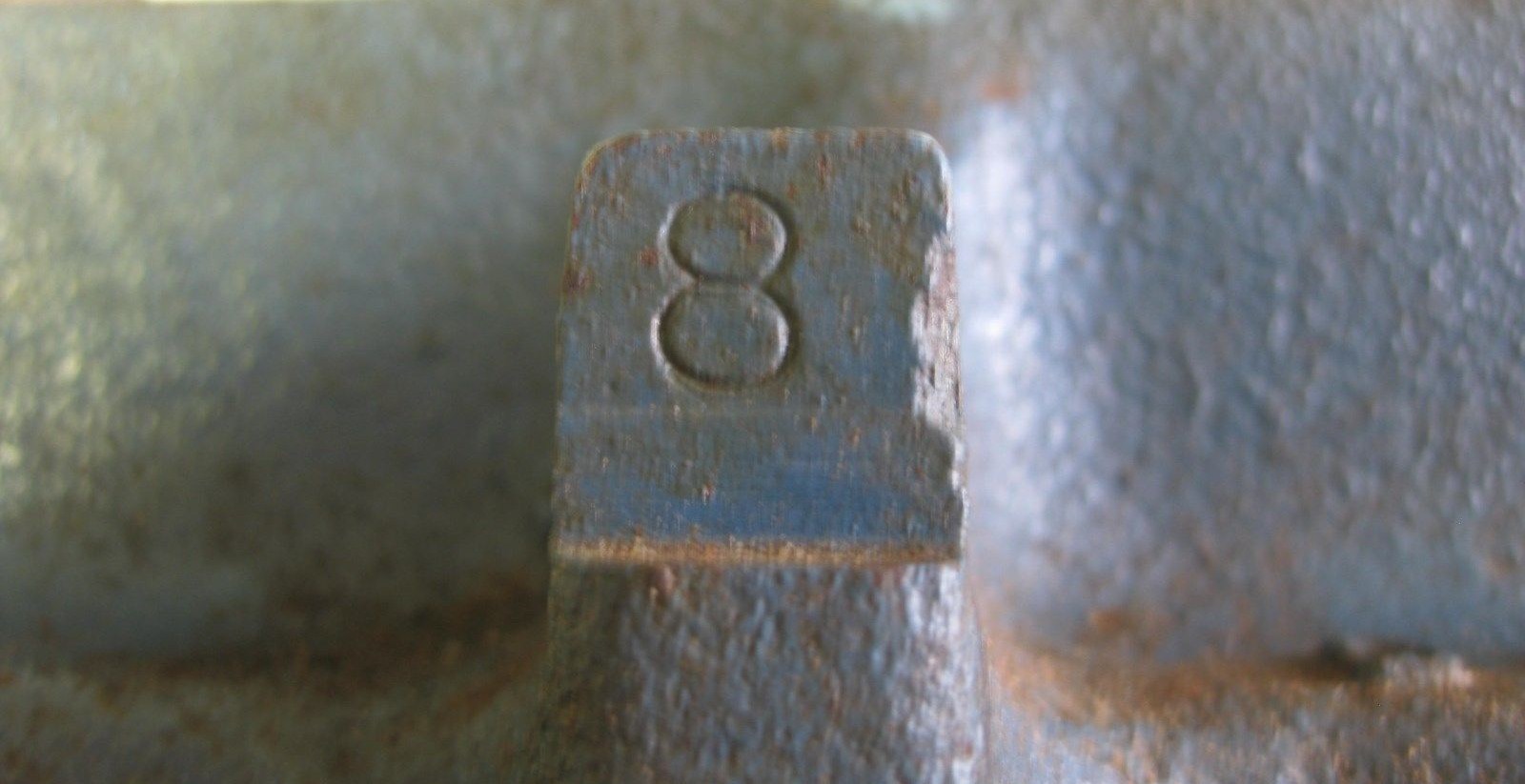.jpg "Code 8--#6x (1).jpg
Views: 1076
Size: 160.94 KB")