on a 68 Firebird, original disc brake car, I replaced the discs with an SSBC set including master cylinder and booster. The distribution block is the original. Problem is it does not brake properly. Pedal seems firm, but very little braking. Bled brakes many times, could this be caused by a bad distribution block?
How far down does the pedal go? Is there any slack in the linkage between the pedal and power booster? Sometimes the length of the rod between the pedal and PB has to be adjusted. I'm assuming the MC was bled? May be but not likely a vacuum leak to the booster..?
When you have someone holding down the brake peddle and you open the bleeder screws the fluid should shoot out. If it just dribbles out you got a problem by the valve or a bad master cylinder, providing you bled the master to start.
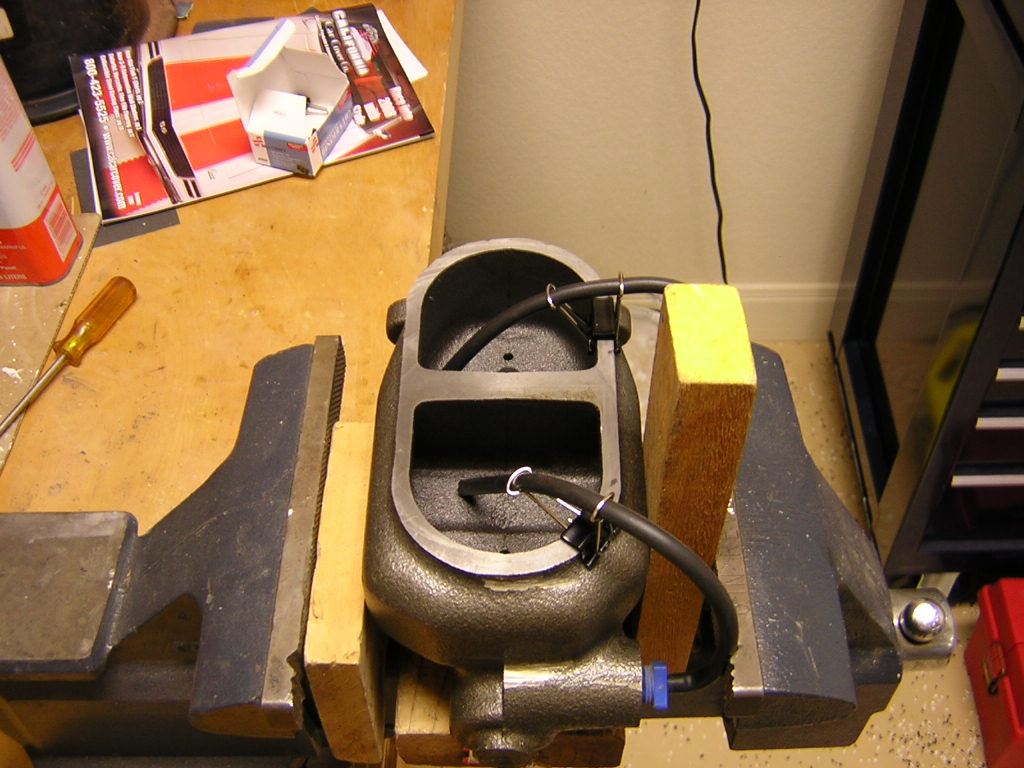
It doesn't have to be bled on a bench per say. I always have it mounted in the car and ready to go. Less mess than trying to bleed it in a vice and then trying to install it in the car spilling brake fluid everywhere. Just hook up the fittings and tubes to the master and run the tubes back into the resivior always make sure they are submerged in fluid. Pump the pedal slowly till the air bubbles are gone. The goal is to eliminate all the air trapped in the pistons inside the master. FWIW I have installed brand new masters that leaked past the pistons and did not build any pressure. Never assume.
I remember a few years back a bunch of people here were having issues with the SSBC stuff. Check the archives. There may not be a fix. I didn't bench bleed the last 2 MC's I replaced. Just takes longer to get the fluid flowing but once it starts pumping it's fine.
It doesn't have to be bled on a bench per say. I always have it mounted in the car and ready to go. Less mess than trying to bleed it in a vice and then trying to install it in the car spilling brake fluid everywhere. Just hook up the fittings and tubes to the master and run the tubes back into the resivior always make sure they are submerged in fluid. Pump the pedal slowly till the air bubbles are gone. The goal is to eliminate all the air trapped in the pistons inside the master. FWIW I have installed brand new masters that leaked past the pistons and did not build any pressure. Never assume.
Manual Brake master cylinders are pretty level but the power brake master cylinder has a pretty good angle to it. That is were air can get trapped. For that reason is why they recommend to bench bleed it. That way it is level an no air get trapped.
Here is my photo of my MC bench bleed setup that somebody thought was helpful once:
2012 Mustang Boss 302 #1918, Competition Orange. FGF replacement 2006 Mustang V6 Pony, Vista Blue. Factory ordered. 2019 BMW X3 (Titled to the wife, but I'm always driving it for her. So I'm claiming it) Old projects, gone but not forgotten: 1967 FB 400, original CA car. After 22 years of work, trashed by the guy who was supposed to paint it. I had to sell it. 1980 Turbo Trans Am 1970 Mustang fastback, 351C 4Bbl, auto 1988 Mustang GT, 5 speed 1983 F-150 4x4, built 302 1994 Chevy K2500 HD 4x4, 454 TBI
When you bench bleed it, careful not to fully depress the rod. You could break the seal MC. That's an expensive mistake.
How do you know if you are getting close to fully depressing it? Does the rod return on its own once you push it in? Asking because I have never donw this before. Thanks!
There is a spring inside MC. You gentle press in slowly about 1/2- 1 Inch or so and then ride it back out . Once you start pushing it in with a little pressure you can tell when the spring starts getting compress and tight to release, You can see air bubbles being released to know you are doing it right.