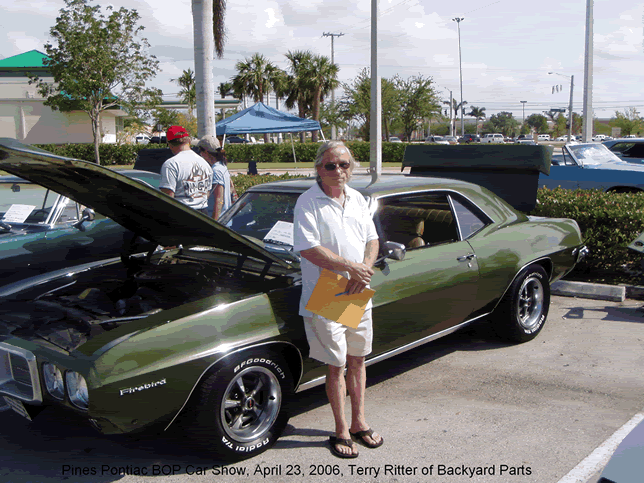
I'm still having problems with overheating. I'm wondering now about the timing advance. The book says 10 degrees maximum advance. (I've got an original 1111270 dual diaphram distributor in the car.) How much advance is too much?
I think that timing and vac advance are in relation with each other. you need to set the timing in the factory spec first then check the advance with the proper equiptment. the heating problem could be that you have the [even though is recomended] wrong thermostat temp. the gas used today is different making the engine run hotter. the combination I use is 160 therm and a factory fan shroud ,6 blade fan also a 4 core radiator and a lower baffle if necessary. if you done this and it doesnt work; then the timing is at fault and carburator is out of adjustment. running too rich [or has a vacummn leak] will make the motor run hotter. you might try recurving the distributor also.
You may want to read up on the dual diaphram setup. The only time the vacumme diaphram advances is when it gets really hot, if I remeber right. I don't recall what the Thermostatic switch switches at but its over 200. Pontiac put out a service bullitin about it because of overheating issues. The 69 cars ended up having the thermostatic switch but not the dual diaphram after that. I researched it a bit when I was looking at mine. Someone hear should have the info.
This overflow thing is about to get me. I've got my hands on an infared temp senson...tonight I'll read the actual temp. My new NAPA temp sensor for the car's idot light doesnt' show that the engine is hot...even when it overflows. I've also acquired a pressure tester for the cap and system. Busy night ahead.
Do you have the cap for a non-recovery cooling system (a cap for a recovery system is designed to open when hot!) and does it "overheat" if you leave the cap at the first click?
Boilover does not mean overheating.
If you are experiencing boilover, look at the cap again. Once the engine cools, remove the cap and the coolant should be about 3" under the filler neck. If you fill it to the top it will burp out the extra to save the radiator once it is fully hot.
Vikki 1969 Goldenrod Yellow / black 400 convertible numbers matching
Vikki makes a good point. My car runs at a rock solid 180 degree temp but after I shut it down it will rise to around 220 and if I have recently topped off the radiator it will leave a puddle on the ground (enviromentalists must love me). If you buy an after market temp guage with a capilary tube you could put it under the hood temporarily to get a pretty acurate engine temp. There may even be a spair hole in the intake so you would not need to remove the elec temp sw. Pete
Well I feel like and idiot. I installed a new temp sensor a few days back; it did NOT show the car to be getting hot. I borrowed an infared temp reader...the car was not hot. I dropped the water level to about 3.25 inches below the filler neck bottom...no more overflow, even after driving 100 MPH. The slow starting when hot is likely a function of the tight/newly rebuilt moter and a rebuilt starter. Will give the engine a few miles to loosen up and see if it's still slow when hot. Thanks for the tips. Pictures of my car are now posted on this site, entry 688.
Thanks fellows; it's taken a lot of time and effort. I've restored about a dozen old muscle cars; this one took more time than any three others combined. Thanks also for the helpful discussion on this site. Very good source of information.
Just thought you guys might like a benchmark. I sold the (above) firebird at auction for $31,500 (including bidder's premium) on saturday. Numbers matching Firebirds are definitely going up in price if properly restored.
Just a new chevy SSR. I'd be a buyer on a numbers matching 69 trans am. I'm looking for any very very low mileage trans am (70 - 76). Would also consider a very nice Can Am.



![[Linked Image]](http://www.oocities.org/~lobird/images/liukkonen1.jpg)