|
|
Joined: Jan 2005
Posts: 1,859
Member
|
|
Member
Joined: Jan 2005
Posts: 1,859 |
OK, round 2
1st: We bled the MC. Got air out of the front.
2nd: Bled the front brakes. We didnt get a lot of fluid out of them and couldnt get the pedal to pump up so we figured we needed to replace the MC,,, which everyone was suggesting.
3rd: Bench bled and installed the MC
4th: Started to bleed the front brakes. Got more fluid out of the new MC than the old one. Got the fluid clear of air in the front but the pedal still wouldnt pump up at all
5th: Bled the rears, got them all free of air too and the pedal still wont pump up
6th: Stood around scratching our heads and figured to let it sit a night and see if it would pump up tomorrow. No puddles, no leaks, no air, WTF???
http://firstgenfirebird.org/show/closeup.mv?CarID=646 ----------------------------------- Joe ----------------------------------- 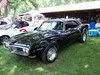    >> |^^^^^^^^^^^^^^'''''| || >> |...BEER TRUCK......| ||'|";, ___. >> |_..._..._______===|=||_|__|..., ] - >> "(@)'(@)""""""""''"**|(@)(@)******''(@)
|
|
|
|
|
Joined: Mar 2004
Posts: 11,905
Valued Mentor
|
|
Valued Mentor
Joined: Mar 2004
Posts: 11,905 |
Is the pedal spongy, or does it just fall to the floor?
Two questions on your rear brake installation:
1. When installing, did you properly set the star adjusters per the service manual?
2. If you did not do this prior to bleeding the brakes, have you removed the rear drums and made sure the cups and actuators for the rear wheel cylinders are still in their bores, and the star wheel adjusters still in place on the correct sides?
And although the fronts had no issues before, it might be a good idea to pull the drums and take a look and see if there is any seepage from the front wheel cylinders, since it appears you may have issues with this circuit now.
|
|
|
|
|
Joined: Jul 2005
Posts: 43
Member
|
|
Member
Joined: Jul 2005
Posts: 43 |
Same problem on my '67.
The rod from the pedal to the MC was adjusted a little bit too long, keeping a tiny bit of push on the MC when the pedal was all the way up.
Just enough so that the MC couldn't suck fluid from the resevoir.
Can test for this (w/o disconnecting brake lines) by pulling the MC forward and "shimming" it from the firewall a litte.
|
|
|
|
|
Joined: Sep 2001
Posts: 14,265
Valued Mentor
|
|
Valued Mentor
Joined: Sep 2001
Posts: 14,265 |
Stay focused on the changes you made. As Vikki stated, adjust up your rear shoes. After all, that's where the changes have been made. After that, do a little rolling and braking. Roll back and brake, roll forward and brake. Rolling back and braking adjusts the shoes to their maximum tightness. You say that you have more fluid flow from the new master cylinder so it did need to be replaced. Make sure all your rubber brake hoses are in good shape. That's the other 'usual suspect' for a 'mind boogler'. These hoses can delaminate inside and cause all kinds of strange symptoms.
|
|
|
|
|
Joined: Jan 2005
Posts: 1,859
Member
|
|
Member
Joined: Jan 2005
Posts: 1,859 |
1. When installing, did you properly set the star adjusters per the service manual?
Rears are properly seated and adjusted. We had also gotten a firm pedal before we went soft.
2. have you removed the rear drums and made sure the cups and actuators for the rear wheel cylinders are still in their bores, and the star wheel adjusters still in place on the correct sides?
I havent taken the rear drums off again to check the actuators. I can double check this to make sure. The adjusters are on right also.
3. it might be a good idea to pull the drums and take a look and see if there is any seepage from the front wheel cylinders, since it appears you may have issues with this circuit now.
With as much fluid as we have ran through this car I cant imagine that we would have a leak and not see a huge puddle under it. The underside of the car is clean and dry as a whistle
I can go through and re-check all these items to make sure. Any other thoughts so I can add them onto the list of things to check?
http://firstgenfirebird.org/show/closeup.mv?CarID=646 ----------------------------------- Joe ----------------------------------- >> |^^^^^^^^^^^^^^'''''| || >> |...BEER TRUCK......| ||'|";, ___. >> |_..._..._______===|=||_|__|..., ] - >> "(@)'(@)""""""""''"**|(@)(@)******''(@)
|
|
|
|
|
Joined: Sep 2001
Posts: 14,265
Valued Mentor
|
|
Valued Mentor
Joined: Sep 2001
Posts: 14,265 |
|
|
|
|
|
Joined: Jan 2005
Posts: 1,859
Member
|
|
Member
Joined: Jan 2005
Posts: 1,859 |
Brake? I dont have a lot of confidence that I have any at this point. How can I brake with no pedal pressure?
The fluid is clean, no air. The MC is working fine. There are no leaks in the system. There is somehting missing here.
Someone answer this:
If the fluid is clean, the MC has no air, its moving fluid, the drums are on and adjusted properly, then why would you not get a pumped up pedal?
I am going to pull the drums and check all the shoes to make sure they are seated ok but I am fairly confident that they are since we pumped up the pedal just fine and then it failed without messing with the brakes at all.
http://firstgenfirebird.org/show/closeup.mv?CarID=646 ----------------------------------- Joe ----------------------------------- >> |^^^^^^^^^^^^^^'''''| || >> |...BEER TRUCK......| ||'|";, ___. >> |_..._..._______===|=||_|__|..., ] - >> "(@)'(@)""""""""''"**|(@)(@)******''(@)
|
|
|
|
|
Joined: Sep 2001
Posts: 14,265
Valued Mentor
|
|
Valued Mentor
Joined: Sep 2001
Posts: 14,265 |
Sounds like bad hose/hoses. You sure you guys got your up/down pedal syncronized with the open/close of the bleeders? You must always close the bleeder before the pedal comes up.
You could have bought a bad master. I have had three bad ones in a row. They can move fluid until under pressure then bypass internally.
The major master rebuilders count on the customers to test their product.
|
|
|
|
|
Joined: Mar 2004
Posts: 11,905
Valued Mentor
|
|
Valued Mentor
Joined: Mar 2004
Posts: 11,905 |
You should not ever have to "pump up" the pedal when applying the brakes. When pedal bleeding, three slow strokes of the pedal, open the bleeder while the pedal is depressed, maintain pressure on the pedal, close the bleeder, release the pedal. Repeat as necessary. Was the master cylinder you purchased a correct drum/drum power master cylinder? Like the first photo on this page? http://thefirstgensite.com/forum/kb.php?mode=article&k=1 The drum brake master cylinder should have two residual valves, one on each port, to maintain proper pressure in the brake lines. A disc/drum master will not have a residual valve for the front brakes and will displace a larger volume of fluid at a lower line pressure, causing less than adequate braking, soft pedal, and possibly unseating the wheel cylinder pistons from their proper location. If your original master was in fact bad and not actuating the front brakes, it is possible that the front shoes are far out of adjustment, which will cause the pedal to ride low. It is not the same as a spongy pedal. I am still not sure which you are experiencing...when you press the pedal does it just go softly nearly to the floor, or does it stay fairly close to normal position but have a springy, squishy feeling? First is usually out of adjustment shoes or a bad wheel cylinder or a leak in the system or a ballooning line or an internally failed master cylinder, with nothing to resist the hydraulic pressure. The second is air in the system. If a hose had an internal collapse the pedal would still be firm, even harder than normal. If a hose is very deteriorated, it can balloon under pressure. Examine them when you resume bleeding. The hoses should not look like they are inflating while pressure is applied.
|
|
|
|
|
Joined: Aug 2005
Posts: 322
Member
|
|
Member
Joined: Aug 2005
Posts: 322 |
Joe,
I can't say I have near the experience doing brake jobs as Jim, or Vikki, but I can say I've had difficulty with a few. I've learned over the years that once you get to the point you are at, start over. Start with the very basic, examine all 4 Drums and ensure they are seated and adjusted properly (there should be a very slight drag). Examine the wheel cylinders and verify they have no fluid leaks, and that the bleeder screws are free from debries. Check all hoses for structural integrity, and for leaks. If all check good, then it must be the MC. I know you replaced it already. Did you buy a rebuilt or new one? Spend the money on the new one, I've had too many problems with rebuilt ones, and the money spent is well worth the time saved. As Vikki said, verify you are getting the correct MC from the parts store. I know your pain, I had a Ford Dealership spend 3 days, and over $1000 in parts trying to diagnose a problem with my wifes 95 Cobra Mustang. After 3 days, the mechanic decided to start at the beginning, and replace the plugs. Turns out the plugs were bad, and he assumed they were good since they were recently replaced. Glad it was under warranty. Hope this helps.
|
|
|
|
|
Joined: Oct 2005
Posts: 611 Likes: 3
Member
|
|
Member
Joined: Oct 2005
Posts: 611 Likes: 3 |
Joe,
I can't speak to the shoe adjustment on the fronts but the rears were up plenty tight enough, adjusted them myself.
System acts as if there is a leak. Could be a "mouse" in a hose but I didn't notice anything odd last night when we were working on it. Would explain the sudden system change. Everything else appeared clean & dry.
I agree. Time to start with a clean slate. Double check all four corners including WCs and shoe adjustment. Double check hard lines and hoses under pressure. (what little we can muster at this point)
If nothing odd is found then I suspect we either got a bad MC, as Jim states it does happen, or we got a MC without check valves. To check this, my MC is currently setting on the bench waiting for me to finish installing the new brake lines. This is a known good part from a similar system. We could install it and eliminate the MC as a variable in the equation.
I talked with a couple other people today about this problem. This short list of solutions is about all there is. The system just isn't that complicated. That said, I've never experienced this much trouble bleeding a brake system; any system!
Thanks,
Dennis
|
|
|
|
|
Joined: Jan 2005
Posts: 1,859
Member
|
|
Member
Joined: Jan 2005
Posts: 1,859 |
Well Dennis and I went at it again tonight.
Here is what we know is NOT the problem:
1. MC is good. We removed the new one and put the one Dennis had on his car (that we know works) on mine.
2. The drums are all adjusted well
3. All cylinders are ok and the plundgers are ok
4. There are no leaks anywhere
5. The soft lines are not buldging at all
6. Bleeder screw are ok
7. We un-screwed the MC a bit too to allow the rod to fully retract and this didnt help
We still have no pedal and it appears that we are getting air into the system somehow, or havent chased it all out.
The only other item that we havent been able to check out is the distribution block. Can that cause an issue of a soft pedal like this?
Does someone have on that I can get?
http://firstgenfirebird.org/show/closeup.mv?CarID=646 ----------------------------------- Joe ----------------------------------- >> |^^^^^^^^^^^^^^'''''| || >> |...BEER TRUCK......| ||'|";, ___. >> |_..._..._______===|=||_|__|..., ] - >> "(@)'(@)""""""""''"**|(@)(@)******''(@)
|
|
|
|
|
Joined: Sep 2001
Posts: 14,265
Valued Mentor
|
|
Valued Mentor
Joined: Sep 2001
Posts: 14,265 |
All I can say is what I would do next. I have read every word of every post and I'm not just shooting from the hip. I'm thinking about this like it is my car and my money buying the parts. When I go over the course of events, one event sticks out in my mind; when you cracked open the front bleeder for good measure. That's when a good day went bad. Replace the wheel cylinder at the corner where you first started to bleed the front. If you were doing it in the proper sequence, that would be the passenger front wheel cylinder. Joe and Dennis, just do it. Don't ask why, just replace it. It's what I would do and I have a journeymans card(went to college for it LOL) and have fixed over a million machines for GM in and out of the factory.  DO IT!!! That's the way I would tell the apprentice and he does not usually do it. He would wait till I wasn't looking and change the distribution block! If you are feeling ambitious, replace both front wheel cylinders.
|
|
|
|
|
|
Anonymous
Unregistered
|
|
Anonymous
Unregistered
|
Looking more and more like operator error...
...just kidding Joe!
My buddy with a '67 mustang is having a similar problem. We couldn't get a decent pedal this weekend. I'm eagerly following this thread hoping to learn how to fix his problem. :p
|
|
|
|
|
Joined: Jan 2005
Posts: 1,859
Member
|
|
Member
Joined: Jan 2005
Posts: 1,859 |
Jim,
One question. If the wheel cylinder was bad wouldnt it be leaking?
If not can you shed some light as to why it wouldnt be leaking fluid.
http://firstgenfirebird.org/show/closeup.mv?CarID=646 ----------------------------------- Joe ----------------------------------- >> |^^^^^^^^^^^^^^'''''| || >> |...BEER TRUCK......| ||'|";, ___. >> |_..._..._______===|=||_|__|..., ] - >> "(@)'(@)""""""""''"**|(@)(@)******''(@)
|
|
|
|
|
Joined: Sep 2001
Posts: 14,265
Valued Mentor
|
|
Valued Mentor
Joined: Sep 2001
Posts: 14,265 |
Basic properties of liquids and gases. Air can be drawn in where liquid can not leak.
Basic troubleshooting will point at the wheel cylinders because they have moving parts and also have seals.
Also, basic deduction will tell you to go where the trouble originated. The most common right answer to a question or problem is usually the simplest answer.
Or, as my granddad used to say, and he was one smart farmer, "That's another stone out the field, Jimmy"
|
|
|
|
|
Joined: Jan 2005
Posts: 1,859
Member
|
|
Member
Joined: Jan 2005
Posts: 1,859 |
My only problem with your statement that the front pass cyl. is bad it this:
1. We get the line to clear of mostly all the air.
2. With the amount of fluid that we have pushed through this thing, there should be at least 1 drop somewhere and there isnt at all.
Why is that? You cant have a leak without leaking fluid.
Lets assume that it is a bad cyl. You should get the pedal to pump up a bit if its a minor leak that wont allow fluid to escape but will allow air to enter, but not enough to prohibit you from clearing the line of air, right? Given these parameter you should feel a change in the pedal. We get nothing at all. No pump up at all. Zero.
Its not like we clear the line, go to the next, clear the line, then try and pump up. We simply dont pump up at all.
I can replace the cylinders, but thats just throwing another part at the problem. Just like the MC. Put a new one on, no change. Put on Dennis', no change. I dont mind eliminating problems, but not via part replacement.
Something is going on here.
I am thinking about getting some pipe plugs and isolating parts of the system know to narrow down our search. I figure I can plug one line at the dist block at a time and bleed/pump up the brakes. If I plug one line and the brakes pump up, bingo! Now we know where to look.
Sound like a good idea or no?
http://firstgenfirebird.org/show/closeup.mv?CarID=646 ----------------------------------- Joe ----------------------------------- >> |^^^^^^^^^^^^^^'''''| || >> |...BEER TRUCK......| ||'|";, ___. >> |_..._..._______===|=||_|__|..., ] - >> "(@)'(@)""""""""''"**|(@)(@)******''(@)
|
|
|
|
|
Joined: Sep 2001
Posts: 14,265
Valued Mentor
|
|
Valued Mentor
Joined: Sep 2001
Posts: 14,265 |
NO
Basic properties of liquids and gases. Air can be drawn in where liquid can not leak.
At the crucial point when everything started bad you closed the bleeder and air sucked it.
The bleeder screw at the front wheel cyl. is not closing all the way due to rust/bad thread...
|
|
|
|
|
Joined: Jan 2005
Posts: 1,859
Member
|
|
Member
Joined: Jan 2005
Posts: 1,859 |
If that were true Jim you would never be able to clear the line of air. Which we are able to do.
http://firstgenfirebird.org/show/closeup.mv?CarID=646 ----------------------------------- Joe ----------------------------------- >> |^^^^^^^^^^^^^^'''''| || >> |...BEER TRUCK......| ||'|";, ___. >> |_..._..._______===|=||_|__|..., ] - >> "(@)'(@)""""""""''"**|(@)(@)******''(@)
|
|
|
|
|
Joined: Sep 2001
Posts: 14,265
Valued Mentor
|
|
Valued Mentor
Joined: Sep 2001
Posts: 14,265 |
If you were able to clear the line of air you would have solid pedal, period, end of story. You just pointed out why my answer is correct. If you want an answer from a wrench jockey, you got it. I'm done trying to convince you. Advice is to take or leave.
|
|
|
|
|
Joined: Mar 2004
Posts: 11,905
Valued Mentor
|
|
Valued Mentor
Joined: Mar 2004
Posts: 11,905 |
If the brake warning piston in the distribution block went forward and stuck (goop in the bore, etc.) what would be the effect at the pedal and at the front wheel cylinders?
|
|
|
|
|
Joined: Jan 2005
Posts: 1,859
Member
|
|
Member
Joined: Jan 2005
Posts: 1,859 |
http://firstgenfirebird.org/show/closeup.mv?CarID=646 ----------------------------------- Joe ----------------------------------- >> |^^^^^^^^^^^^^^'''''| || >> |...BEER TRUCK......| ||'|";, ___. >> |_..._..._______===|=||_|__|..., ] - >> "(@)'(@)""""""""''"**|(@)(@)******''(@)
|
|
|
|
|
Joined: Sep 2001
Posts: 14,265
Valued Mentor
|
|
Valued Mentor
Joined: Sep 2001
Posts: 14,265 |
Vikki,
That would have little or no effect other than activating the warning light.
|
|
|
|
|
Joined: Dec 2005
Posts: 5,108
Power Member
|
|
Power Member
Joined: Dec 2005
Posts: 5,108 |
I have to agree, something happened when you moved to the front.
Thinking air somehow got trapped in the system, but how?
Dont feel like going back over the posts.
Are you getting good pressure(equal)out of both of the front cylinders?
|
|
|
|
|
Joined: Mar 2004
Posts: 11,905
Valued Mentor
|
|
Valued Mentor
Joined: Mar 2004
Posts: 11,905 |
As long as opinions are being tossed on the table:
Re: Leaking Brake Distribution Block - Post Mortem[200/85] posted by Steve Seekins on
Thursday, 23 December 1999, at 9:43 a.m.
The 200 series through 1985 seem to be prone to this failure. I published a safety warning on these distribution blocks several years ago in Rolling. It is not necessary to have a 240 pound pedal pusher to suffer the failure. Normally, the blocking valve in these blocks does not move - and in those systems that have not been flushed every two years (I suspect that this includes most Volvos from the 80s), the corrosion builds up in the cylinder bore. Then the first time that the piston moves a little, the corrosion cuts the seals and the leak starts - could be very small or relativeloy significant. You may not even notice it, and the piston may not move enough to trip the brake warning light. However, the result is that fluid can leak from BOTH circuits of the dual triangular system with no warning light, and you can suffer a total brake failure!! In the year that I published this article (sorry, I don't remember which issue it was) we had at least three members with this failure, and two of them were driving when they had a total brake failure. Since that time, Volvo has recommended regular brake system flushes, and they have changed the brake distribution blocks - they are no longer made of iron, but are alloy and the corrosion problem should be much less.
The way to check them is simply to unplug the sensor wire and unscrew the plastic switch from the block. ANY evidence of fluid in the sensor cavity means replacement of the block. It simply is not worth risking brake failure!
As noted, this is also a very good reason to flush the brakes on a regular schedule and use a pressure bleeder like the Eezibleed or the Power Bleed --
Steve Seekins
______________________________________________
Re: 240 brake pedal pressure[740-760/1986] posted by Steve Seekins on
Saturday, 11 April 1998, at 7:15 p.m.
The brake warning light is actuated by a small switch on the brake distribution block - located on inner side of left frame rail below master cylinder. You man have to remove (unscrew) the switch after disconnecting the wire from the terminal on top. If there is any evidence of brake fluid inside the switch cavity, the distribution block is toast and needs to be replaced. There is a piston inside the block with some seals on it. If there is any corrosion in the block, and the piston moves, the seals are often damaged and leakage occurs. It is possible to lose fluid from both sides of the brake system through this block. Anyway, of there is no evidence of fluid there, step on the brake pedal hard a couple of times while the switch is removed. Then reinstall the switch. Hopefully the piston will have centered itself and the brake light should be out. If not, then disto block likely needs replacing as the piston is stuck to one side or the other. I have had a couple of people tell me that they have had success disassembling the block, cleaning the bore, and replacing the seals.
Volvo Club of America
|
|
|
|
|
Joined: Jun 2003
Posts: 1,739
Member
|
|
Member
Joined: Jun 2003
Posts: 1,739 |
It's my experience that the piston in the distribution block can move far enough in the bore to block one of the circuits. The piston has a groove around the center that the switch detent rides in. If the piston is forced off center by a large differential in pressure between the cylinders, the switch is activated.
You could remove the switch from the block and inspect the piston through the hole. I had Vanco Power Brake in CA rebuild mine.
If you completely remove the block and then remove the switch, you can remove the piston through one of the end holes after removing a seat.
I was going to suggest earlier that you had plugged bleeders, but if you removed them and closely inspected them, then I would look to the distribution block.
If you guys weren't so far away, I'd be glad to help out. I have a pneumatic brake bleeder that has always given me the best bled brakes.
|
|
|
|
|
Joined: Jun 2003
Posts: 1,739
Member
|
|
Member
Joined: Jun 2003
Posts: 1,739 |
I found this page that has a few schematics of how the distribution block works: Dist. Block
|
|
|
|
|
Joined: Jul 2005
Posts: 43
Member
|
|
Member
Joined: Jul 2005
Posts: 43 |
|
|
|
|
|
Joined: Jan 2005
Posts: 1,859
Member
|
|
Member
Joined: Jan 2005
Posts: 1,859 |
Not yet. I gave it a rest for a bit.
I will report when its fixed.
http://firstgenfirebird.org/show/closeup.mv?CarID=646 ----------------------------------- Joe ----------------------------------- >> |^^^^^^^^^^^^^^'''''| || >> |...BEER TRUCK......| ||'|";, ___. >> |_..._..._______===|=||_|__|..., ] - >> "(@)'(@)""""""""''"**|(@)(@)******''(@)
|
|
|
|
|
Joined: Mar 2001
Posts: 3,912
Senior Member
|
|
Senior Member
Joined: Mar 2001
Posts: 3,912 |
It sound's like you may have some trapped air in the sys.
Are you getting a good amt. of fluid out of all bleeder's ?
No more, no less out of frt. than rear ?
If you are getting more out of one system than the other, then the system (frt. or rear) that's producing the least amt. of fluid have someone pump the pedal to the floor once and open one of the bleeder's tehn close release pedal and repeat until a good amt. of fluid come's out of the bleeder then go to other side and once you get a good amt. of fluid coming out of the bleeder's then bleed as usual when doing so you only need to pump the pedal no more than 2 times.
Remember to wait about 15 sec. between each pumping procedure.
Then if that work's return to the m. cylinder for a final check of any left over air and this can be done on the car.
|
|
|
|
|
Joined: Sep 2001
Posts: 2,902
Senior Member
|
|
Senior Member
Joined: Sep 2001
Posts: 2,902 |
You're probabally goingo to be jumping on this ongoing mess this weekend, and a taking some chill pills for a few days is the best approach.
Because advisors aren't there cracking bleeders and stepping on the pedal, there is a lot of guessing going on, and the wording used to describe the problem adds a signifigant haze factor.
You say it's acting as if it has air in the system. The thing is you must determine whether or not there is air in the system. If it picks up air as you bleed it, it's going to spit air when you bleed. If it's not spitting air--a couple of resivor full of fluid pumped throught they system provides you with a safe bet that there is no air in the system.
The problem I have with air entering the system: Of course, air can pass through areas fluid cannot, but it's--not impossible, but--next to impossible for air to be sucked into the system. In order for air to enter the system, the fluid would have to at a lesser pressure than in the resivor. Fuild return isn't done by sucking fluid back in they resivor. Instead, fluid is forced back into the resivor by the return springs. That means that return fluid is under a higher pressure than the pressure in the resivor. A safe assumption would be that it would next to impossible for air--coming from a lower pressure area--to leak into an higher pressure area of fluid. So you might want to rule out sucking air from any point in the system.
The problem I have with the distribution block problem: The problem mentions leak. What is this leak? An extenal leak, or an internal leak withing the primary/secondary systems. Also, it's a different type of car. I don't know a thing about the braking system Steve Seekins mentions, but as Jim has stated, the brake light switch has little affect on the fluid travel in the system.
If I could take it one step further, IT HAS ZERO AFFECT ON THE WAY THE BRAKES WORK!!! The only role this part plays is that it allows the pistion to shift--because of the differences in hydralic pressure between the systems-- activating the brake light. Simply, it has zero affect on fluid flow, regardless to its position in the bore. It cannot suck air becuse the fluid is under positive pressure regardless to which direction of flow.
Okay, we have eliminated the master cylinder, but I have to play hit or miss because I'm not there verifying the checks. Plugged hoses cause hard pedals, so hoses can be ruled out.
My question goes back to whether or not the shoes are properly set. Properly set shoes has always been a haze factor in itself, and different things work differently on different cars and different people working on them. For instance, Jim cannot get his car to gravity bleed. My car will gravity bleed like gas through a Holley. Jim has sucess with setting star adjustes by backing up. In all of my life, I have never been able to get one click on a star adjuster, and I know many guys that are in my camp.
When you say the shoes are where they should be, which formula are you using as far as properly set shoes?
Also how are the drums? If they have been turned quite a bit, you're going to have a low pedal. Even if the drum is within specks, you can have a low pedal, another reason why out of speck drums should hit the s/can.
I have always loved the various methods in various books. To simplify, the book says to tighten them until the wheel locks, setting the shoes and hardware to their proper positions. Then the adjuster is backed off however many clicks
But there is a problem with the definition of lock-up. Because brake application is gradient, and locked up for turning it by hand, compared to locked up to the vehicle's momentum are totally different. Also, my definition of wheel lock-up will vary greatly with Gorillia Monsoon's definition of lock-up.
Let's throw some more into the equasion--just to keep it fun. The shoes and drums don't match and the variance can be pretty signifigant, meaning that lock up can be long before total contact of the shoes and drums.
In the earlier years, I too ran around with unsatisfactory brakes, meaning a super low pedal, and it took a number of years for me to develop my own technique of coming up with an intitial setting for new shoes.
Just a little loose on the adjustment will net a pedal on the floor. If they are not dragging, they are too loose, and the pedal will be on the floor. I cannot speak for other cars, but on this car--unleess you can figure out what tension the technical writers were using when they tighten until lock up . . . or you can get the star adjusters to work--this is the way the brakes have to be set up. And this is the reason so many people potty mouth drum brakes.
To set the shoes properly, they need to have signifigant drag on the drums--not a freewheeling spinning wheel making a yink, yink, yink sound. If you don't have a serious grind on new shoes, they aren't tight enough. It's hard to describe how tight of a grind you need on the intitial setting, but it's one hell of a lot tighter than most people think. The thing is that the grind/tension must be equal on both sides. The best way to describe the setting is that the wheel should barely spin, a little tighter than freewheel, with a signifigant/heavy drag.
Actually, it needs to be tighter than the intial setting I use, but I'm conservative on the intial setting because it has to generate a fair amount of heat. If you do the lock up then back off, the wheel is almost impossible to turn. So the book is probabally right because the mechanic isn't going to do mulitple adjustmetns.
Try this shoe setting, and see where the pedal sits because there is a huge difference in pedal height between heavy drag and freewheel. If you have somewhat satisfactory pedal, test them at low speed. (You might not have a super high pedal because the shoes may not be in complete contact with the drums.) If the brakes stop the car, do a series few fairly agressive 40 to 0 stops. Often, after a few agressive stops, even without driving any distance, you can raise the car, spin the wheels, and they will freewheel, or freewheel with a yink, yink, yink, of drag. If they freewheel, tighten them up until you get some drag.
I'm not as agressive with the setting as a professional who knows how to set up 4 wheel drum brakes. (It's getting where there aren't any professionals who know how to set up drum brakes because drum brakes are pretty much extinct.) So it takes me 3 to 4 adjustments to get the shoes seated. If you feel a little reserved with the heavy drag, you can be even more conservative, do settings with a ever so slight drag, and do more adjustmetns as the shoes seat. But you need more than a freewheel with a yink, yink, yink. There has to be some drag, or you'll never get the pedal off of the floor.
Once you have the shoes seated, the end setting with be freewheeling with just a slight yink, yink, yink, but the pedal will be tall, with practically zero travel before the brakes apply. The tall pedal allows the full use of the hydralic powe and will give the car incredibally agressive braking power.
You might be able to get a proper setting by doing as Jim says, backing and braking. It's supposed to work, and if you look at the set-up of the adjuster, it's a no brainer that it's supposed to work, but I have never had any luck using this method because my uncle is named Mr. Murphy.
Normal driving is supposed to cause the brakes to adjust as they wear. I don't have such luck, so I do have to do one brake adjustment about half way through the life of the shoes. If I do a second adjustment, I'm pretty much planning on new shoes in the short future.
|
|
|
|
|
Joined: Sep 2001
Posts: 14,265
Valued Mentor
|
|
Valued Mentor
Joined: Sep 2001
Posts: 14,265 |
You left out the part about the pedal got hard and then when he opened and closed the front bleeder the pedal never got hard again. It's a major clue.
|
|
|
|
|
Joined: Mar 2004
Posts: 11,905
Valued Mentor
|
|
Valued Mentor
Joined: Mar 2004
Posts: 11,905 |
Nice post. I've had plenty of four wheel drum cars, from a '70 'Cuda 440-6 with 4 wheel manual drums to a '70 Nova to my current '66 Le Mans with 4 wheel manual drums and a single chamber master cylinder. Each of these cars could/can stop fast enough to cause whiplash when the brakes are cool. Proper adjustment is key, and is evidenced by the high pedal described above. I have dismantled a distribution block. It is a simple device. As designed, the piston hovers between two high pressure circuits, and when pressure in one side drops it is supposed to slide to the lower pressure side and set off the warning lamp by contacting the switch. Our 'bird distribution blocks are iron with a brass piston and rubber o-rings. Like all rubber components, the potential for failure after close to 40 years is significant, and binding between dissimilar metals is a possibility. If the o-rings are bad, fluid or residue will be evident if you remove the switch from the side of the block. If any fluid is present in the switch chamber, at least one of the seals is leaking. If both leak, fluid can fill the chamber and at best you have effectively a single cylinder master cylinder as fluid passes from front to rear lines or vice-versa; at worst you have a leak at the switch, which is not designed to hold pressure or fluid, and you lose line pressure or let air in. Another possibility is that the piston slides in the bore and sticks on residue (we do all flush our brake systems regularly, don't we?  ) or that it travels to the end of the chamber and for lack of good pressure on the defective side, fails to return to center. This can be visually checked by looking into the switch hole, or mechanically checked by passing a straightened paper clip into one of the front line seats; it should pass straight through without hitting the piston. For the rear, which does not pass through the block, see if the paper clip goes more than half the width of the block. If it is stuck and will not return to center but is not leaking, remove the block and replace it or if you are lucky, a soak in an alcohol bath and careful depression of the piston through the seat on the end may be enough to put it back into place. Do this with the switch out, then visually confirm that the piston is centered. You can also use compressed air if the block is removed from the car. Rinse thoroughly in alcohol, push the piston back and forth a few times, rinse again, then shake it out and dry it. To center the piston with the block on the car, you will need to relieve the pressure on the good side by opening wheel cylinder bleeders. Just my 5 cents worth.
|
|
|
|
|
Joined: Dec 2005
Posts: 5,108
Power Member
|
|
Power Member
Joined: Dec 2005
Posts: 5,108 |
After reading Amervo's post, i remembered years ago learning the hard way about adjusting 4w drums.
I set up mine to turn easy with the wheel on, thinking the car would be faster, and have less wear.
The pedal went down alot, and stopping was scary.
Had to make them barely turnable for the brakes to work right.
|
|
|
|
|
Joined: Sep 2001
Posts: 14,265
Valued Mentor
|
|
Valued Mentor
Joined: Sep 2001
Posts: 14,265 |
For those who do not want to read the whole post, Joe said he had a firm pedal at one point in the bleeding process. This should rule out poorly adjusted shoes/drums.
|
|
|
|
|
Joined: Sep 2001
Posts: 2,902
Senior Member
|
|
Senior Member
Joined: Sep 2001
Posts: 2,902 |
Termonology: Firm, soft, spongy, low, high. Bottom line, if it has new shoes, and they ain't draggin' on the drums, that will acount for a low pedal.
|
|
|
|
|
Joined: Sep 2001
Posts: 2,902
Senior Member
|
|
Senior Member
Joined: Sep 2001
Posts: 2,902 |
One more thing: It could have started out with a high pdeal with the shoes improperly adjusted.. If the shoes weren't aligned, they would take up space. Once the brakes were hit a couple of times, setting the shoes in alignment, dropping the pedal.
After looking at your other post at other testing, tightening up the shoes until there is a lot of drag is just as easy test, and the "test" might cure the problem.
|
|
|
|
|
Joined: Jan 2005
Posts: 1,859
Member
|
|
Member
Joined: Jan 2005
Posts: 1,859 |
I now have fully functional brakes.  Got my new distribution block from FirebirdBill, installed it and bleed the brakes,,,, guess what? High hard pedal. Imagine that. I dont know the exact science behind it, but I think Hammered framed it up pretty well. Vikki also stated that this was the problem. I really dont understand how that can make a difference in a sealed system, but it did. Thanks a lot John, I owe you a prize. Look for a PM. Also, thanks to everyone on the board for the help.
http://firstgenfirebird.org/show/closeup.mv?CarID=646 ----------------------------------- Joe ----------------------------------- >> |^^^^^^^^^^^^^^'''''| || >> |...BEER TRUCK......| ||'|";, ___. >> |_..._..._______===|=||_|__|..., ] - >> "(@)'(@)""""""""''"**|(@)(@)******''(@)
|
|
|
|
|
Joined: Dec 2005
Posts: 5,108
Power Member
|
|
Power Member
Joined: Dec 2005
Posts: 5,108 |
 Should be able to fire up mine tonight unless i run into something else. May even take it to 41 Saturday. Ray will be there for top gun. Let me know if you can make it. Noon till ?
|
|
|
|
|
Joined: Sep 2001
Posts: 14,265
Valued Mentor
|
|
Valued Mentor
Joined: Sep 2001
Posts: 14,265 |
What was wrong with the dis block you had???? What a goat rope if you don't fill us in. The tech forum is not only to get your car running but to help others in the future. You can't just say, "I don't know the science behind it". Next you will be praying over it.  John shows pic on how it works and goes into how one circuit can get plugged. This doesn't describe your problem. Vikki says it can get stuck and you can clean it. Whats up????? Come on Joe, it's give and take here. Give us the info.
|
|
|
|
Forums57
Topics35,546
Posts298,895
Members8,865
| |
Most Online19,810
Feb 1st, 2026
|
|
|
There are no members with birthdays on this day. |
|
|
|


