|
|
Joined: Mar 2001
Posts: 3,912
Senior Member
|
|
Senior Member
Joined: Mar 2001
Posts: 3,912 |
My engine spark knocks around 2300-3500 in any gear.
So after reading other post on the sub. I think it's the mech. advance.
So I pulled my dist. cap and rotor and the springs are different sizes.
Meaning one is heavier than the other.
Is this o.k. or out of the norm ?
|
|
|
|
|
Joined: Aug 2005
Posts: 322
Member
|
|
Member
Joined: Aug 2005
Posts: 322 |
This is not uncommon. When you change mechanical advance you may need to use 2 different springs to acheive the advance desired.
|
|
|
|
|
Joined: Jan 2004
Posts: 2,263
Member
|
|
Member
Joined: Jan 2004
Posts: 2,263 |
Find another heavy one! Your mechanical advance is coming in too fast.
|
|
|
|
|
Joined: Sep 2001
Posts: 14,265
Valued Mentor
|
|
Valued Mentor
Joined: Sep 2001
Posts: 14,265 |
Always start a spark knock analysis problem with a compression to octane comparison. 9 times out of 10 you simply need more octane. You can't expect to use 93 octane with stock compression without pinging.
|
|
|
|
|
Joined: Jan 2004
Posts: 2,263
Member
|
|
Member
Joined: Jan 2004
Posts: 2,263 |
That would be the case if the engine was pinging everywhere. Since the pinging is limited to a specific rpm range and it stops after 3500 rpm, an adjustment of the amount of timing in that range is indicated.
|
|
|
|
|
Joined: Sep 2001
Posts: 14,265
Valued Mentor
|
|
Valued Mentor
Joined: Sep 2001
Posts: 14,265 |
I didn't read anything about it stopping at a higher RPM. If I would have known that..... What I read could definitely be octane related. My stock 400 will ping when you get on it if I use 93 octane. It goes away when I add some 110. Maybe Doug is trying to get away with 93 in an engine set-up that will not run with that low of octane. Easy things first is my tactic. It wouldn't hurt to hear an octane to compression reference to get things in context.
|
|
|
|
|
Joined: Mar 2004
Posts: 11,905
Valued Mentor
|
|
Valued Mentor
Joined: Mar 2004
Posts: 11,905 |
"Speed reading" again, Jim?
|
|
|
|
|
Joined: Sep 2001
Posts: 14,265
Valued Mentor
|
|
Valued Mentor
Joined: Sep 2001
Posts: 14,265 |
"Speed reading" again, Jim? He doesn't say it went away. If you read between the lines you may or may not come to that conclusion. I stick by my idea to ask about compression and octane first. It's a common sense approach. I practice what I preach. When I buy a car that pings I check fuel first. Any pinging troubleshooting problem should begin with a baseline of octane and compression. IMO
|
|
|
|
|
Joined: Jan 2004
Posts: 2,263
Member
|
|
Member
Joined: Jan 2004
Posts: 2,263 |
We'll need the rest of the engine specs as well, not just the compression, to judge whether he's octane challenged or not. Since he specified a range, I stick by my summary. In light of more info ...
|
|
|
|
|
Joined: Feb 2005
Posts: 1,219
Member
|
|
Member
Joined: Feb 2005
Posts: 1,219 |
If it IS an octane issue, I like this stuff: http://www.maxlead2000.com/ The site seems to be way cheaper than the retail vendors I've seen (like at Carlisle.) I also like STP's Octane booster. It takes the edge off and I can get it at Ft. Belvoir for $1.99, yes 2 bux. At Advance Auto it's $4.50+
|
|
|
|
|
Joined: Sep 2001
Posts: 14,265
Valued Mentor
|
|
Valued Mentor
Joined: Sep 2001
Posts: 14,265 |
I did some testing with the maxlead2000 and posted the results. It's a good way to get rid of the spark knock but it doesn't give you the performance of actual higher octane fuel.
|
|
|
|
|
Joined: Jan 2004
Posts: 2,263
Member
|
|
Member
Joined: Jan 2004
Posts: 2,263 |
??? I'd like to hear more, Jim!
|
|
|
|
|
Joined: Sep 2001
Posts: 14,265
Valued Mentor
|
|
Valued Mentor
Joined: Sep 2001
Posts: 14,265 |
|
|
|
|
|
Joined: Mar 2001
Posts: 3,912
Senior Member
|
|
Senior Member
Joined: Mar 2001
Posts: 3,912 |
I guess I didn't make myself clear when I said the knock is between 2300-3500 meaning after 3500 it went away.
Anyways I have a 10:1 motor that I run on a full tank of premium fuel 92 or 93 oct. with 1 full qt. of max lead.
I had the dist. recurved by Schornack I guess I should be emailing him on his site.
|
|
|
|
|
Joined: Jan 2004
Posts: 2,263
Member
|
|
Member
Joined: Jan 2004
Posts: 2,263 |
Jim, I was referring to "doesn't give you the performance of actual high octane fuel".
Doug, it's a fairly easy fix. Hopefully they have either records or a good idea of what springs you have in your distributor, and can tell you which springs to use to slow down the curve.
|
|
|
|
|
Joined: Jul 2005
Posts: 3,889
Senior Member
|
|
Senior Member
Joined: Jul 2005
Posts: 3,889 |
Gosh I hope you guys are extremely careful handling that Maxlead. That stuff is TEL (Tetra-ethyl lead). I'm surprised you can get that stuff over the counter.
Tom '69 Firebird 400 4spd conv  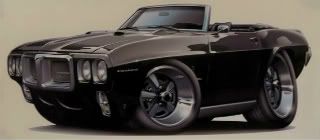
|
|
|
|
|
Joined: Sep 2001
Posts: 14,265
Valued Mentor
|
|
Valued Mentor
Joined: Sep 2001
Posts: 14,265 |
Jim, I was referring to "doesn't give you the performance of actual high octane fuel".
You didn't read it? OK I'll condense it for you. Racing fuel gives you a lot more horsies than lead additive. Greg and I have been bouncing this around for the last year and it's quite noticable. He has found that even Toululene mixed with low octane fuel gives more punch than lead add.
|
|
|
|
|
Joined: Sep 2001
Posts: 14,265
Valued Mentor
|
|
Valued Mentor
Joined: Sep 2001
Posts: 14,265 |
I guess I didn't make myself clear when I said the knock is between 2300-3500 meaning after 3500 it went away.
Anyways I have a 10:1 motor that I run on a full tank of premium fuel 92 or 93 oct. with 1 full qt. of max lead.
I had the dist. recurved by Schornack I guess I should be emailing him on his site. I'm sure that Schornack curved your distributor for performance. You will have to decide whether you want the performance or not. One cool thing about sending out a distributor to Schornack is they test it extensively before they send it back to you. That's what you paid for. Chances are you aren't going to inprove on it by swapping out springs at this point. If you told Schornack exactly what your engine specs are/were then you most likely have the perfect curve already. Try a little racing fuel Doug. I bet the pinging goes away. You will also be very happy with the added performance. If you want to burn 92 or 93 in a 10-1 engine then you better use aluminum heads. You said you read the other thread where Rommel worked on his distributor to get rid of the ping. Rommel's engine runs 9.5-1. You can't compare it to your 10-1. I thought it might simply be a octane versus compression problem. Turns out that's exactly what it is!  Anyone doubting this should really read that old thread that was (ironically) started by Doug a year ago. Here's that link again; /forums/ubbthreads.php?ubb=showflat&Number=45785&page=0&fpart=1
|
|
|
|
|
Joined: Jan 2004
Posts: 2,263
Member
|
|
Member
Joined: Jan 2004
Posts: 2,263 |
First, the reason that I was questioning this is the idea that higher octane fuel gives an engine more power. Not true. That would require a higher energy content and that isn't the case. Higher octane means more knock resistance, not more energy.
Second, the idea that more spark makes more power is also false. I dyno most of the engines I build and the amount of spark each engine needs depends on the entire package, not just the compression ratio. Having the engine run just below detonation is not the best for power! An example: during 1/4 mile testing of a low compression mid 14 second car I plugged in someone else's "perfect" advance curve (widely accepted) and lost 3/10ths. Slowed the curve back down and gained the time back. No pinging, so no octane issues, just too much timing too soon.
I've been building street and racing engines for well over thirty years and have used the same equipment that I'm sure Shornack has. The "test" is running it on their distributor machine to make sure that it is close to what has worked in the past for other engines. Not tested in your engine, but a best guess. I admire your faith in their best guess at the advance curve but that's what it is. Until the engine is run under actual conditions and tested, that's all an advance curve is, a best guess. The curve is a starting point, not the end point.
During actual testing on the dyno, the engine tells you what it wants by making more or less power, and when you curve the distributor accordingly, then you will have the "perfect" curve. Testing at the track is much less accurate and will give a more general trend for the amount of timing and the proper curve. Testing by most people on the street involves making sure that the engine isn't going into detonation and if it is, adjusting the curve to suit the actual conditions. But still better than a guess.
A quick advance curve is not the answer for every engine, and Doug has provided the info needed to demonstrate that and to fine tune his. With an adjustable timing light and a tach, he can set his mechanical advance curve in the car through testing better than Shornack can guess at what the engine might want. Obviously. And ignoring what the engine is saying by "fixing" it with more octane is not the right way. Fix the curve.
Too much timing and excess octane to cover for that will not make more power.
Doug, once you have the curve fixed, you can test for the proper amount of timing and then decide whether you need more octane or not.
Yes, Jim, I read it. I've also done a lot of other reading and testing.
|
|
|
|
|
Joined: Sep 2001
Posts: 14,265
Valued Mentor
|
|
Valued Mentor
Joined: Sep 2001
Posts: 14,265 |
First, the reason that I was questioning this is the idea that higher octane fuel gives an engine more power. Not true. That would require a higher energy content and that isn't the case. Higher octane means more knock resistance, not more energy.
More octane does mean more power. It's an easy test. Compare a tank of 93 to a tank of 110. The results are very obvious. It doesn't take a rocket scientist to feel the difference. Also, what he was looking for was knock resistance so my recommendation for higher octane falls right in line. You insinuate that you can tune Doug's 10-1 engine to run on 93?
|
|
|
|
|
Joined: Mar 2004
Posts: 11,905
Valued Mentor
|
|
Valued Mentor
Joined: Mar 2004
Posts: 11,905 |
Jim, I'd suggest you do further research into octane and what it means. octane (ŏk'tān') Pronunciation Key Any of several hydrocarbons having eight carbon atoms connected by single bonds. It is commonly added to gasoline to prevent knocking from uneven burning of fuel in internal-combustion engines. Octane is the eighth member of the alkane series. Chemical formula: C8H18. Source: "octane." The American Heritage® Science Dictionary. Houghton Mifflin Company. 08 Jun. 2007. <Dictionary.com http://dictionary.reference.com/browse/octane>. Other hydrocarbons are more suited for creating power. Octane itself DOES NOT MAKE EXTRA POWER, it simply allows for more power to be made at a given cylinder pressure. And seeing Brent's skills firsthand I have no doubt that he could tune Doug's car to run well on 89 octane.
|
|
|
|
|
Joined: Sep 2001
Posts: 14,265
Valued Mentor
|
|
Valued Mentor
Joined: Sep 2001
Posts: 14,265 |
You are actually saying that 110 racing fuel doesn't help give you more power than regular pump gas????? You can say that after you have used it in your car and endorsed it in the past? Flip flop, flip flop....
|
|
|
|
|
Joined: Mar 2004
Posts: 11,905
Valued Mentor
|
|
Valued Mentor
Joined: Mar 2004
Posts: 11,905 |
It's not the octane number that makes the difference. It's the fact that I can use a more advanced timing curve with better fuel with my particular engine. You are actually saying that 110 racing fuel doesn't help give you more power than regular pump gas????? You can say that after you have used it in your car and endorsed it in the past? Flip flop, flip flop.... Run with the wind at your back and maybe you'll stay ahead of your misquotes. Show me where I said that. I've never said that the MaxLead was a cure-all, did I? Yes, it does reduce knocking. But it doesn't add more power. Adding timing with MaxLead alone does not help much. Besides the high "octane rating", racing fuel has a different formulation. It's probably lower in detergents, alcohol and other semi-combustible or incombustible crap and higher in the percentage of power-making hydrocarbons. But I am not a fuel chemist, so my observations are my personal experiences with my own vehicles. I know that Sunoco 106 make a big power difference in my '67 Honda 50, raising the top speed from 45 to around 55. It never knocked, so it wasn't the octane rating.
Last edited by Yellowbird; 06/08/07 03:57 PM.
|
|
|
|
|
Joined: Sep 2001
Posts: 14,265
Valued Mentor
|
|
Valued Mentor
Joined: Sep 2001
Posts: 14,265 |
YELLOWBIRD QUOTE: I know that Sunoco 106 make a big power difference in my '67 Honda 50, raising the top speed from 45 to around 55. It never knocked, so it wasn't the octane rating.
So you'll admit better fuel raises power in your Honda but not your 'Bird? Come on! You know your car runs better with the Sunoco racing fuel, why not admit it?
|
|
|
|
|
Joined: Mar 2004
Posts: 11,905
Valued Mentor
|
|
Valued Mentor
Joined: Mar 2004
Posts: 11,905 |
The point escapes you.
If you take your average 87 octane fuel, you can add octane to it and still have crap fuel. It may bear a higher "octane" number but what is the measurement of MMBTU/gallon? What is the specific gravity?
On the other hand, if I were to find a fuel that had an octane rating of 89 but had a higher MMBTU/gallon then I would get more power from the fuel. I could adjust the timing and fuel circuits until the engine produced the most power from the fuel.
The number on the pump means very little except for marketing purposes. Every fuel manufacturer will provide the figures on request.
|
|
|
|
|
Joined: Sep 2001
Posts: 14,265
Valued Mentor
|
|
Valued Mentor
Joined: Sep 2001
Posts: 14,265 |
Since you will not admit it at the present I'll show where you admitted it in the past when you didn't have an agenda to stick up for TOHCan;
YELOWBIRD QUOTE: I've been running Max Lead for 2 years, one quart per tankful. It helps, but my car has more power and runs cooler and permits more advance on a 50/50 blend of Turbo Blue 110 Leaded + Super Unleaded 93 without a doubt. If the leaded fuel was regularly available close by I would not use the Max Lead at all, but it's good to be able to carry a bottle in the trunk in case I am away from good fuel.
|
|
|
|
|
Joined: Mar 2004
Posts: 11,905
Valued Mentor
|
|
Valued Mentor
Joined: Mar 2004
Posts: 11,905 |
IT'S NOT THE OCTANE NUMBER. Not all of it, anyhow. It's the fuel formulation.
|
|
|
|
|
Joined: Mar 2004
Posts: 11,905
Valued Mentor
|
|
Valued Mentor
Joined: Mar 2004
Posts: 11,905 |
Last edited by Yellowbird; 06/08/07 04:46 PM.
|
|
|
|
|
Joined: Sep 2001
Posts: 14,265
Valued Mentor
|
|
Valued Mentor
Joined: Sep 2001
Posts: 14,265 |
IT'S NOT THE OCTANE NUMBER. Not all of it, anyhow. It's the fuel formulation.
|
|
|
|
|
Joined: May 2001
Posts: 3,615
Premium Member
|
|
Premium Member
Joined: May 2001
Posts: 3,615 |
You Michigan people sure do like to argue...
Are ya'll married...to each other?
I'm a hobbyist. Not a professional. Don't be hatin'!
|
|
|
|
|
Joined: Mar 2004
Posts: 11,905
Valued Mentor
|
|
Valued Mentor
Joined: Mar 2004
Posts: 11,905 |
Like our Canadian neighbors, we're not afraid to speak our minds. We just don't do it as politely. 
|
|
|
|
|
Joined: Jan 2004
Posts: 2,263
Member
|
|
Member
Joined: Jan 2004
Posts: 2,263 |
Jim, you're wrong. Read the links that Vikki posted. More octane does not mean more power. You go and test it on the dyno like I have and then tell me what you find. Rocket scientists don't go by "feel". They use objective data.
I build engines for various different racing classes, and use 93 octane, C12 or C14 on the dyno according to the class rules. Too much timing gives you less power. If you cover up the problem with extra octane instead of fixing the problem, you lose power with more octane. Tuning the engine properly means more power. Building the engine to use less timing makes more power. The lazier the engine (wants more spark advance), the more negative work (early spark = early build in cylinder pressure = pressure against the piston as it is still rising in the bore) has to be overcome before it starts making power.
I don't insinuate. I state. I run my wife's van engine (10:1) on 87 octane. I've done that with most of my personal engines for quite a while.
He wants his engine to run properly. It doesn't ping at the bottom or the top, therefore the middle of the rpm range has too much timing.
|
|
|
|
|
Joined: Sep 2001
Posts: 14,265
Valued Mentor
|
|
Valued Mentor
Joined: Sep 2001
Posts: 14,265 |
Smoke and mirrors. Why do you think they sell racing fuel? I know, for all the dumbies like me that don't know how to tune our cars. To think that I could be burning 87 in my stock 69 engine all these years if I was as smart as you. Goll Lee!!!
|
|
|
|
|
Joined: Sep 2006
Posts: 559
Member
|
|
Member
Joined: Sep 2006
Posts: 559 |
You Michigan people sure do like to argue...
It's the economy here......
Brad
|
|
|
|
|
Joined: Mar 2004
Posts: 11,905
Valued Mentor
|
|
Valued Mentor
Joined: Mar 2004
Posts: 11,905 |
"Smoke and mirrors"? C'mon, Jim. Admit it when someone knows more than you. I have scarcely started to learn what Brent's been doing for many years. And I do have a couple of good mentors. It's amazing how many people are willing to teach those who are willing to listen and learn.
Some of the racing fuels are for sanctioned classes to reduce the number of variables, making tuning even more critical.
If you've ever read of the history of gasoline engines and the development of gasolines, you'll learn that up through the 1930s U.S. auto gasoline was about 40 (yes, 40) octane. If you put 87 octane in a Model T, does it go much faster? No. Does it knock less? No, since the compression is too low to knock at all. But with "higher octane" fuel you could rebuild and retune that engine to run a higher compression ratio, which would allow more power to be extracted from the fuel, which would allow the vehicle to go faster up to its mechanical safety limits.
|
|
|
|
|
Joined: Sep 2001
Posts: 14,265
Valued Mentor
|
|
Valued Mentor
Joined: Sep 2001
Posts: 14,265 |
You will definitely not talk me into believing something I know from experience to be false. There is mountains of evidence that stock high compression engines clash with low octane fuel. Why do you think people put lower compression/cc heads on their engines to make them drivable? It's a rediculous stance to say that we all could throw a tune on our distributors and get the same performance out of low octane that we have been getting out of the racing fuel mixture. That's not believable.
|
|
|
|
|
Joined: Mar 2004
Posts: 11,905
Valued Mentor
|
|
Valued Mentor
Joined: Mar 2004
Posts: 11,905 |
If an engine is designed to produce 450 hp with the perfect fuel blend, perfect fuel system tuning, perfect ignition timing curve, perfect altitude, perfect atmospheric conditions, perfect operating temperature but can be tuned to run reliably, and more importantly, more functionally, and have an output of 430 hp under most fuels and operating conditions, which is the better choice?
Each and every component in a motor vehicle is a compromise. You can follow the factory's choices based on what was available at that time, or you can make a few alterations to accomodate today's technologies. But if you are driving the car with today's fuel, not tapping a 40 year old reserve, you'd best tune for it. The alcohol content may mean you need to run a richer mixture than factory spec. The added oxygenates may mean richer jetting is needed. The lower octane may mean you need a less agressive timing curve, or a later curve, or less timing overall.
Ignition, for instance. Back in the early '80s everybody ditched the stock coils in favor of Accel Super Coils. Stronger spark = more power, if you believe the ads.
At 150 psi cylinder compression it may take 25,000 volts to ignite the charge with the spark plug. Does that mean a 40,000 volt coil will do a better job? Not unless your old coil was weaker than spec. If you're running cylinder pressure of 190 psi, maybe you want that 40,000 volts. How do you know? Read, ask, try. If it doesn't work for you, try something else. And ask a lot of questions until you understand. I'm always asking.
Last edited by Yellowbird; 06/08/07 08:55 PM.
|
|
|
|
|
Joined: Dec 2005
Posts: 5,108
Power Member
|
|
Power Member
Joined: Dec 2005
Posts: 5,108 |
Octance is more of a knock(pre-ignition reducer) then a power maker.
If all your engine needs is 93, 110 will not make give it any more power.
|
|
|
|
|
Joined: Jul 2003
Posts: 4,248 Likes: 14
Premium Member
|
|
Premium Member
Joined: Jul 2003
Posts: 4,248 Likes: 14 |
I believe Jim, especially since he did some actual testing. The gas they sell now is so full of crap that it has less energy than straight racing fuel, regardless of the octane. I had a source of 110 gas nearby but last time I went by the place was closed down. Darn! I just ordered some of the Maxlead 2000 stuff. Thanks for the link. I'll share my results. My 389 pings at WOT on 93 octane no matter how I mess with the timing. I need octane!
|
|
|
|
|
Joined: Mar 2004
Posts: 11,905
Valued Mentor
|
|
Valued Mentor
Joined: Mar 2004
Posts: 11,905 |
Actual testing? On a dyno, under controlled conditions, where the only variables were the load and the fuel? No, purely subjective opinions that echoed what I posted the year before when I ordered the case of MaxLead 2000, and had likewise been posted the year before that. Not without value as observations, but not "actual testing".
Personally I'd rather shave off a little power to fully enjoy my car anywhere I might take it, rather than having to stay within driving distance of a particular filling station.
|
|
|
|
Forums57
Topics35,534
Posts298,850
Members8,862
| |
Most Online19,810
Feb 1st, 2026
|
|
|
1 members (Dr. Drivability),
1,839
guests, and
212
robots. |
|
Key:
Admin,
Global Mod,
Mod
|
|
|
There are no members with birthdays on this day. |
|
|
|


