Oldskool has some good points. Timing is one that gets argued on this forum quite a bit, especially where to put the vacuum advance hose. If the initial advance is set too low and the vacuum advance is attached to the stepped port on the carburetor, the fuel air charge may be still burning as it's going out the exhaust port. That can result in a lot of heat transfer into the heads and the coolant, not to mention burned valves. Placing the vacuum advance hose onto the manifold vacuum port will result in a higher timing at idle and more of the fuel air charge will be burned before it leaves the cylinder. More timing will result in a higher rpm allowing you to turn down the idle speed screw and adjust the mixture for a more fuel efficient idle. The vacuum advance was always on the manifold vacuum port until they came up with the smog stuff, then they needed more heat in the exhaust to burn the pollutants. They moved the vacuum advance to the stepped port and opened the throttle to keep them running at idle. Of course that caused run-on, dieseling, so they had to install the idle step up solenoid. The solenoid allowed the throttle to be closed at shut down but opened further when the engine was started.
The water pump clearance is another good point, mine had way too much but a bit of tapping with a small ball-pein hammer fixed it.
I'm sure you put a new thermostat in when you rebuilt it but it could be defective right out of the box, been there. I always use a 160 degree, I know all the arguments about higher temps resulting in more energy but I feel better having my water temp reasonable idling at a red light when the outside air temperature is 100+F. A 160 degree thermostat starts to open at 160 degrees, may not be fully open until 180, at least that's what mine did when I tested it. 230F at a red light would make me sweat way more than the 185F I have now.
That's just my opinion, I'm not an expert.
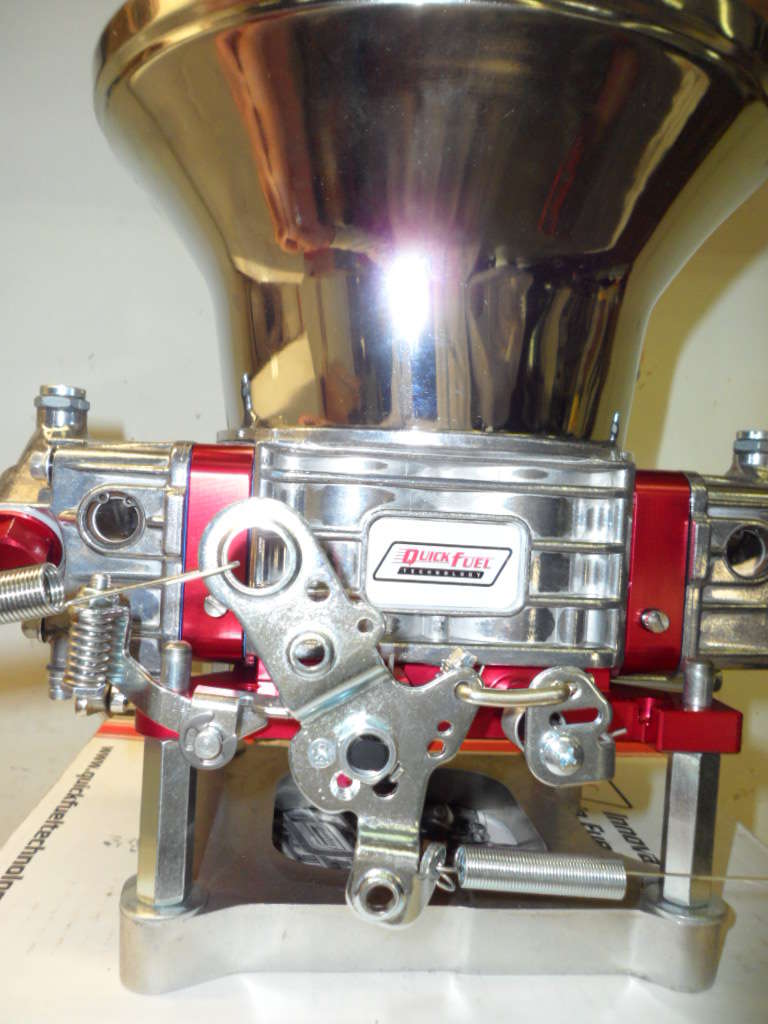
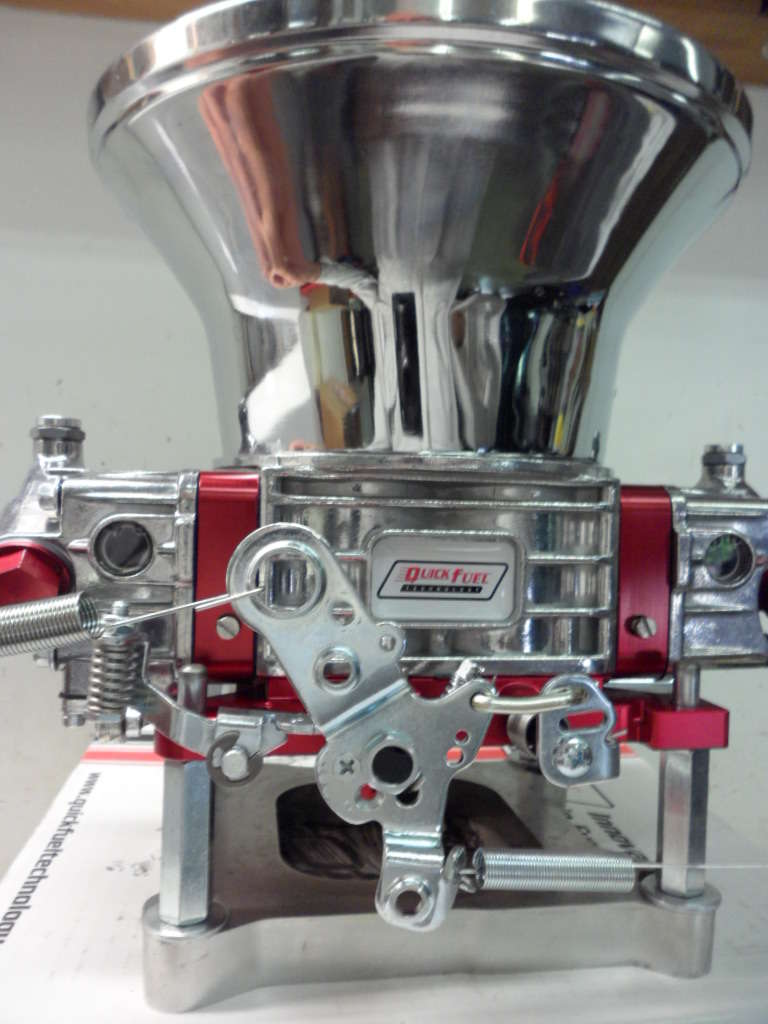
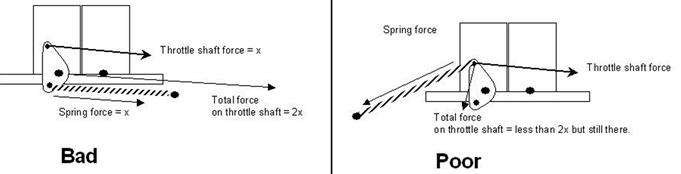
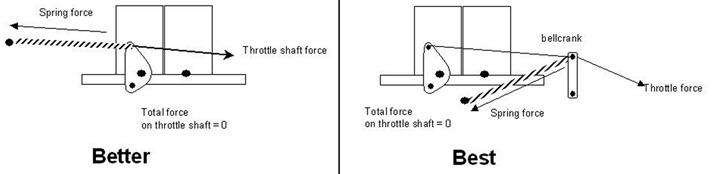
Sorry I do not have a pic of two on a quadrajet, I'm running a Quick Fuel and an Edelbrock on mine. You just want the force of the springs to equal out the wear on the shaft and the shaft bore. A lot of air leaks are due to excessive play in the throttle shaft bore. A spring pulling the throttle closed from the front and another pulling it closed from the rear help even out the wear. I have a couple of diagrams I'll add, not the two spring deal, but will give you an idea of what i'm trying to say. You can have a spring pulling the opposite way of the throttle cable but at idle it's just the spring that's pulling in one direction.